Critical minerals such as graphite, lithium and rare earths have become essential components of systems that span energy, mobility and security. Their value no longer lies purely in their physical properties but increasingly in their geopolitical and industrial positioning.
Take graphite. Its ability to conduct heat and electricity makes it a mainstay in electronics, battery anodes and advanced thermal management systems. These are established industrial uses with consistent demand. Graphite supports the thermal pads and heat sinks in devices that form the backbone of digital infrastructure. It anchors the energy density and durability of lithium-ion batteries, where material performance directly translates into commercial viability. These characteristics make it a critical enabler.
Yet what gives minerals like graphite broader investment significance is how demand is being shaped by overlapping priorities. On one side, commercial markets are accelerating toward electrification and decentralised energy. On the other, governments are re-evaluating supply chain exposure, particularly where materials underpin defence systems or core infrastructure.
As domestic policies shift to secure access and control over mineral supply, companies positioned in extraction, processing or materials engineering stand to benefit.
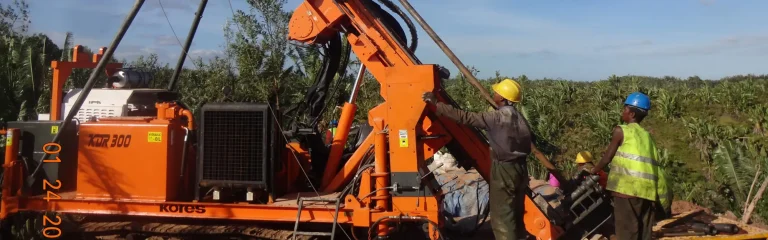
Tirupati Graphite PLC (LON:TGR) is a fully integrated specialist graphite and graphene producer, with operations in Madagascar and Mozambique. The Company is delivering on this strategy by being fully integrated from mine to graphene. Its global multi-location operations include primary mining and processing in Madagascar, hi-tech graphite processing in India to produce specialty graphite, and a state-of-art graphene and technology R&D center to be established in India.