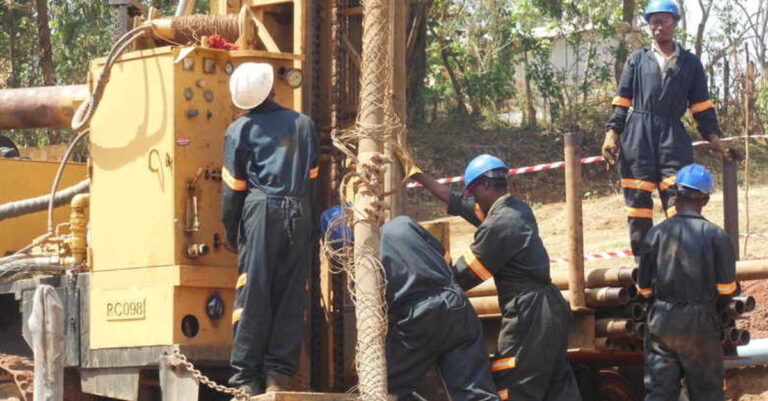
KEFI Gold and Copper plc (LON:KEFI), a gold and copper exploration and development company focused on the Arabian-Nubian Shield with a pipeline of projects in the Federal Democratic Republic of Ethiopia, and the Kingdom of Saudi Arabia, has provided an update regarding its corporate strategy following the full launch of the Company’s high-grade/high-recovery Tulu Kapi Gold Project.
Tulu Kapi Project Launch
As announced on 22 December 2025, the Company’s key asset, Tulu Kapi, has now been fully launched. In the past month, the following critical milestones have been achieved:
· Final project contracting packages, covering all capex as well as over 50% of 7-year opex (via the arrangements for mining services and electricity supply), and:
· Lycopodium has begun work as the lead design and construction contractor for the process plant and all on-site infrastructure after their contract was activated;
· the mining contract’s competitive tender was updated to ensure optimum outcome; and
· field activities ramped up, including Ethiopian Electric Power Company on power supply and Ethiopian Roads Authority’s efforts on new access roads to the site.
· The development finance package assembled now includes:
· US$340 million (US$240 million in debt, US$100 million in equity);
· US$60 million for mining fleet via a mining services agreement; and
· US$30 million in non-dilutive capital for contingencies and growth in both Ethiopia and Saudi Arabia.
The Tulu Kapi Project schedule remains for commissioning in late 2027 and full production in 2028.
The finance closing process, which was in preparation for many years, was able to be finalised from May 2025 following the Ethiopian Parliamentary Ratification of the Project’s second bank’s country membership. Subsequently, the debt funding commitment was formalised in October 2025, and the equity components were assembled in December 2025, as reported in the Company’s announcements on 20 October 2025 and 22 December 2025.
Having arranged that the equity capital package includes non-ownership dilutive Gold Streams and the KEFI EthioPrefs, the required Lenders’ approval of the associated detailed documentation is taking place and is expected to be completed shortly.
At gold prices of US$3,000-5000 per ounce, the NPV (5%) to KEFI as at start of construction is US$710 million to US$1,667 million. This equates to 5 to 11 pence per KEFI share, excluding value attributable to the Company’s Saudi assets, but after adjusting KEFI’s issued share capital for full dilution to account for the recent fundraise, unexercised warrants and options in issue and the impact of potential issuance and exercise of already authorised, but as yet unissued incentive share options.
Developments at the Company’s Saudi joint venture (“GMCO”), highlight its materiality to KEFI shareholders by providing significant additional value without operational risk and distraction from the start-up in Ethiopia, and without the need for KEFI to raise further capital. A KEFI-Saudi update will be issued after this month’s GMCO review of the various projects’ status and plans.
Corporate Review & Strategy
Since its IPO in 2006, KEFI has invested roughly US$100 million into exploration and development initiatives, focusing on the Arabian Nubian Shield since 2008, where US$13 million has been spent in Saudi Arabia and another US$87 million in Ethiopia, mainly on Tulu Kapi.
KEFI was invited into Saudi Arabia in 2008 to be the mining technical partner of the conglomerate ARTAR and was invited into Ethiopia in 2014 by the institutional shareholders of the Tulu Kapi Project to overhaul the Project and implement its start-up. Over this timeframe, the Company’s partners and predecessors have themselves also spent more than US$100 million alongside KEFI.
KEFI’s entry yielded significant discoveries within the first few years in Saudi Arabia and the successful overhaul of the Tulu Kapi Project within the first two years in Ethiopia. The Company’s highly experienced teams applied relevant experience of the same geological terrain and project types in Western Australia. With hindsight, what followed that rapid early progress was a long period of collaboration with authorities, through challenging local circumstances, which resulted in local reforms of security and regulations. KEFI developed strong relationships, and now both countries’ mining sectors are experiencing exponential growth. KEFI has been well-positioned to leverage off this growth in both countries.
Through its groundbreaking entry into Saudi Arabia and Ethiopia, KEFI has created the following portfolio of advanced projects, plus a cherry-picked exploration portfolio:
1. TKGM in Ethiopia (83% owned): 1.7 million oz of gold & silver at Tulu Kapi
2. GMCO in Saudi Arabia (13% owned):
· 0.9 million oz gold & silver at Jibal Qutman
· 2.6 million oz gold-equivalent resources at Hawiah (copper, gold, zinc, silver) ranking it globally amongst the top 15% of VMS deposits)
The three advanced projects offer extensive growth prospects, and it is quite possible that their combined gold-equivalent resources – currently over 5 million ounces – could more than double in the long run, not accounting for additional opportunities in the broader portfolio.
Whilst exploration continues in Saudi Arabia and is planned to recommence in 2026 in Ethiopia, in 2025 we started preparing for development in both countries by appointing appropriate Managing Directors to the operating entities in both countries.
In Ethiopia, our strong African-experienced start-up team is now well embedded; our specialist development contractors are mobilising; and recruitment is now in full swing to ensure operational readiness during the two years of development.
In Saudi Arabia, whilst the Company’s shareholding is now only 13%, KEFI has developed a powerful partnership with the Al Rashid family’s holding company ARTAR, with whom GMCO has been built into a self-sufficient operating entity designed to operate independently. This avoids distracting KEFI from the current operating focus on Ethiopia and, at the same time, GMCO offers the potential for KEFI to have a diversified portfolio of producing assets within the next few years. And GMCO’s discoveries, aggressive exploration programme and multi-billion-dollar backers offer the possibility for KEFI’s 13% of GMCO’s resource base and economic potential to match that of KEFI’s 83% of Tulu Kapi. All these assets are in their infancy and GMCO, which has to date been exploring aggressively with the financial backing of ARTAR, is now also launching programmes in joint venture with mining major Hancock Prospecting. A Saudi listing of GMCO may be considered after production has commenced and, in that respect, it is notable that a profitable mining company in Saudi with very similar projects to those of GMCO, but with a smaller resource base, is capitalised on the local stock exchange at SAR8.1 billion (representing approximately US$2.1 billion for 100%).
Saudi Arabia – GMCO Strategic Review
We recently concluded the strategic review of our involvement in the GMCO joint venture with the outcome that:
· During the review resources were increased, the Umm Hijlan Exploration Licence (“EL”) was awarded, located directly south of the Hawiah EL, and roughly doubling the prospective strike length of the mineralised structure undergoing development feasibility study. In addition, GMCO’s new joint venture with major miner Hancock Prospecting was awarded a major mineralised belt – Al Hajar North.
· GMCO has been prepared for its next stage of development by:
· expanding the management team via appointments with track records of successful start-ups and operations; and
· the joint venture with Hancock Prospecting focusing on a mineralised belt analogous to, and parallel with, GMCO’s tenements in the Wadi Bidah Minerals District (“WBMD”), where GMCO has made a string of discoveries and where the Hawiah discovery already ranks globally amongst the top 15% of VMS deposits. We note that the zones within WBMD which had not been selected by GMCO for exploration, have since been pegged by a joint venture between mining majors Ivanhoe Electric and Maaden, demonstrating industry acknowledgement of the prospectivity identified and successfully being addressed by GMCO.
As regards KEFI’s desire and capacity to contribute to GMCO’s future capital requirements, we repositioned ourselves as follows during 2025:
· KEFI allowed its shareholding in GMCO to dilute to c.13% as at 31 December 2025 due to the preference to focus the Company’s capital on Ethiopia pending the now-achieved launch of development at Tulu Kapi;
· with partner ARTAR we ensured GMCO has its own management independent of shareholders, obviously with the oversight of the recently enlarged GMCO Board and of course with technical advice from KEFI where appropriate;
· GMCO has entered a joint venture with Hancock Prospecting, further expanding its own capacity for exploration;
· we assembled equity capital at KEFI which provides capacity to follow our rights at GMCO where deemed appropriate; and
· we consider that the inherent value of our 13% GMCO shareholding warrants that we invest further, using capital that has already been raised, and establish a portfolio of producing assets within a few years.
KEFI today has a corporate structure that can be summarised as follows:
· a retail shareholder base exceeding 5,000 individuals was recently joined by a number of global financial institutions.
· The KEFI board intend to move the Company’s listing to the Main Market of the London Stock Exchange as soon as appropriate, targeting 2028.
· in Ethiopia:
· the Government is the Company’s partner in the operating company TKGM;
· leading African banks, mining royalty specialists and contractors have joined the Tulu Kapi syndicate; and
· local leading family offices and institutional investors are joining the share register of the Ethiopian holding company, KME, via their subscription to KEFI EthioPrefs which are intended to be listed on the new Ethiopian Stock Exchange.
· in Saudi Arabia:
· major local conglomerate ARTAR is the Company’s partner in GMCO; and
· there are long-established corporate relationships within the Saudi investment and banking sectors.
KEFI’s financial structuring is further explained below in the section “Explanatory Background for Tulu Kapi Project Financing”.
KEFI Gold and Copper plc Founder and Executive Chairman, Harry Anagnostaras-Adams, commented: “Our successful funding of the high-grade and high-recovery Tulu Kapi Gold development took many years of intense effort as the first-mover, against a changing, and at times challenging, geopolitical landscape.
“This has demanded exceptional discipline, patience and support from all stakeholders – the community, our personnel, the government agencies at all levels and our shareholders and other financiers – for which we are greatly appreciative. The next chapter requires no less effort, but fortunately, is now focused on the implementation of a well-defined plan to which all stakeholders are, or will be, contractually committed.
“Our strong African-experienced development and start-up team is now well embedded in Ethiopia; our specialist development contractors are mobilising; and recruitment is now in full swing to install operational readiness during the two years of development. The current development phase 1 is community resettlement and plant procurement, followed by earthworks and installation of infrastructure, followed by open-pit mining starting six months before plant commissioning.
“We are fortunate to have successfully launched this multi-billion dollar cash flow project at what has turned out to be a propitious moment against a gold rush in Ethiopia and indeed globally. The projected range of economic outcomes is better than we had anticipated.
“We now plan to have a clear run at not only starting up the multi-billion dollar cash flow generator at Tulu Kapi, but to target a potentially equally valuable minority-share in producing assets developed from KEFI’s discoveries in Saudi Arabia which are now independently managed by the joint venture company GMCO.
“This is a great time for KEFI to have triggered its development phase, deliberately structured within such tight alliances with powerful strategic partners and financiers.”
Explanatory Background for Tulu Kapi Project Financing
Full Funding Requirements
Because this is a first-mover transaction for Ethiopia and because the Project’s secured lenders are providing c.70% of the US$340 million development capital, all detailed definitive documentation has had to be approved by these major African development banks – one being well-embedded in Ethiopia and the other being Africa’s leading mining financier.
The total Project cost is c.US$500 million after taking into account that the mining contractor finances the mining fleet of c.US$60 million and historical expenditure was over US$100 million.
Structuring of the Debt and Equity Finance Package
Historical expenditure on exploration, engineering, permitting, regulatory reform and financing was equity-funded by KEFI’s shareholders.
The Secured Debt Facilities from leading African development banks (the “Lenders”) and their Base Case for debt structuring is summarised as follows:
· US$240 million debt of the US$340 million package. The US$100 million equity-risk capital does not interfere with debt service coverage.
· Debt-focussed analyses were based on a 7.5 year debt repayment profile from net cash flows generated at a gold price of US$2,000/oz flat for the next 10 years.
· Ore Reserves (JORC-compliant) are 15.4 million tonnes at 2.1 g/t for 984,000 ounces of gold recovered and sold, with ore between 0.5g/t and 0.9g/t being stockpiled rather than processed and sold.
· Mine plan is based on a cut-off grade derived, assuming a gold price of US$1,250/oz, with mining costs updated in recent months via refreshed tenders by competing mining services contractors. The Ore Reserve and mine plan will be regularly updated during construction and production, in line with scheduled grade-control and extensional drilling programmes along with updated gold prices.
· Warranted nameplate processing capacity of the plant is 1.9-2.1 million tonnes per annum (depending on ore feed type) procured under a fixed-price lump sum engineering and procurement arrangement.
This Lenders’ Base Case analysis reports the following economic metrics for the Lenders:
· Gold price US$2,000/oz.
· All-in Sustaining Costs (“AISC”) US$1,080/oz.
· Break-even cost, including debt repayment US$1,567/oz.
· Net operating cash flow of US$1,077 million over 7 years or US$154 million per annum.
· Net cash flow available for debt service of US$799 million after royalties, taxes, sustaining capex or US$114 million per annum.
· Debt service coverage ratio of 3.0-to-1, double the prescribed minimum of 1.5-to-1.0.
The Company’s ‘2025 Business Plan’ goes beyond Lenders’ more restricted focus, as follows:
· we start with the foundation of the open pit plan as approved by the Lenders, for recovery and sale of 984,000 oz of gold and we then:
· increase the gold planned to be recovered and sold by processing all low-grade stockpiled ore grading above 0.5g/t and also introduce initial production from within the already-drilled underground Mineral Resources. The net effect is that total ore tonnes processed increases by 10% to 17 million tonnes and average grade increases by 14% to 2.4 g/t for 1,215,000 ounces of gold recovered and sold;
· recognise silver credits, estimated at one ounce of silver for two ounces of gold, based on metallurgical results for the Tulu Kapi Definitive Feasibility Study. The silver content of drill core had not been assayed to JORC-compliant standards by the previous owners, but this will be done in future drilling programmes as silver will be a material contributor;
· tune up plant throughput to accommodate the c.10% increase in ore processing by installing extra grinding and leaching capacity as has already been designed into the plant footprint; and
· repay senior debt within two years of production start-up based on an assumed gold price of US$3,000/oz flat, which is set below the lowest long-term analysts’ forecast published in industry surveys (published at the end of 2025 by Standard & Poors and by CIBC).
Tulu Kapi’s production forecasts indicate strong net cash flow potential for KEFI shareholders after covering all expected costs, taxes, royalties and debt service. These estimates also cater for additional charges related to potentially increasing the KEFI Ethio Prefs from US$26 million to US$46 million and the Gold Streams from US$30 million to US$40 million.
KEFI’s 2025 Business Plan with open-pit plus an initial underground model reports the following economic metrics after building in the capital-servicing costs of a funding package of US$370 million including an extra US$30 million for reserves and growth. Here we focus on estimates at US$3,000/oz gold:
· At a gold price of US$3,000:
· Debt Service Coverage Ratio in respect of the US$240 million Project debt increases to 5.6-to-1.0;
· Break-even cost:
· including debt repayment is US$1,637/oz; and
· including also servicing of Gold Streams and EthioPrefs is US$1,946/oz.
· if all surplus net cash flow (after all charges and capital servicing) from initial Project production was allocated to debt prepayment, the full US$240 million debt would be repaid within the first two production years.
Optimising the Mix of Equity Capital
In optimising the mix of equity capital, the main factors considered include the following:
· Only bank debt can be repaid as quickly as we wish and all other forms of capital are locked in for the long-term. Therefore, we maximised debt at 70% of development capital (US$240 million of the US$340 million) and, for risk-management, we:
· derived ore reserves at the conservative gold price assumption of US$1,250/oz;
· staged the open pit cut-back phasing to maximise cash flow in the first production years; and
· use only fully subordinated equity risk capital for any equity funds required to complement debt-capital for development and also for any extra funds raised for cash reserves and opportunities for organic growth.
· For equity-risk capital commitments, we implemented the following approach:
· we reached agreement with the Government that it be a shareholder at the TKGM level, to maximise alignment in this new sector for Ethiopia. The TKGM entry valuation basis was agreed in 2017 and is c.US$200 million. So the Government’s US$20 million investment attracts a c.12% shareholding in addition to its 5% free carry;
· we have assembled, for finalisation, offers for non-ownership dilutive equity-risk-capital or “equity risk notes” – specifically Gold Streams and redeemable preference shares both serviceable from net cash flows available for dividends:
· Redeemable Preference Shares (EthioPrefs) with a view to listing them on the new Ethiopian Stock Exchange once production settles down. These funds are received as Ethiopian BIRR, mature after 8 years and the cost of capital is 15% plus potential upside if the gold price rises above that which prevailed at the time of the subscribers’ investment. We can only accept so much Ethiopian BIRR due to TKGM’s development spending profile requiring mainly hard currency;
· Gold Streams provide hard currency equity capital into TKGM. These have life of mine entitlements and US$40 million thereof serves to increase the IRR to TKGM shareholders (KEFI and the Government) at any gold price above c.US$1,800/oz;
· the balance of equity capital has already been provided by KEFI shareholders where required for early expenditures for the costs of finance closing and Project launch. At the recent placing price of 1.3 pence per share, the fully-diluted KEFI entry valuation was c.US$210 million;
· the combined package of debt and equity of US$370 million being available for project development and for the extra capital for cash reserves and growth.
· Industry analyst benchmarking of the implied stock market capitalisation of KEFI’s planned 83% beneficial interest in Tulu Kapi indicates significant upside (see reports on KEFI website: https://www.kefi-goldandcopper.com/investor-info/analyst-coverage). This is separate from and in addition to the value of our interest in GMCO.
Projected Economic Metrics
Tulu Kapi’s production forecasts indicate strong net cash flow potential for KEFI shareholders after covering all expected costs, taxes, royalties and debt service. These estimates also consider potential additional charges related to increasing the KEFI Ethio Prefs from US$26 million to US$46 million and the Gold Streams from US$30 million to US$40 million.
KEFI’s 2025 Business Plan with open-pit plus an initial underground model reports the following economic metrics after assuming a funding package of US$370 million including an extra US$30 million for reserves and growth. Here we focus on break-even estimates at US$3,000-5,000/oz gold (from slightly below the lowest consensus forecast of US$3,400 – from Standard and Poors and CIBC – and up to slightly above the prevailing price of US$4,500/oz):
· TKGM AISC US$1,004-1,144/oz;
· TKGM Net Operating Cash Flow (after all costs and taxes but before debt-service) of US$1,991-3,684 million over 7 years or US$284-526 million per annum;
§ KEFI 83% of net cash flow per annum after servicing all other capital (debt, KEFI Prefs and Gold Streams) over the first 7 years averages US$151 million to US$330 million;
§ NPV (5%) to KEFI as at start of construction of US$710 million to US$1,667 million;
§ This equates to 5 to 11 pence per KEFI share as at start of construction, after excluding Saudi assets and after adjusting KEFI’s issued share capital for full dilution to account for the recent fundraise, unexercised warrants and options in issue and the potential issuance and exercise of already authorised, but as yet unissued incentive share options; and
§ IRR of 112% to 200%.
These metrics are focused only on production forecasts from within the reported Mineral Resources at Tulu Kapi. KEFI considers that there is significant potential for Resource-expansion at Tulu Kapi at depth as the orebody remains open. The last drill-hole was 90 metres at 2.8 grams per tonne. We also intend to explore in the region.
These metrics also ignore the value of KFI’s interests in Saudi Arabia.