Ilika plc (LON:IKA) Chief Executive Officer Graeme Purdy caught up with DirectorsTalk for an exclusive interview to discuss the Stereax deployment of wireless sensors for Network Rail.
Q1: This morning, we saw an interesting announcement about the Stereax deployment with Network Rail. Could you explain a little bit about the application?
A1: Network Rail has got a vast amount of infrastructure that needs to be monitored as cost-effectively as possible, bear in mind that a lot of our rail infrastructure dates back many decades and covers things like bridges and tracks themselves.
So, what they’re doing actually as part of their modernisation programme is to deploy the latest sensor technology in order to monitor the condition of all of this infrastructure. Also, to make sure that it remains in good condition and that commuters’ rail journeys are not disrupted and that the condition of the infrastructure remains in as a good a condition as we would all expect it to be in.
Q2: Why are Stereax batteries a good fit with this?
A2: Well, there a good fit really because the sweet spot for some of today’s batteries combined with energy harvesters are really applications where cabling the sensors i.e. providing a hardwire power connection is expensive or where changing out primary coin cells which are used to power sensors is actually quite tiresome i.e. the labour costs for doing that are quite high so that the total cost of ownership of that type of sensor, infrastructure would be high.
If you look at infrastructure monitoring and this is not dissimilar actually to the wind turbine condition monitoring programme that we announced last year, they key thing is it’s quite difficult to go and maintain sensors once they’ve been installed. You really want to just forget about them and just enjoy the data stream that hopefully comes from these sensor devices. So, if you’ve got some remote bridge in the middle of the countryside, you want to go in, you put your strain gauges in there, make sure that the bridge is in good condition and you don’t really want to have to send people out to maintain the sensors on a regular basis, you’d be delighted if that sensor would stay and operate for 10 years without you having to touch it.
The advantage of these Stereax cells is that when you put them together with a little photovoltaic panel, the energy harvester, then you recharge them, they will sit there, and they will operate for at least 10 years. So, you’ve got that fit and forget advantage that you really need for condition monitoring.
Q3: Am I right in thinking that it’ll be an existing Stereax product that will be used here?
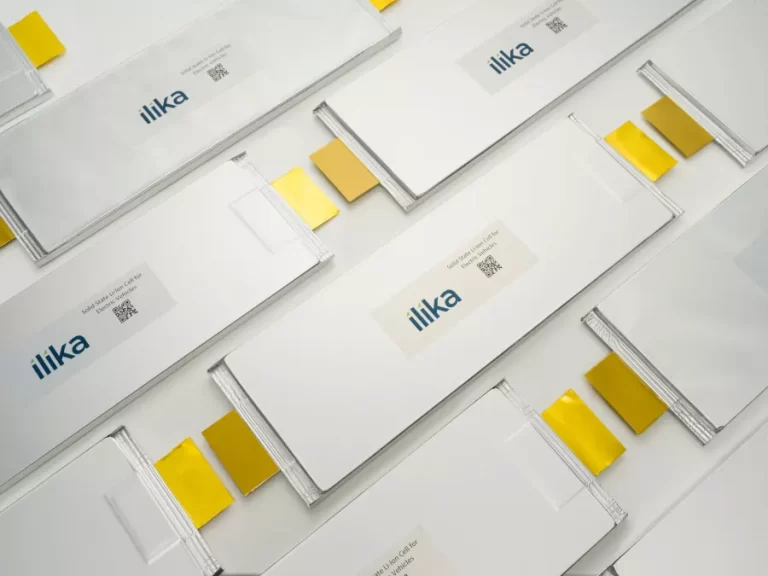
A3: Yes, that’s right. We don’t need to develop a new battery, we launched the M250 and that is a fully defined product that we’re making on our pilot line at the moment and in fact, the idea is to use those to couple them with a little PV panel to power strain gauges in the first deployment.
So, it’s not really a battery development, when we talk about the development aspect of this, the key thing is to make sure that the sensors are in a robust housing. The reason for that is it’s quite an extreme environment that you get at the track side, so you need to make sure that the sensors are properly packaged.
That’s part of the reason why we’re partnered with Smart Component Technologies (SCT) in this programme because they’ve already development components and devices that are deployed in the rail industry. So, they’re used to the robust environment that you need, it’s quite dirty, sees a lot of vibration so you have to make sure that the whole thing is packaged in an effective manner.
Q4: Is there much development work that’s needed?
A4: Well, it’s really some electronics engineering and some packaging work that’s needing to be done so it’s all stuff that actually we feel is all pretty doable in terms of technology risk, we think it’s a low risk deployment in many regards.
Q5: When do you think the work will start?
A5: Actually, we’re starting as we speak. We’ve issued this announcement pretty promptly and the project team is mobilising right now, in fact we have an operational kick-off meeting on Monday.
So, yes, this is a work in progress.