Electric vehicles are on the brink of a transformation, and it’s not just about longer range or faster charging. The real shift may come from a revolution in battery safety—one that quietly unlocks lighter packs, more efficient manufacturing, and sleeker, cheaper cars. Ilika’s recent solid-state battery test results suggest we’re closer than ever to EVs that are not only faster and cleaner but also radically safer.
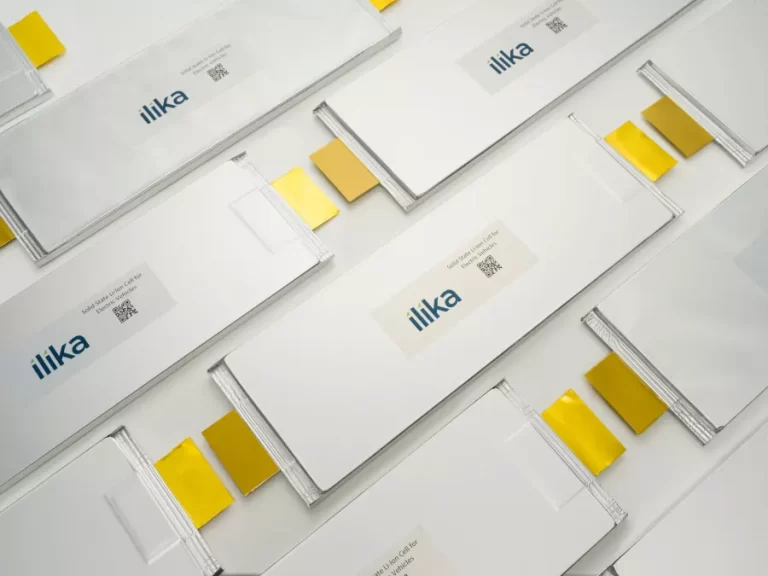
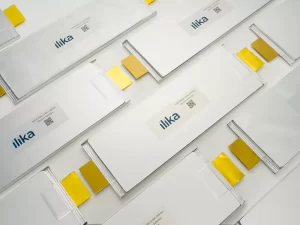
Ilika’s Goliath solid state cells recently underwent rigorous nail penetration tests—an aggressive scenario used to simulate damage that could lead to catastrophic failure. The results were striking. The Goliath cells did not ignite or explode. Surface temperatures stayed below 80°C. Meanwhile, commercially available lithium-ion cells with similar chemistry ruptured and ignited in a classic thermal runaway. This isn’t just a laboratory win; it signals the beginning of a major shift in battery safety.
It’s important to note that electric vehicles are already significantly safer from a fire-risk perspective than traditional internal combustion engine (ICE) vehicles. With only 1.3 thermal runaway incidents per 100,000 EVs between 2010 and 2024, compared to 1,530 fires per 100,000 ICE vehicles, EVs have a far better track record. But what they gain in safety, they lose in weight—modern EVs are on average 20% heavier than their ICE counterparts, largely due to the batteries. Those batteries can make up to 30% of the vehicle’s total weight, versus fuel accounting for just 5% in ICE cars.
The reason? Lithium-ion battery packs are more than just cells. They’re engineered fortresses built to contain and cool those cells, with heavy structural elements, sensors, cooling circuits, and fire-retardant materials. That extra weight is necessary—but it compromises vehicle range, performance, and production efficiency.
This is where the Cell-To-Pack Ratio (CTPR) becomes a critical metric. High CTPR means a larger portion of the pack’s weight or volume is actual energy-storing cell material, not protective infrastructure. Lower CTPR indicates inefficient design with more mass devoted to non-energy-producing elements. Safer cells enable designers to strip back the excess. This is why Ilika’s results are so promising—solid-state cells like Goliath’s could push CTPR to new heights, especially if they can match the energy density of current high-performance chemistries.
Battery chemistry is already evolving. NMC cells are moving towards higher nickel content, shedding cobalt entirely. BYD’s Blade batteries and structural cell designs allow packs to bypass traditional module steps. Lightweight components from players like Constellium and Henkel are trimming unnecessary mass from pack architecture. Yet even these advances may hit a plateau. Solid-state batteries have the potential to leapfrog these limitations.
SSBs replace flammable liquid electrolytes with solid materials—gel, polymer, or ceramic—which are far less likely to ignite. They don’t suffer from the thermal vulnerabilities of conventional lithium-ion batteries, particularly at high temperatures, and their stability under stress means far less structural reinforcement is needed. This isn’t just about safety—it’s about enabling lighter, more compact, and more powerful battery packs.
What’s more, SSBs promise better thermal tolerance. Where current batteries must be cooled meticulously to stay between 15–45°C, solid-state designs may operate efficiently at higher temperatures. That could ease the burden on complex, multi-circuit cooling systems and pave the way for truly fast charging. No more waiting around for your EV to juice up—imagine charging that fits into the time it takes to grab a coffee.
But challenges remain. SSBs may need more physical compression to maintain performance, potentially eating into some of the weight advantages. Cold-weather performance is also a hurdle—solid-state batteries, like their liquid-based cousins, lose efficiency at sub-zero temperatures, potentially requiring added heating systems. These engineering trade-offs will need to be finely balanced by cell and pack designers working in sync.
For drivers, though, the benefits could be transformative. Vehicles with the same range could be dramatically lighter, giving them quicker acceleration and lower energy consumption. Or, with the same weight, they could travel much further between charges. Combine that with safer, more durable packs and the result is a vehicle with lower lifetime emissions, fewer rare minerals, and stronger environmental credentials—without compromising performance.
Ilika plc (LON:IKA) is a pioneer in solid state battery technology enabling solutions for applications in Industrial IoT, MedTech, Electric Vehicles and Consumer Electronics.