Rio Tinto plc (LON:RIO) has announced its final results.
Solid results underpinned by +8% CuEq1 production and sharper cost discipline
Rio Tinto Chief Executive Simon Trott said: “Safety remains our highest priority. We are deeply committed to learning from the tragic death of one of our colleagues at the Simandou project last weekend and I will be spending time with the team on the ground, as we fully investigate how this happened.
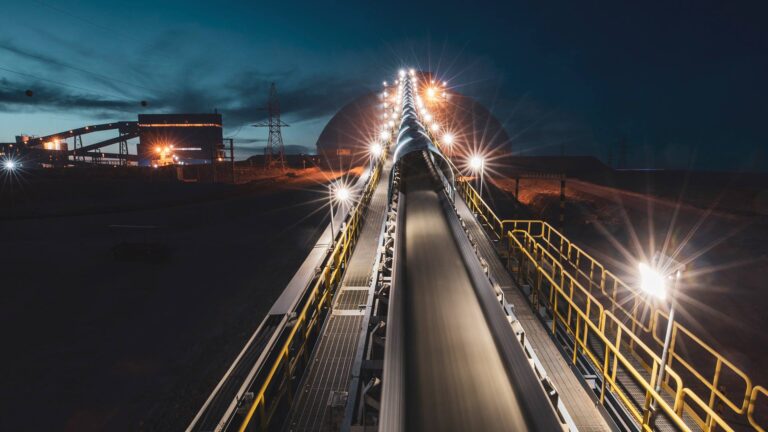
“Our solid financial results demonstrate clear progress as we embed our stronger, sharper and simpler way of working. We achieved an 8% uplift in CuEq production1 driven by the ongoing ramp-up of the Oyu Tolgoi underground copper mine and record iron ore production since April from our Pilbara operations. This strong operational performance, together with a diversifying portfolio and firm cost discipline, underpinned a 9% increase in underlying EBITDA to $25.4 billion and operating cash flow of $16.8 billion. We delivered stable underlying earnings of $10.9 billion, after taxes and government royalties of $10.4 billion2.
“We continue to invest in delivering industry-leading, value-accretive growth, supported by our disciplined capital allocation and best-in-class project execution. We remain on track to achieve 3% CAGR in CuEq1 production to 2030. At the same time, the structural cost improvements underway today position us for higher margins and cash flow. With a high-quality pipeline, anchored in copper, we have clear visibility to extend this growth profile well into the next decade.
“Our strong cash flow and balance sheet enable us to sustain a 60% payout ratio with a $6.5 billion ordinary dividend, making it the tenth consecutive year at the top end of the range.”
1. Executive Summary
• Net cash generated from operating activities of $16.8 billion up 8% and underlying EBITDA of $25.4 billion up 9%. Results were underpinned by our operational excellence and disciplined cost management, and rising contributions from copper and aluminium.
• Profit after tax attributable to owners of Rio Tinto of $10.0 billion.
• Ordinary dividend of $6.5 billion, a 60% payout, ten-year track record at top end of range.
• Key project execution milestones in 2025:
◦ Oyu Tolgoi copper underground development project now complete
◦ Simandou high grade iron ore first ore shipment in December
◦ Western Range iron ore replacement mine opened on time and on budget
◦ Construction commenced at three further Pilbara iron ore brownfield mines
◦ Arcadium acquisition closed ahead of schedule in March: focused on delivering
in-flight lithium projects in Argentina and Canada
1 Copper equivalent volume = Rio Tinto’s share of production volume / Volume conversion factor x Product price ($/t) / Copper price ($/t). Prices are based on long-term consensus prices. 2 In 2024, taxes and government royalties were $8.2 billion.
| Year ended 31 December | 2025 | 2024 | Change |
| Net cash generated from operating activities (US$ millions) | 16,832 | 15,599 | 8 % |
| Purchases of property, plant and equipment and intangible assets (US$ millions) | 12,335 | 9,621 | 28 % |
| Free cash flow1 (US$ millions) | 4,025 | 5,553 | (28)% |
| Consolidated sales revenue (US$ millions) | 57,638 | 53,658 | 7 % |
| Underlying EBITDA1 (US$ millions) | 25,363 | 23,314 | 9 % |
| Underlying earnings1 (US$ millions) | 10,868 | 10,867 | – % |
| Profit after tax attributable to owners of Rio Tinto (net earnings) (US$ millions) | 9,966 | 11,552 | (14) % |
| Underlying earnings per share (EPS)1 (US cents) | 669.2 | 669.5 | – % |
| Ordinary dividend per share (US cents) | 402 | 402 | – % |
| Underlying return on capital employed (ROCE)1 | 16% | 18% | |
| Net debt1 (US$ millions) | 14,362 | 5,491 | 162 % |
1 This financial performance indicator is a non-IFRS (as defined below) measure which is reconciled to directly comparable IFRS financial measures (non-IFRS measures). It is used internally by management to assess the performance of the business and is therefore considered relevant to readers of this document. It is presented here to give more clarity around the underlying business performance of the Group’s operations. For more information on our use of non-IFRS financial measures in this report, see the section entitled “Alternative performance measures” (APMs) and the detailed reconciliations on pages 38 to 45.