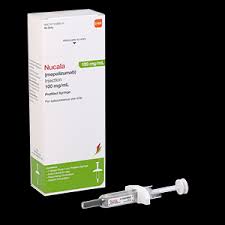
GSK plc (LON:GSK, NYSE: GSK) has announced that China’s National Medical Products Administration (NMPA) has approved Nucala (mepolizumab) as add-on maintenance treatment of adult patients with inadequately controlled COPD characterised by raised blood eosinophils.
· Nucala is the first and only monthly biologic approved in China studied in a wide COPD population with blood eosinophil count (BEC) starting as low as 150 cells/µL
· Approval based on the positive MATINEE and METREX phase III trials
· MATINEE data included reduction of exacerbations leading to hospitalisation and/or emergency department visits
· Of patients inadequately controlled on inhaled triple therapy, 67% have a blood eosinophil count above 150 cells/µL
The approval was based on data from the positive MATINEE and METREX phase III trials. Across these trials, mepolizumab showed a clinically meaningful and statistically significant reduction in the annualised rate of moderate/severe exacerbations versus placebo plus standard of care in a wide spectrum of COPD patients with an eosinophilic phenotype. The incidence of adverse events was similar between placebo and mepolizumab groups.
Mepolizumab is the first and only monthly biologic approved in China and evaluated in COPD patients with a BEC starting as low as 150 cells/µL. Around 100 million people in China have COPD. Among those who continue to exacerbate despite inhaled triple therapy, about 67% have a BEC above 150 cells/µL.1,2 Recurrent exacerbations accelerates disease progression, higher hospitalisation and readmission rates, increased mortality and greater health system burden.3,4 COPD deaths in China represent over 30% of global COPD mortality.3
Kaivan Khavandi, SVP & Global Head, Respiratory, Immunology & Inflammation R&D, GSK said: “Given the high incidence of COPD in China and a mortality rate that is above the global average, there is a clear need for novel options to address COPD. The approval of Nucala offers patients in China a monthly add-on maintenance treatment to reduce exacerbations, including those leading to emergency department visits and/or hospitalisations which account for a large proportion of annual direct medical costs.”
In both MATINEE and METREX trials, mepolizumab demonstrated a statistically significant reduction in the annualised rate of moderate or severe exacerbations compared with placebo, in patients with an eosinophilic phenotype, when added to triple inhaled therapy [MATINEE: rate ratio 0.79, 95% confidence interval (0.66, 0.94), P=0.01] (AER mepolizumab = 0.80 exacerbations per year versus placebo = 1.01)] [METREX: rate ratio 0.82, 95% CI 0.68, 0.98, adjusted P=0.04] (AER mepolizumab = 1.40 exacerbations per year versus placebo = 1.71).5,6 In a pre-defined secondary endpoint in MATINEE, the annualised rate of COPD exacerbations requiring ED visits and/or hospitalisation was reduced in the mepolizumab group when compared with placebo [rate ratio 0.65; 95% CI (0.43, 0.96) nominally significant after adjustment for multiplicity] (AER mepolizumab = 0.13 exacerbations per year versus placebo = 0.20).
Mepolizumab is already approved in China as an add-on maintenance treatment for severe eosinophilic asthma in adults and adolescents aged 12 years and older, as well as for adults with chronic rhinosinusitis with nasal polyps and eosinophilic granulomatosis with polyangiitis. It is currently approved for use in COPD in the US. Regulatory submissions are under review globally, including in Europe where mepolizumab was recently granted a positive CHMP opinion in COPD.
About MATINEE and METREX
Both MATINEE and METREX are phase III, randomised (1:1), double-blind, parallel-group trials assessing the efficacy and safety of mepolizumab 100 mg as add-on therapy, administered subcutaneously every 4 weeks versus placebo in addition to optimal inhaled triple therapy (dual long-acting bronchodilators plus inhaled corticosteroid).5
MATINEE assessed the efficacy and safety of mepolizumab for 52-104 weeks, in 804 patients with COPD with evidence of type 2 inflammation, characterised by an elevated blood eosinophil count (≥300 cells/µL at screening and ≥150 cells/µL in the past year). Patients could participate with a range of clinical presentations of COPD including chronic bronchitis only, emphysema only or a combination of both.
In METREX, the efficacy and safety of mepolizumab was evaluated for 52 weeks in 836 patients randomised (1:1) to mepolizumab or placebo across two groups, the eosinophilic phenotype group (blood eosinophil count of ≥150 cells/µl at study entry or ≥ 300 cells/µl within the past year) or the non-eosinophilic phenotype group (blood eosinophil count of <150 cells/µl at study entry and no evidence of ≥300 cells/µl within the past year).
References
1. Wang C, et al. Lancet. 2018 Apr 28; 391(10131):1706-1717. 2.Yin P, et al. Chest. 2016; 150(6):1269-1280.
2. GSK, Optum Analysis DOF (DOF 2024N562932_00).
3. Yin P, et al. The Burden of COPD in China and Its Provinces: Findings From the Global Burden of Disease Study 2019. Front Public Health. 2022 Jun 3;10:859499. DOI: 10.3389/fpubh.2022.859499.
4. World Health Organisation (WHO). Advancing COPD care in China through a comprehensive approach. Available at: https://www.who.int/news-room/feature-stories/detail/advancing-copd-care-in-china-through-a-comprehensive-approach#:~:text=China%20has%20almost%20100%20million%20people%20living%20with,for%20more%20than%200.9%20million%20deaths%20in%202013. Last accessed December 2025.
5. Sciurba F, et al. Mepolizumab to prevent exacerbations in COPD with an eosinophilic phenotype. N Engl J Med. Apr 2025;392:1710-1720. Available at nejm.org.