Great Western Mining Corporation plc (LON:GWMO) Chief Executive Officer Edward Loye caught up with DirectorsTalk to share his outlook on the company’s direction, project potential, and the opportunity in critical minerals and precious metals based in Nevada.
Q1: As you’ve announced, you’ll be joining Great Western Mining on the 1st February. Edward, what stood out to you about the company and why was this opportunity the right one for you?
A1: It’s the right commodities in the right place at the right time. Great Western have gold, copper, and tungsten in Nevada today. The company have a great core team, they’re embedded, well established in Nevada, and of course, Nevada being consistently ranked as a highly regarded mining jurisdiction.
So, the opportunity for me?
Well, there’s a real opportunity here. This is a rare opportunity to be involved with a project that has assets in both precious metals and in critical minerals in such a favourable jurisdiction. I really think the project, and the company is undervalued and there’s so much potential for growth and value add.
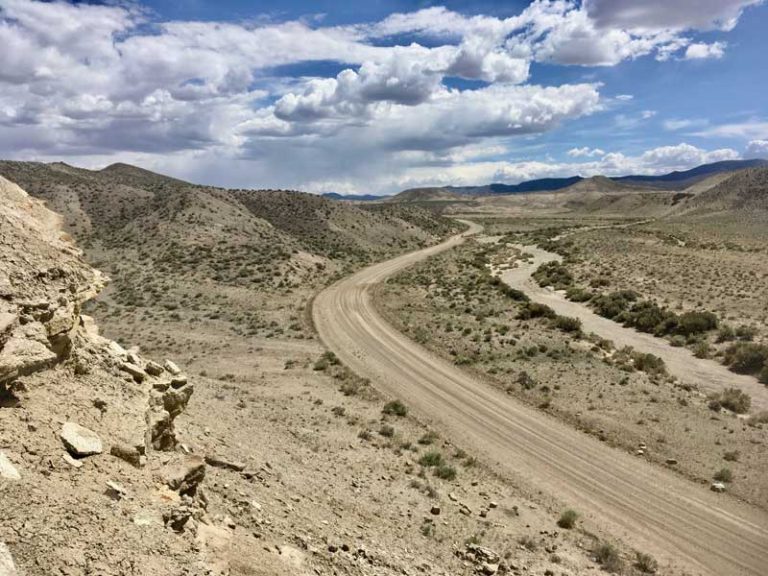
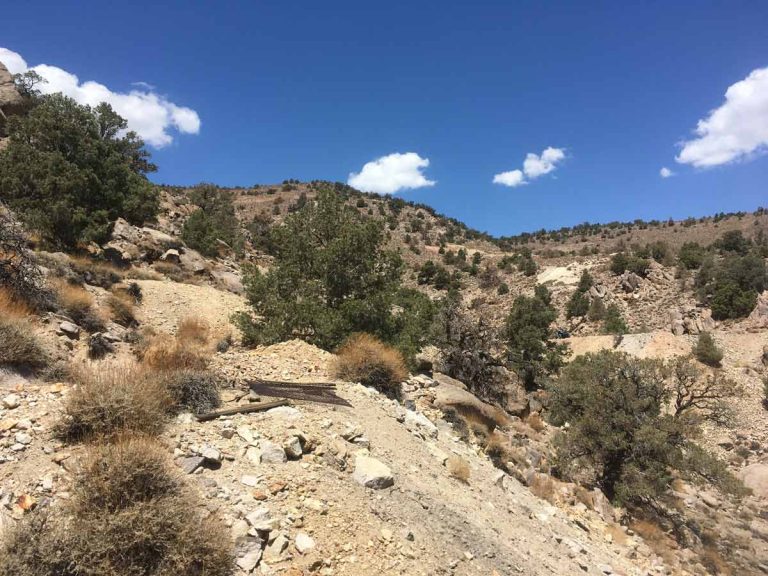
Mineral County, where most of the company’s assets are located, is so underexplored in terms of application of modern geological exploration and geo-metallurgical de-risking. It’s a fantastic opportunity to develop and add value.
Q2: Could you give our viewers a quick overview of your professional background and what experience you feel will be most valuable as you step into the role of CEO?
A2: I’ve been involved in the mining industry, as well as geology as a science for 20 years now. After graduating 20 years ago, I held a few junior positions in tungsten and tin projects and I returned to Camborne School of Mines, University of Exeter, 15 years ago to undertake not one, but a series of master’s degrees in Mining Geology and Applied Mineralogy.
After that, I remained as a member of staff for a number of years, and this gave a really good foundation for me because I always had this drive to set up my own mining junior company. They were there as a backup while I was developing my first project, a rare earth element deposit in Namibia 10 years ago, which I spun out of, obviously, my experience and knowledge working at the university in the rare earth space.
Of course, I learned so much about the industry firsthand by doing everything really from fundraising, making websites, drill planning, communicating with local communities, local governments, geophysics programmes, overseeing drilling campaigns and undertaking metallurgical test work. And everything else related. So, that’s been great.
Since then, I’ve been involved in some other UK and EU funded projects in not only the rare earth space, but other magnet materials and commodities such as tin, tungsten, zinc, indium. So, there’s a lot I can bring to Great Western.
Over the years, I have spent a lot of time in the desert states of the US, Arizona particularly, so I’m used to the legislature and the way of life out in the desert. I love that area as much as I love the Namib as well in Namibia, I love the desert states in the US. So much potential. The desert is like an open book. It’s a geologist’s dream in terms of reading the rocks and exploring the potential.
Q3: So, once you formally step into the role, what are the two or three strategic priorities that you’d be most focused on? And why those in particular?
A3: I don’t think we will substitute one project over another because obviously there’s lots of potential here across the group’s assets, whether that’s the gold, the copper or all the tungsten. But it’s the latter, the tungsten that I’m very keen to bring to the fore, notably because it has analogous properties similar to other tungsten plays in the region. So, really looking forward to bringing that to the fore.
Of course, we are going to be receiving results from West Huntoon and keen to show the porphyry driver for that mineralisation and of course, we have results coming in from OMCO, the Olympic mine at the Rhyolite Dome, which is a satellite to that deposit. Historically, that was very well endowed with gold, around 23 grams per tonne so we’re keen to see how those results stack up.
Great Western have their existing copper resource at M2 and there’s the Eastside project and the mill, which I think will be put on the back burner while we prioritise some of these primary assets.
So, to recap, I think tungsten will be the lead priority immediately but of course, we will concurrently continue the delineation of West Huntoon and OMCO and there is the potential to look at extending the M2 licence, for example.
Q4: Given the current geopolitical environment, are there particular commodities that you believe a US-focused resource development company like Great Western Mining is especially well positioned to benefit from?
A4: As we all know, the current administration in the US wants to reshore a lot of primary production in terms of raw materials, especially critical and strategic minerals, and obviously the midstream processing for those materials. This wasn’t a single political term position, the previous administration in the US was very keen on reshoring what is Joe Biden’s Inflation Reduction Act.
This has so much potential where we are positioned, notably because of its mining friendly jurisdiction, and the fact that tungsten is so important when it comes to defence, as well as manufacturing and tooling. There’s also the future energy security side of things as fusion reactors come to the fore, there’s no substitute for tungsten in that plasma facing material in the reactors.
Obviously bringing it back to now, tungsten price is driven by the Chinese and there is a need to control the strategic assets. So, hence why US government is very interested in tungsten at the moment. You’ve got APT prices at $800 per metric tonne unit, that’s remained quite strong, even though tungsten had a breakout year last year, that’s still remaining strong because of these, not single pressure, but lots of different reasons why tungsten is in such demand.
We can’t forget gold, obviously gold is doing well, all-time highs again, benefiting from the kind of uncertainty politically at the moment and of course, we’re keen to see what the results are like from our Rhyolite Dome project.
So, we’re covering quite a few commodities here that are front and centre right now in a lot of those conversations, and in the right state to develop these things.
Not to forget copper, of course, what with the demand surging and a shortage of new discoveries out there.
Q5: You’ve spent time on the site over recent weeks and months. What insights could you share with investors about operating in Mineral County and what differentiates it as a mining jurisdiction?
A5: It’s called Mineral County for a start, so it tells you everything you need to know. You couldn’t have a better poster child than Mineral County in Nevada. You have the military town of Hawthorne, that has actually been earmarked as a stockpiling site for critical minerals. You have the Walker Lane belt, this prolific belt that runs north to south through Mineral County and it’s related to some of the most iconic mines in the world, such as the Comstock Lode. So, well-endowed with gold and silver, obviously countless ghost towns and what have you. There’s so much potential here.
A lot of these old mines employed very antiquated methods in terms of their mining technologies and many of these areas haven’t been revisited with a modern geological outlook or geo-metallurgical de-risking. So, there’s so much potential here.
Active now in Mineral County, we have mines such as the Rawhide Sets, we have Isabella Pearl Mine, the Santa Fe Mine and proximal to us, we have Guardian Metals’ Pilot Mountain, of course. They’re only 30 miles away from us.