Ferro-Alloy Resources Limited (LON:FAR), the vanadium producer and developer of the large Balasausqandiq vanadium deposit in Southern Kazakhstan, has today announced that it has started production of ferro-molybdenum and vanadium pentoxide.
In October 2020, the Company started to recover molybdenum in the form of calcium molybdate as a by-product during the recovery of vanadium from bought-in raw-material concentrates. Calcium molybdate was sold at a discount to the published price for the contained molybdenum. The Company is now converting this calcium molybdate to ferro-molybdenum which will enable the Company to avoid the discount.
The Company has also commissioned the equipment to convert ammonium metavanadate (AMV) into vanadium pentoxide. Formerly, the AMV was sold at a small discount to the published price of the contained vanadium pentoxide. Some amounts will continue to be sold as AMV in order to satisfy existing contracts, but increasing amounts will be converted to vanadium pentoxide, thus eliminating the discount for AMV.
The material remaining after extraction of the vanadium and molybdenum products from the vanadium-bearing concentrates contains quantities of nickel which the Company has been selling as a low-grade concentrate. All of this material is now being sold and there are no remaining tailings or other residues remaining on site from operations.
The Company is now offering for sale:
· Ammonium metavanadate (AMV)
· Vanadium pentoxide
· Ferro-molybdenum
· Nickel concentrates
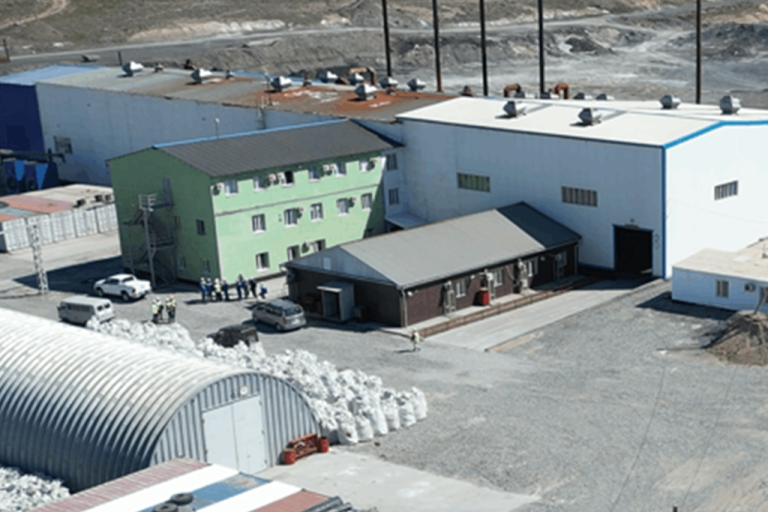
The Company has contracted for delivery of an electric arc furnace, expected to be commissioned in the first half of 2022. This will be the last step in the current plans for the existing processing operation which is expected to bring vanadium production up to 1,500 tonnes (vanadium pentoxide equivalent) per year, as well as greatly reducing costs to make ferro-vanadium and enabling the production of ferro-nickel. The necessary connection of the plant to a high-voltage powerline and a 1,000 square metre process-plant extension have already been built in readiness for this equipment.
Nick Bridgen, Ferro-Alloy Resources CEO, commented: “This low cost, revenue-generating step completes our current product line-up and allows us to extract the maximum value of the vanadium and molybdenum from our raw-materials. Together with our low Kazakhstan operating costs, this enables us to be amongst the most efficient producers of vanadium from secondary raw materials
“We look forward to the addition of the electric arc furnace which will complete our plans for the existing plant, the earnings from which will contribute to the ongoing development of the main Balasausqandiq project.”