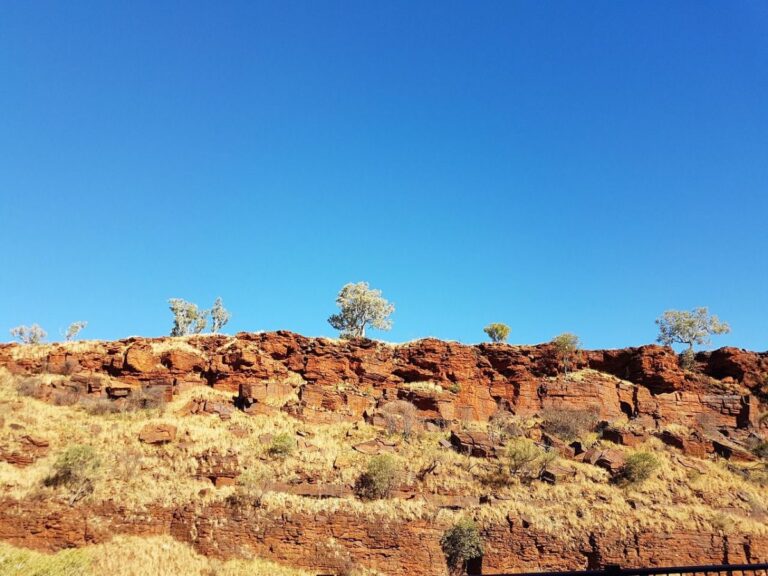
Rio Tinto plc (LON:RIO) has published the board review of cultural heritage management, following the destruction of the Juukan rockshelters in May 2020 (https://www.riotinto.com/news/inquiry-into-juukan-gorge). The review details what elements of Rio Tinto’s systems, decision-making processes and governance failed to work as they should have and sets out recommendations to prevent a similar incident occurring in the future.
The board review builds on Rio Tinto’s submission to the Inquiry by the Australian Parliament’s Joint Standing Committee on Northern Australia. While the submission sets out details of Rio Tinto’s relationship with the Puutu Kunti Kurrama and Pinikura people (PKKP) from 2003 to 2020 and the circumstances that led to the events that occurred in the Juukan Gorge, the board review addresses why it happened and how Rio Tinto can improve internal processes and practices within Iron Ore and across Rio Tinto.
The board review concluded that while Rio Tinto had obtained legal authority to impact the Juukan rockshelters, it fell short of the Standards and internal guidance that Rio Tinto sets for itself, over and above its legal obligations. The review found no single root cause or error that directly resulted in the destruction of the rockshelters. It was the result of a series of decisions, actions and omissions over an extended period of time, underpinned by flaws in systems, data sharing, engagement within the company and with the PKKP, and poor decision-making.
The review details a number of areas where Rio Tinto can improve, strengthen or amend practices, work culture and governance, including:
· Strengthening communities and heritage systems, processes and teams within operations to ensure that heritage issues are accorded equivalent priority alongside safety and operational performance. This includes improved processes for escalating heritage issues to more senior decision-making levels and the need for a greater prioritisation of partnerships and relationships with Traditional Owners and First Nations people from senior operational leaders and teams;
· Strengthening oversight of operational, communities and heritage practices and performance by establishing a new Social Performance function reporting to the Group Executive, HSE, Technical and Projects. This aims to ensure that communities and heritage issues are managed with the same rigour and discipline as applies to health, safety and the environment. This team will regularly review the operational performance of communities and heritage at Rio Tinto’s global operations in accordance with our standards and provide best practice sharing and knowledge;
· Strengthening the Group’s audit capability through the introduction of more effective internal audits to ensure conformance with Rio Tinto and independent International Heritage Standards and Guidelines; and
· Strengthening board oversight and assurance to enhance governance and overall accountability.
In light of the findings of the review, the board has decided that J-S Jacques, chief executive; Chris Salisbury, chief executive of Iron Ore; and Simone Niven, Group Executive, Corporate Relations, will not receive a performance-related bonus for 2020 under the company’s Short-Term Incentive Plan (STIP). In addition, J-S’s 2016 Long-Term Incentive Plan (LTIP) award, that is due to vest in the first half of 2021, will be reduced by £1 million (subject to vesting). The rationale for this decision is outlined in the Addendum to the review.
The review findings complement and continue to inform Rio Tinto’s ongoing cooperation with the Inquiry by the Joint Standing Committee on Northern Australia. Rio Tinto also continues to support the West Australian Government’s planned reform of the Aboriginal Heritage Act 1972 (WA).
The review is available at https://www.riotinto.com/news/inquiry-into-juukan-gorge.
Notes to editors
Based on last year’s STIP payments and the current share price, the effect of these decisions is forecast to reduce the pay of each individual (to be disclosed more fully in Rio Tinto’s 2020 remuneration report) as follows:
| STIP * | LTIP** | |
| J-S Jacques | £1,701,000 | £1,000,000 |
| Simone Niven | £525,000 | N/A |
| Chris Salisbury | A$1,106,000 | N/A |
* Indicative figures, using 2019 actual STIP earned as a proxy.
** Reduction to be applied to the vesting of the 2016 LTIP award, subject to performance.
Simon Thompson, chairman of Rio Tinto, said “While the review provides a clear framework for change, it is important to emphasise that this is the start of a process, not the end. We will implement important new measures and governance to ensure we do not repeat what happened at Juukan Gorge and we will continue our work to rebuild trust with the Puutu Kunti Kurrama and Pinikura people.
“We fully recognise traditional owners must be treated as equal partners which includes regular, open and respectful dialogue. We look forward to continuing our engagement with the PKKP on a joint initiative to learn the lessons from Juukan and to strengthen our partnership.
“It is clear that no single individual or error was responsible for the destruction of the Juukan rockshelters, but there were numerous missed opportunities over almost a decade and the company failed to uphold one of Rio Tinto’s core values – respect for local communities and for their heritage. We are determined to learn, improve and rebuild trust across various internal and external partners. I look forward to working with J-S, Chris and Simone to drive change and improvements in order to re-establish Rio Tinto’s credentials and strengthen heritage management across the business”.