XP Factory plc (LON:XPF) Chief Executive Officer Richard Harpham caught up with DirectorsTalk to discuss company’s interim results and share insights on brand performance, financial highlights, and strategic plans for the year ahead.
Q1: Richard, a very good performance from XP Factory in difficult markets. Could you just walk us through the key financial highlights from the period?
A1: We’re actually really pleased with the numbers. It has been a very, very tough period for the sector so for us to see growth in all the key areas, I think is a real testament to the team.
So, at a high level for the group, we’ve seen a sales increase of 13% year-over-year, so £28 million of sales, 25% in the prior year and that’s flowed through to a pre-IFRS 16 EBITDA, that is old school EBITDA as I refer to it, of £1.7 million, £1.5 in the prior year, so again up 15%. The market’s certainly been very, very challenging for our sector. Consumer sentiment, in fact, in sectors more broadly has been really tough so with all those things as given, I’d say that’s been a really strong place to open.
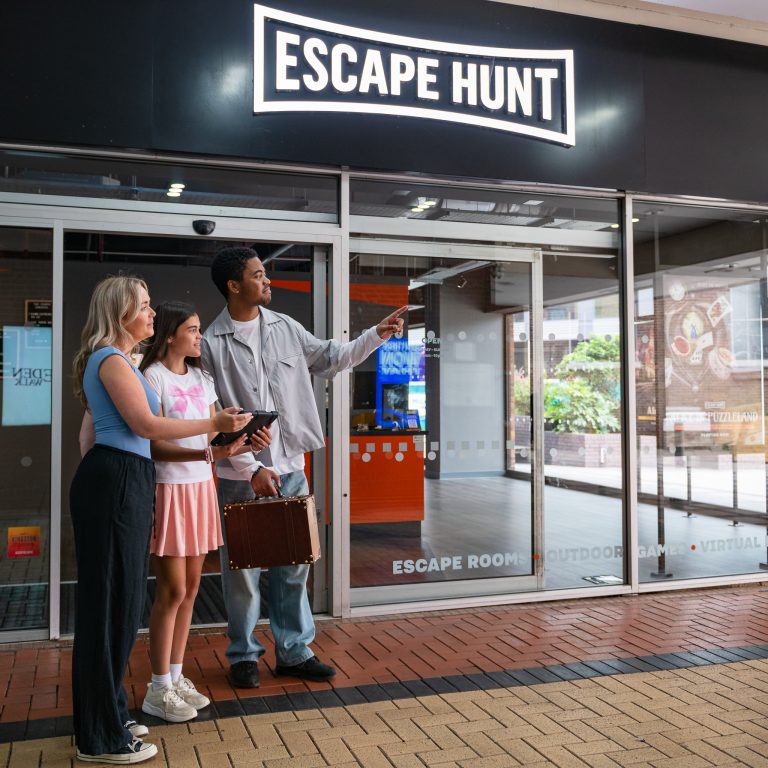
Within that, we’ve got some good performances from each brand. Escape Hunt has just continued to surprise and delight now for quite a really prolonged period of time, Escape Hunt grew 13% to £7.3 million worth of sales and converted, again, out of 40% EBITDA, so really, really good level of conversion in that business at a site level. Actually, remarkably, saw almost 2% of positive like-for-like, which against the sector is a step change.
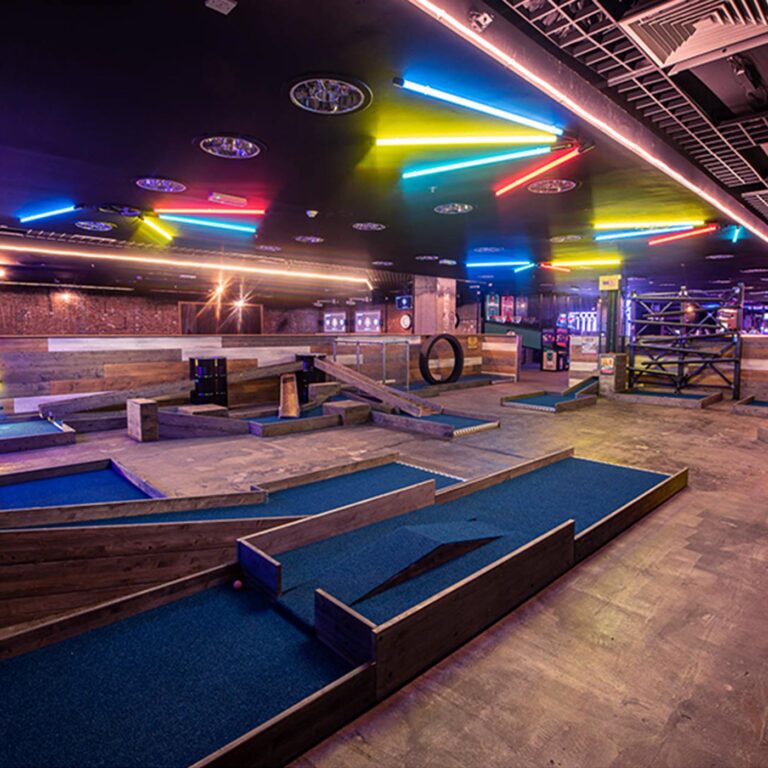
On the Boom side, we were 16% up on sales, so we hit £20.5 million worth of sales, 16% up over a year but in that business, that growth was born more of some very successful new sites opening. So, in Reading and in Cambridge, which are not yet like-for-like, as the like-for-likes in that business were negative 6.8 so quite a long way ahead of the sector, but nonetheless negative like-for-likes. I suppose that’s the advantage of having new sites coming in and really bolstering those numbers. So nevertheless, we saw sales increase by 16% in that business.
I think the thing that’s really exciting about the Boom business is, despite like-for-likes being negative for the period, we nevertheless improved our EBITDA margins from 11.8% to 12.8% and that is a function of a couple of key drivers, really. It’s a function of getting a very much enhanced supply deal on our drinks, we’ve talked about that previously, so I won’t go too far into the detail of that again, but that’s really made a big difference to us. It has had a laser focus on peripheral operating costs to really kind of make sure that we are operating as lean as we can whilst not taking anything away that would impact customer service. So, seeing a percentage move in EBITDA in that business positively in such a tough market feels like a real win, actually.
Q2: Just starting with Boom, what would you highlight as the main drivers of performance for this half?
A2: Well, as I say, it’s been a continued focus on trying to do the best that we can for customers. Obviously, that does, even in a very tough market, that perhaps becomes more important than ever. So, that constant focus is very much a thing that we do as a business.
As I say, we have definitely benefited from our revised strategy, I would say, on Boom. About a year and a half ago now, we came out and we said that, look, we will do fewer Boom sites than we had perhaps suggested we would do before, but we will make sure that those new sites we do open are better, as in, on average, they are in higher footfall areas, they are more densely populated, they’ve got the right mix of workers, etc. We’ve obviously learned a lot over the three years that we’ve been trading the brand.
Reading and Cambridge are two great testaments to that strategy. So, they’re newer sites for us, but they are in fantastic locations with exactly the right demographics. Both of them have hit the ground running incredibly well and that’s been a real bolster to the numbers. So, as I say, whilst we might have had some negative lights over here, seeing really positive additions from new sites that have far exceeded our own expectations has kind of been the balance. That’s been really important.
As I’ve already mentioned, just that real hard focus on operational cost controls and keeping the operation balanced has been the thing that’s driven the success.
Q3: Just turning to Escape Hunt, what were the main highlights there?
A3: As well as I say, Escape Hunt has just performed extraordinarily well again, against a really tough backdrop. Seeing positive likes for likes in the current environment is just extraordinary, I would suggest and doing that whilst also delivering 40% EBITDA in the first half is wonderful. As has always been the case in Escape Hunt, the customer sentiment towards that business remains incredibly strong. It has been an incredibly well received business by customers ever since we opened and that’s continued again with a 99% positive satisfaction score in that business.
I think we’ve just found this wonderful, sweet spot where we operate in a sector as very much the market leader, as very much the premium player, as very much the gold standard experience within the escape room industry. I think that’s really coming to bear and has come to bear. It obviously worked fabulously for us in the good times and is seemingly working well for us in the harder times right now. So, it really is a very special crown jewel in the business.
Q4: Now, I see that you’ve announced a new three-year £20 million revolving credit facility with HSBC. What does that mean for XP Factory?
A4: Well, in and of itself, you won’t see too much changing, certainly not changing as a result of the financing coming in.
The desire to put a new facility in place was born actually of two things really; it was born of a desire to have a longer-term facility in place. This is three years with the extension to roll for an additional two and what that means is you’ve just got far more stability, you can make longer-term planning decisions, and you don’t need to keep on coming back around thinking about refinancing existing deals, etc. So, on the one hand, that was a really good reason to do it. I should say that obviously therefore the doubling of the facility is simply an acknowledgement, if you like, that we expect EBITDAs to grow quite significantly over the next three years. And then we have a facility that is large enough for us to roll into while still maintaining that maximum one times EBITDA to debt ratio that we’ve talked about so far. So, it’s really giving us a runway to come into.
Obviously, the second thing was that we felt that we have delivered some very strong results in the markets post the original facility being put in place. Off the back of that, we figured that we should be viewed as a lower risk now than where we were when we took that initial facility quite early on in our story, and therefore, we figured that we should be able to get quite materially better rates on those numbers.
You’ll see quite materially improved rates on that debt, such that actually the cost to service a £20 million facility is actually quite significantly lower than the pre-existing cost that we had in place to service one of 10. So, those two things together have been, I think, really encouraging and I would suggest a really good sort of testament to the way that HSBC are viewing XP and our numbers and indeed the team’s performances.
Q5: Just looking ahead, what can investors expect from XP Factory over the next year?
A5: I think we’re in a really interesting and, if I might say, quite fortunate position right now in so far as I think we have options strategically. We’ve gone out previously a couple of years back and said, what we expect to do with the business is get out a run rate of £100 million worth of sales and a run rate of £15 million of EBITDA and we think we can do that and certainly, with the debt facilities in place, we believe we can do that. That would look like us doing quite a significant number of Escape Hunts, really taking that business in round numbers from £15 million of sales to £30 million in round numbers and moving Boom at a lower pace, as we’ve just discussed fewer but better sites, probably moving that business from £45 million through to £60 million. So, that’s how we would see the kind of the plan unfolding and that’s what we have talked about quite a lot before.
The reason that’s really attractive for us is because historically we’ve made around 50% return on capital, so it clearly makes a lot of good sense to be putting money into new sites. I think the thing that has afforded us in some respects a little bit of luxury is that whilst that makes a whole lot of sense from an investment thesis, and whilst we clearly see the sites and we’re able to go after them and they exist and we know we can achieve them and we have the funding to do so, I think with consumer sentiment in the UK being pretty negative at the moment, and indeed investor sentiment per se into consumers certainly being fairly negative, what that’s done is presented two kind of dynamics.
One, it’s probably taken a little bit of the impetus out of needing to go after new sites really, really quickly. I think before we felt that you really wanted to go at your number, get your sites done, get them open, because there was a load of people, there were a load of competitors vying for great sites and so on, and we feel that’s backing away a little bit. So, quite that impetus is possibly a little bit lower.
What that means that when we look at where our share price is and we think about that in the context of free cash generation, to give you an example, we talk in our statement for the first half of having generated £1.4 million worth of free cash. Now, I should make the point that in H1, we will typically generate probably only 25% of the cash that we’ll generate in the full year. Obviously, Christmas is a really big deal for us. But if you take that £1.4 million of free cash and you say we only do the same as that in H2, so we’re at £2.8 million of free cash, that versus our market cap represents about 15% free cash flow yields. Indeed, if you took a more likely outcome, which says we make three times the free cash in H2 versus H1, so therefore we max out and we’re at £5.6 million rather than £2.8 million, that represents a 30% free cash return on our equity.
So, when you look at that, and you look at the slowing of the impetus to take sites quickly, and you look at where the view is on consumer per se, it really does bring back into the crosshairs this idea that it might make more sense for us, at least in part, to be buying back our own shares. So, we’ve agreed as a Board to let Christmas trade out, to understand exactly how much free cash we have generated and then make a determination post that point on how much we will put towards buying back our own shares, because it feels like that is now something which is a very sensible thing to do.