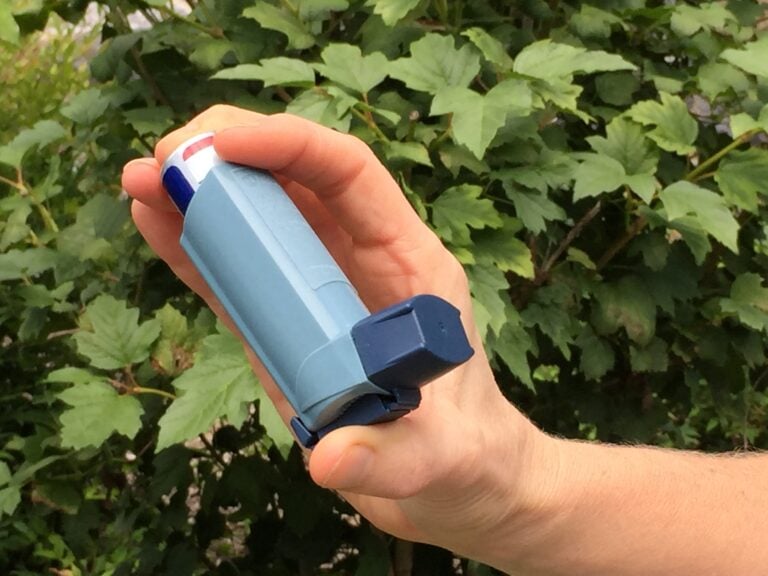
AstraZeneca plc (LON:AZN) has announced that PT027 has been recommended by FDA advisory committee as new rescue treatment for asthma.
The Food and Drug Administration’s (FDA) Pulmonary-Allergy Drugs Advisory Committee (PADAC) has voted 16 to 1 that the data support a favourable benefit risk assessment for the use of PT027 (albuterol/budesonide) for the treatment of asthma in people aged 18 years and older. In adolescents aged 12 to 17 years, the Committee voted 9 to 8 that the data do not support a favourable benefit risk assessment for the use of PT027 for the treatment of asthma. In children aged 4 to 11 years, the Committee voted 16 to 1 that the data do not support a favourable benefit risk assessment for the use of PT027 for the treatment of asthma.
PT027 is a potential first-in-class, pressurised metered-dose inhaler (pMDI), fixed-dose combination rescue medication in the US containing albuterol, a short-acting beta2-agonist (SABA), and budesonide, an anti-inflammatory inhaled corticosteroid (ICS). It is being developed by AstraZeneca and Avillion.
In the first half of 2022, the FDA accepted the New Drug Application (NDA) for PT027 and set a Prescription Drug User Fee Act date for the first half of 2023.
Bradley E. Chipps, Past President of the American College of Allergy, Asthma & Immunology and Medical Director of the Capital Allergy & Respiratory Disease Center in Sacramento, US, said: “Millions of people with asthma rely on their albuterol rescue inhaler to alleviate acute symptoms, but this does not treat the underlying inflammation, leaving patients at risk of severe asthma exacerbations, regardless of their disease severity or level of control. If approved, PT027 could transform the current rescue treatment approach.”
Mene Pangalos, Executive Vice President, BioPharmaceuticals R&D, AstraZeneca, said: “We are pleased that the Pulmonary-Allergy Drugs Advisory Committee has recognised the potential for PT027 to deliver important benefits for people with asthma, as a first-in-class treatment option in the US. We look forward to working with our partner Avillion and the FDA to progress the application and discuss next steps, including for adolescents and children.”
Asthma is a chronic, inflammatory, variable respiratory disease that affects as many as 339 million people worldwide,1 including over 25 million in the US.2 Globally, more than 176 million asthma attacks are experienced each year.3
The NDA submission was based on results from the MANDALA, DENALI and TYREE Phase III trials.4-7 In MANDALA, PT027 significantly reduced the risk of severe exacerbations compared to albuterol in patients with moderate to severe asthma when used as an as-needed rescue medication in response to symptoms.4,5 In DENALI, PT027 significantly improved lung function compared to the individual components, albuterol and budesonide, in patients with mild to moderate asthma.6
The safety and tolerability of PT027 in these trials were consistent with the known profiles of the components.4-7
Results from the MANDALA trial were published in the New England Journal of Medicine in May 2022.4
PADAC reviews and evaluates available data concerning the safety and effectiveness of marketed and investigational human drug products for use in the treatment of pulmonary disease and diseases with allergic and/or immunologic mechanisms and makes appropriate recommendations to the Commissioner of Food and Drugs.
PT027
PT027 is a potential first-in-class SABA/ICS rescue treatment for asthma in the US, to be taken as needed. It is an inhaled, fixed-dose combination rescue medication containing albuterol (also known as salbutamol), a SABA, and budesonide, a corticosteroid, and is being developed in a pMDI using AstraZeneca’s Aerosphere delivery technology.