Thor Energy plc (LON:THR) Chief Executive Officer Andrew Hume caught up with DirectorsTalk to discuss the award of two new regulated substance exploration licence applications in South Australia and the strategic partnership with H2EX to expand the company’s natural hydrogen footprint.
Q1: Andrew, Thor Energy have been awarded two new regulated substance exploration licence applications in South Australia. What is it that makes these licences so special?
A1: We’re really pleased to have been awarded these RSELA’s, that stands for Regulated Substance Exploration Licence Applications. Numbers are 810 and 811, both in South Australia. So, these licences are like a logical and value-adding extension to our existing hydrogen and helium portfolio.
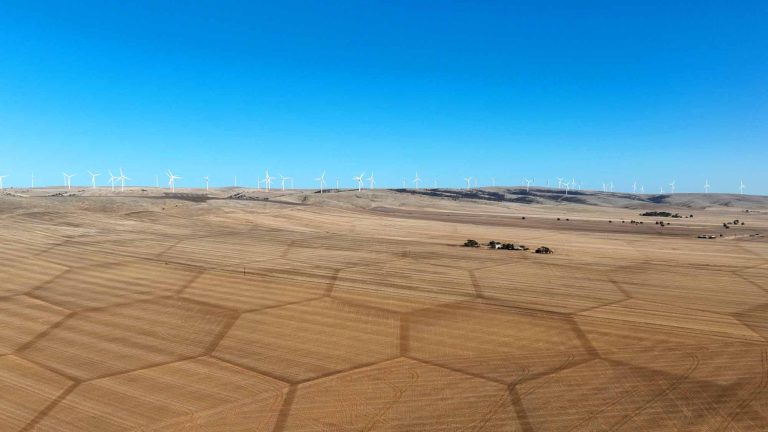
They’re located in the onshore Otway Basin in the southern part of the state and it’s a historical oil and gas-producing province, which still has remaining hydrocarbon potential. It’s also got a lot of compelling evidence to say that there’s a working natural hydrogen system there.
In particular, there was a well called Rogue One that was drilled more than a century ago, which found about 40% methane, about 25% hydrogen in the well, which at the time, of course, had no value, but now speaks to a multi-energy potential remaining in the basin. There’s undrilled structures, and particularly from a hydrogen point of view, there’s untested natural hydrogen plays.
The other thing is we benefit from a vast legacy data set that’s been acquired over the onshore Otway over the years. That allows us to rapidly and at low cost do our exploration, augmented by learnings from High Range project as well.
So, this new acreage, what we do is we’re continuing to build a scalable energy hydrogen footprint in the region.
Q2: Now, you’re partnering with H2EX on the new ventures. Can you explain for us your partnering strategy?
A2: Partnering with H2EX, it’s really exciting for these licences. H2EX are an unlisted company, but they’ve got an extensive exploration portfolio across both South Australia and Western Australia. They’ve also been very good at developing unique understandings about how to explore hydrogen, which augment our own and they’ve also demonstrated the ability to collaborate with academia and secure grant funding. So it’s really exciting to be working with them.
I guess by partnering with them, we’re combining the best of both worlds in a way where we’ve got both companies’ natural hydrogen know-how. There’s also a lot of oil and gas experience in there. That brings together a more commercial approach, which is really the fundament of why we decided to collaborate.
The natural hydrogen industry is still in its infancy, and we believe by applying the commercial frameworks of the traditional energy sector, it’s probably the best way to move these projects forward quickly, effectively to a viable, productive future.
So, this is really a strategic collaboration, at least for the Otway area for these licences and, as I say, bringing the best of both worlds to the projects.
Q3: Just before we finish, how do these licence applications impact your South Australian portfolio?
A3: Very constructively. South Australia is essentially the heart of Thor Energy’s operations. We have other assets in the Northern Territory and, of course, in the US but in South Australia, we have one of the most prospective natural hydrogen exploration portfolios in the world.
We’ve always been quite careful in how we brought that portfolio together. We feel it’s well balanced in terms of the risk profile, the scale potential, and also some of the diversity of plays, especially with these new licences coming in.
Of course, beyond hydrogen, we hold gas storage exploration licences, which are co-located with our High Range project and that allows us to investigate things quite naturally and quite efficiently.
So, while we’re exploring for natural hydrogen, we get information on the gas storage licences and vice versa. Gas storage is really interesting, because it could potentially liberate and allow us to get above commercial barriers for hydrogen once we get out to the exploration phase on our High Range licence. Of course, it has other potential in terms of natural gas storage, greenhouse gas storage as well.
A third element of our portfolio is the copper, the gold, and the rare earth element projects that we have. So, mainly, Alford East and Alford West are in the northern end of the Yorke Peninsula, and a project called Kapunda, which sits about 180 kilometres, approximately north, north northeast of Adelaide.
Ultimately, what we’re doing is Thor’s South Australian portfolio is connected by not just the fact that it’s all in South Australia, but it’s realising a clear exploration focus, which we believe leverages our exploration heritage, very much my side of things from an oil and gas point of view, but also the company’s longstanding mineral exploration focus.
So, we’re kind of at the intersection of conventional mining and advanced well extraction. I think Thor is uniquely positioned in South Australia to be able to unlock value across the resource spectrum. And then obviously to differentiate this out globally.