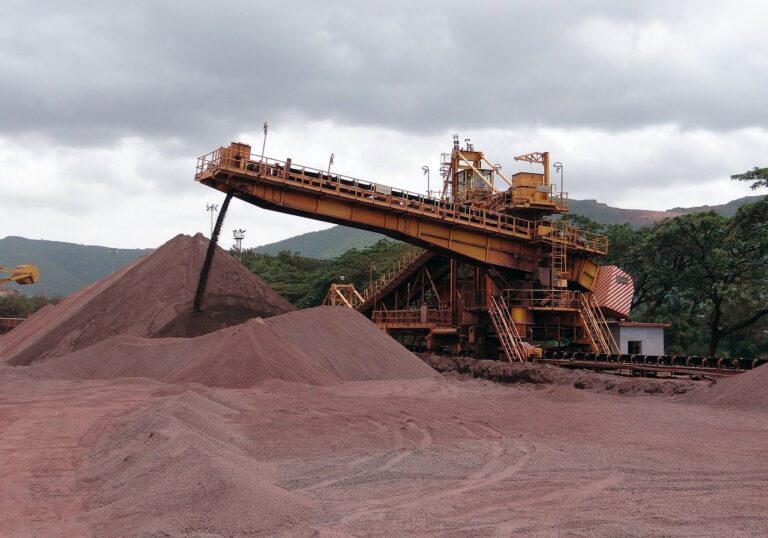
Rio Tinto plc (LON:RIO) has delivered first ore from the Gudai-Darri iron ore mine as the company brings online its first greenfield mine in the Pilbara, Western Australia, in more than a decade. Gudai-Darri will help underpin future production of the company’s flagship Pilbara Blend™ product.
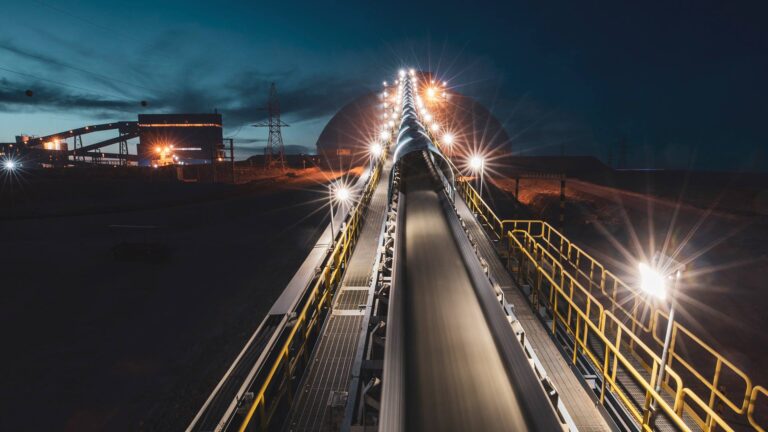
The first autonomous AutoHaul™ trains loaded with ore from Gudai-Darri’s process plant have travelled the new 166-kilometre rail line that connects to Rio Tinto’s existing rail and port infrastructure. Production from the mine will continue to ramp up through the remainder of this year and is expected to reach full capacity during 2023.
Since ground was broken in April 2019, more than 14 million workhours have resulted in the movement of over 20 million cubic metres of earth, batching and placement of 35,000 cubic metres of concrete, and the installation of 10,000 tonnes of steel. The development of Gudai-Darri supported more than 3,000 jobs during the construction and design phase. The mine will support around 600 ongoing permanent roles.
With an expected life of more than 40 years and an annual capacity of 43 million tonnes, Gudai-Darri will underpin future production of Pilbara Blend™ product. A feasibilty study to support an expansion of this new hub is also progressing.
The mine’s commissioning and ramp-up is expected to increase Rio Tinto’s iron ore production volumes and improve product mix from the Pilbara in the second half of this year. Full-year shipments guidance for 2022 remains at 320 to 335 million tonnes (100% basis) subject to risks around the ramp up of new mines, weather and management of cultural heritage.
The capital cost for the mine is estimated to be $3.1 billion (A$4.3 billion). As disclosed in February, the company’s replacement projects in the Pilbara, including Gudai-Darri, were subject to potential capital increases of approximately 15% due to ongoing COVID-19 restrictions, including labour access and supply chain quality issues. Group capital expenditure guidance for 2022 is unchanged at around $8 billion.
Rio Tinto Iron Ore Chief Executive Simon Trott said “The commissioning of Gudai-Darri represents the successful delivery of our first greenfield mine in over a decade, helping to support increased output of Pilbara Blend, our flagship product. It sets a new standard for Rio Tinto mine developments through its deployment of technology and innovation to enhance productivity and improve safety.
“I’d like to acknowledge the support of the Traditional Owners, the Banjima People, on whose country Gudai-Darri is situated. We have worked closely with the Banjima People to progress this project and we look forward to continuing to actively partner with them into the future.”
Rio Tinto Chief Technical Officer Mark Davies said “The safe and successful delivery of Gudai-Darri, in the midst of a global pandemic, is testament to the resilience and hard work of thousands of Rio Tinto employees and contractors, including a range of local Western Australian suppliers, as well as Pilbara Aboriginal businesses.
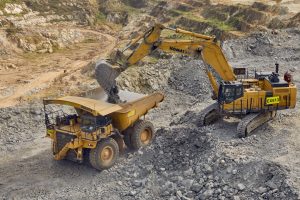
“In building this new hub we have brought together the best of our innovations, including autonomous trucks, trains and drills, as well as the world’s first autonomous water trucks, to make Gudai-Darri our most technologically advanced iron ore mine.
“This suite of autonomous assets complements the planned deployment of other leading-edge technologies including a robotic ore sampling laboratory, field mobility devices for all personnel and a digital asset of the fixed plant, which, together with data analytics, will make Gudai Darri safer and more productive.”
Helping support Rio Tinto’s carbon emission reduction targets, Gudai-Darri will be powered by a 34 megawatt solar farm that is expected to supply about a third of the mine’s average electricity demand once construction is complete in August.
Together with a new lithium-ion battery energy storage system in Tom Price, the solar plant is estimated to reduce annual carbon dioxide emissions by about 90,000 tonnes compared to conventional gas powered generation, equivalent to taking about 28,000 cars off the road.