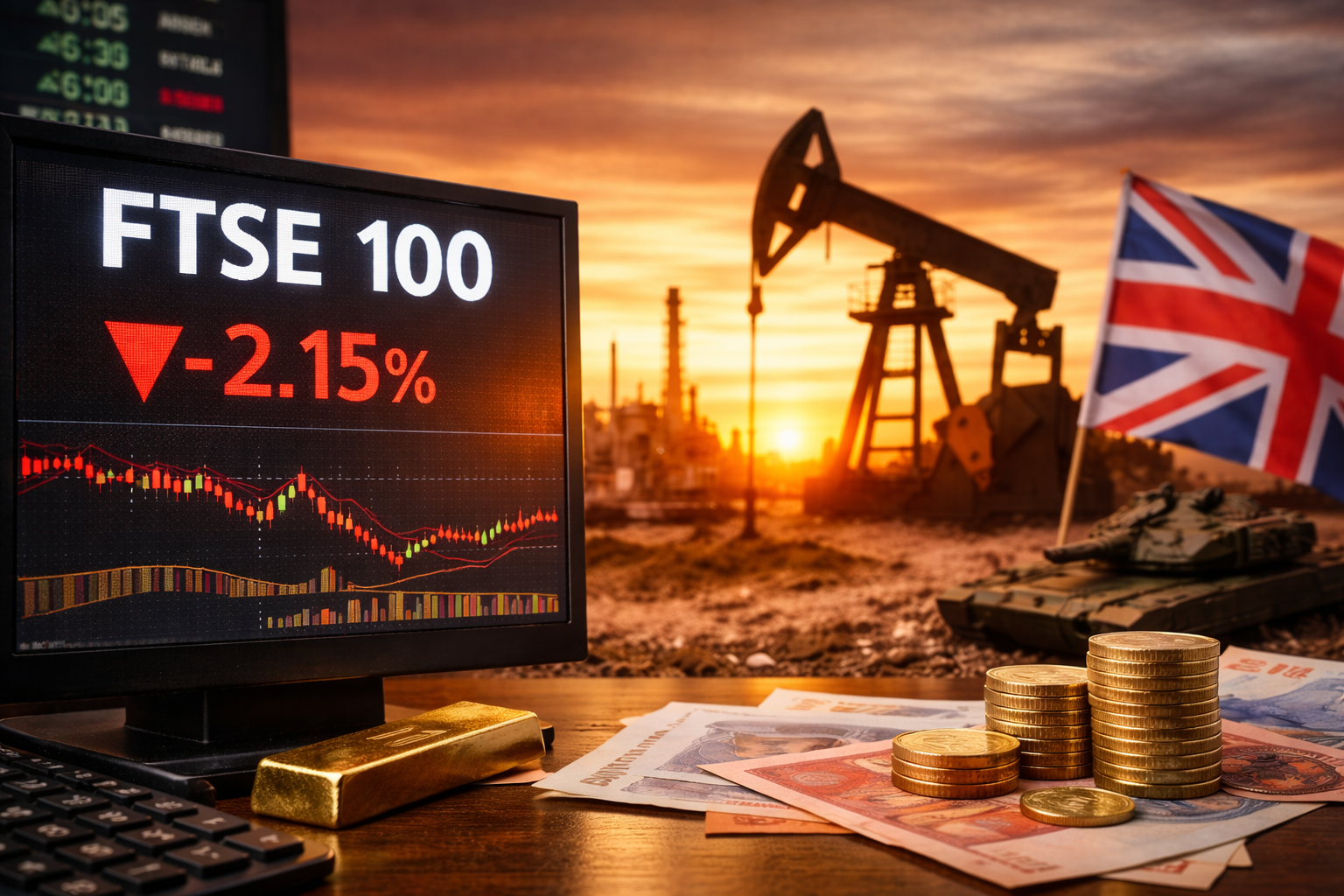
The FTSE 100 slid more than 2 per cent in Wednesday trading as escalating tensions in the Middle East and a sharp rise in oil prices weighed heavily on UK equities. London’s benchmark index fell towards the 10,500 level during afternoon trade, marking one of its steepest declines in recent sessions as investors reduced exposure to risk-sensitive sectors.
The sell-off followed intensified conflict in the region, raising concerns about potential disruption to key oil supply routes. Brent crude climbed above $80 per barrel, fuelling inflation worries and prompting investors to reassess global growth expectations. Higher energy costs can increase pressure on corporate margins and consumer spending, contributing to a more defensive market tone.
Energy Stocks Provide Partial Support
Despite the broader weakness, oil and gas majors traded firmer as the rise in crude prices improved revenue outlooks for the sector. The FTSE 100’s significant weighting towards global energy producers helped cushion the index from deeper losses, although gains in that segment were not enough to offset widespread declines elsewhere.
Defence-related shares also showed relative resilience as investors rotated towards areas perceived to benefit from elevated geopolitical risk.
Travel, Banks and Cyclicals Under Pressure
Travel and leisure stocks were among the largest fallers of the session, reflecting concerns that geopolitical instability could dampen international travel demand. Airline and hospitality names declined notably as markets priced in potential disruption and weaker consumer confidence.
Banking stocks also moved lower, pressured by the broader risk-off environment. Financial shares tend to be sensitive to shifts in economic outlook and investor sentiment, and the renewed volatility prompted selling across the sector.
Sterling and Inflation Concerns
Sterling weakened modestly against the US dollar, a move that can offer some support to multinational companies by boosting the value of overseas earnings when translated into pounds. However, this effect was overshadowed by global equity selling.
The surge in energy prices has also complicated expectations around interest rate policy. Investors are weighing whether sustained higher oil prices could feed back into inflation, potentially influencing the Bank of England’s policy stance in the months ahead.