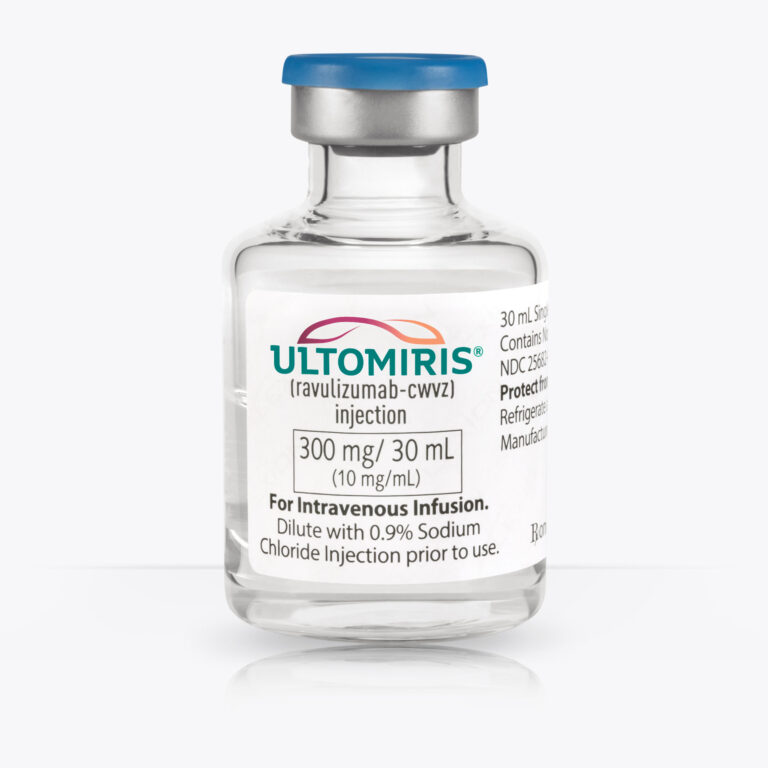
AstraZeneca plc (LON:AZN) has announced that Ultomiris (ravulizumab) has been approved in Europe as an add-on to standard therapy for the treatment of adult patients with generalised myasthenia gravis (gMG) who are anti-acetylcholine receptor (AChR) antibody-positive.
This decision marks the first and only approval for a long-acting C5 complement inhibitor for the treatment of gMG in Europe. gMG is a rare, debilitating, chronic, autoimmune neuromuscular disease that leads to a loss of muscle function and severe weakness.1 The diagnosed prevalence of gMG in the EU is estimated at approximately 89,000.2-8
The approval by the European Commission follows the positive opinion of the Committee for Medicinal Products for Human Use and is based on results from the CHAMPION-MG Phase III trial, which were published online in NEJM Evidence. In the trial, Ultomiris was superior to placebo in the primary endpoint of change from baseline in the Myasthenia Gravis-Activities of Daily Living Profile (MG-ADL) total score at Week 26, a patient-reported scale that assesses patients’ abilities to perform daily activities.9 Additionally, in prolonged follow-up results from the open-label extension, clinical benefit of Ultomiris was observed through 60 weeks.9
Renato Mantegazza, Professor at the Department of Neuroimmunology and Neuromuscular Diseases, Fondazione IRCCS Istituto Neurologico Carlo Besta, Milan, Italy, and CHAMPION-MG trial investigator, said: “As physicians, we see first-hand how gMG can have a debilitating impact on quality of life. Today’s approval is a major advancement for treating gMG in Europe, offering patients and physicians a new, long-acting treatment option which has shown reliable efficacy and sustained improvements in activities of daily living.”
Marc Dunoyer, Chief Executive Officer, Alexion, said: “This approval in Europe of the first and only long-acting C5 inhibitor is an important step towards realising our vision of improving the lives of people living with gMG and increasing access to Ultomiris worldwide. Alexion’s pioneering leadership in complement science has affirmed C5 inhibition as a proven approach for managing this debilitating disease. We’re proud to offer a new treatment option that provides more convenience in dosing and has shown clinical benefit in a broader range of patients, including those who remain symptomatic despite their initial standard of care treatment.”
In CHAMPION-MG, the safety profile of Ultomiris was comparable to placebo and consistent with that observed in Phase III trials of Ultomiris in paroxysmal nocturnal haemoglobinuria (PNH) and atypical haemolytic uraemic syndrome (aHUS). The most common adverse reactions in patients receiving Ultomiris were diarrhoea, upper respiratory tract infection, nasopharyngitis and headache.9
Ultomiris was approved in the US in April 2022 and Japan in August 2022 for certain adults with gMG. Regulatory reviews are ongoing in additional countries.
Ultomiris
Ultomiris (ravulizumab), the first and only long-acting C5 complement inhibitor, offers immediate, complete and sustained complement inhibition. The medication works by inhibiting the C5 protein in the terminal complement cascade, a part of the body’s immune system. When activated in an uncontrolled manner, the complement cascade over-responds, leading the body to attack its own healthy cells. Ultomiris is administered intravenously every eight weeks in adult patients, following a loading dose.
Ultomiris is approved in the US, EU and Japan for the treatment of certain adults with gMG.
Ultomiris is also approved in the US, EU and Japan for the treatment of certain adults with PNH and for certain children with PNH in the US and EU.
Additionally, Ultomiris is approved in the US, EU and Japan for certain adults and children with aHUS to inhibit complement-mediated thrombotic microangiopathy.
As part of a broad development programme, Ultomiris is being assessed for the treatment of additional haematology and neurology indications.
Alexion
Alexion, AstraZeneca Rare Disease, is the group within AstraZeneca focused on rare diseases, created following the 2021 acquisition of Alexion Pharmaceuticals, Inc. As a leader in rare diseases for nearly 30 years, Alexion is focused on serving patients and families affected by rare diseases and devastating conditions through the discovery, development, and commercialisation of life-changing medicines. Alexion focuses its research efforts on novel molecules and targets in the complement cascade and its development efforts on haematology, nephrology, neurology, metabolic disorders, cardiology, and ophthalmology. Headquartered in Boston, Massachusetts, Alexion has offices around the globe and serves patients in more than 50 countries.