Unilever Plc (LON:ULVR) has announced its full year results stating a sharper focus and disciplined execution is driving competitive performance.
Full Year Key Highlights
• Underlying sales growth (USG) 3.5%, with 1.5% volume growth; stronger fourth quarter USG of 4.2%, with 2.1% volume
• Turnover €50.5 billion, down (3.8)%; with adverse currency (5.9)% and net disposals (1.2)%
• Power Brands (78% of turnover) leading growth with 4.3% USG and volume up 2.2%
• Strong gross margin 46.9%, up 20bps, supporting brand & marketing investment up 10bps to 16.1%
• Underlying operating margin expansion to 20.0%, up 60bps, driven by disciplined overhead management
• Underlying EPS increased 0.7%; diluted EPS increased 6.2%
• Productivity programme delivering ahead of plan, with cumulative c.€670 million savings by end of 2025
• 100% cash conversion with FCF of €5.9 billion; down €0.4 billion primarily due to Ice Cream demerger costs
• Quarterly dividend raised 3% vs third quarter 2025
• New €1.5 billion share buyback announced
• Further portfolio transformation; Ice Cream demerged and 10 transactions closed or announced since start of 2025
Note: Following the demerger of the Ice Cream Business, all figures are on a continuing basis, which excludes Ice Cream, unless specifically noted.
Full Year Key Figures
| Underlying performance | GAAP measures | ||||||
| (unaudited) | 2025 | vs 2024(b) | 2025 | vs 2024(b) | |||
| Full Year | |||||||
| Underlying sales growth (USG) | 3.5% | Turnover | 50.5bn | (3.8)% | |||
| Beauty & Wellbeing | 4.3% | Beauty & Wellbeing | €12.8bn | (2.3)% | |||
| Personal Care | 4.7% | Personal Care | €13.2bn | (3.4)% | |||
| Home Care | 2.6% | Home Care | €11.6bn | (6.4)% | |||
| Foods | 2.5% | Foods | €12.9bn | (3.2)% | |||
| Underlying operating profit | €10.1bn | (1.1%) | Operating profit | €9.0bn | 2.4% | ||
| Underlying operating margin | 20.0% | 60bps | Operating margin | 17.9% | 110bps | ||
| Underlying earnings per share | €3.08 | 0.7% | Diluted earnings per share | €2.59 | 6.2% | ||
| Free cash flow | €5.9bn | €(0.4)bn | Net profit | €6.2bn | 2.9% | ||
| Fourth Quarter | |||||||
| USG | 4.2% | Turnover | €12.6bn | (2.7)% | |||
| Quarterly dividend payable in March 2026 (a) | €0.4664 | per share(b) | |||||
(a) See note 9 for more information on dividends
(b) 2024 comparatives have been re-presented to reflect the demerger of the Ice Cream Business Group
Chief Executive Officer Statement
“In 2025 we became a simpler, sharper, and faster Unilever, delivering our commitment to volume growth, positive mix and strong gross margin. Our underlying sales growth improved throughout the year as we landed a strong innovation plan, drove improvements in key emerging markets and successfully completed the Ice Cream demerger.
We are moving at speed to build a business that drives desire at scale in our brands, execution excellence across all channels and cost discipline. We have set clear priorities for growth – building a brand portfolio for the future, with more Beauty, Wellbeing and Personal Care, prioritising premium segments and digital commerce, and anchoring our growth in the US and India.
Despite slowing markets, our sharper focus and disciplined execution underpin our confidence for 2026 and beyond.”
Fernando Fernandez
Strategic Highlights
In 2025 we accelerated the strategic reshaping of Unilever, further focusing our portfolio on higher-growth categories, with increased exposure to Beauty & Wellbeing and Personal Care. We continue to be disciplined, with targeted bolt-on acquisitions including Dr. Squatch in North America and Minimalist in India, alongside disposals of non-core and local brands, primarily in Foods. The demerger of the Ice Cream business was completed in December, creating a simpler Unilever with a clearer strategic and capital allocation focus.
We advanced our shift towards a more category-led and execution-focused operating model. We created separate sales organisations by Business Group across the largest markets to strengthen accountability and speed of decision-making, while the One Unilever model simplified operations in smaller markets. In parallel, we took decisive actions to reset our businesses in Indonesia and China, including changes to route-to-market and portfolio optimisation. Both markets showed improving trends as these actions took hold through the year.
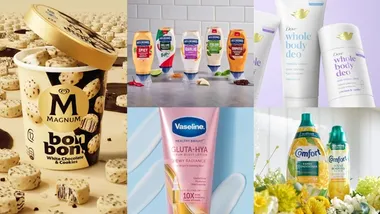
We strengthened the capabilities required to support our strategy and drive sustained volume growth, positive mix with structurally higher gross margin. We scaled premium innovations across the core portfolio and expanded platforms such as Whole Body Deodorants and Wonder Wash across new variants and new markets. We also accelerated our shift to social-first demand generation, with brands such as Dove and Vaseline embracing creator-led content and always-on digital engagement.
Looking ahead, we will continue to focus on the three shifts that will be critical to support sustained outperformance in rapidly changing markets: building desire at scale with our brands, ensuring the organisation is fit for the AI age, and reinforcing a play to win culture with clear accountability.
Outlook
We expect underlying sales growth for full year 2026 to be within our multi-year guidance range of 4% to 6%, with at least 2% underlying volume growth. 2026 growth is expected to be at the bottom end of the underlying sales growth range reflecting the slower market conditions. We anticipate a modest improvement in underlying operating margin for the full year versus 20.0% in 2025.
Full Year Review: Unilever Group
Growth
| (unaudited) | Turnover | USG | UVG | UPG | A&D | Currency | Turnover change |
| Full Year | €50.5bn | 3.5% | 1.5% | 2.0% | (1.2)% | (5.9)% | (3.8)% |
| Fourth Quarter | €12.6bn | 4.2% | 2.1% | 2.0% | 1.0% | (7.5)% | (2.7)% |
Underlying sales growth in 2025 was 3.5%, with 1.5% from volume and 2.0% from price, with sequential improvement through the year led by volume. Underlying sales growth in the fourth quarter of 4.2% was the strongest of the year despite slowing markets, with a balanced contribution from volume and price. Power Brands continued to lead growth delivering 4.3% underlying sales growth in 2025, with 2.2% volume. Business Groups performance was led by Personal Care and Beauty & Wellbeing.
• Beauty & Wellbeing: 4.3% underlying sales growth was led by double-digit growth in Wellbeing, Dove and Vaseline. Underlying sales growth of 4.7% in the fourth quarter was driven by a stronger Asia Pacific Africa delivery which offset slower growth in the Wellbeing market.
• Personal Care: 4.7% underlying sales growth was supported by market share gains, premium innovations, and commodity-driven price increases. In the fourth quarter, underlying sales growth remained strong at 5.1%.
• Home Care: 2.6% underlying sales growth was led by volume. Underlying sales growth accelerated to 4.7% in the fourth quarter with 4.0% volume supported by a sequential improvement in key emerging markets.
• Foods: 2.5% underlying sales growth was driven by emerging markets. Developed market underlying sales growth was flat despite declining markets, as Hellmann’s continued to perform well. In the fourth quarter, underlying sales growth was 2.3%, as markets remained subdued.
Developed markets (41% of group turnover) delivered above market underlying sales growth of 3.6%, led by 2.6% volume growth. In the fourth quarter, underlying sales growth slowed to 1.7%, with 0.5% volume, reflecting slower market growth in both the US and Europe.
• North America: 5.3% underlying sales growth with 3.8% volume was supported by market share gains. Underlying sales growth of 2.8% in the fourth quarter, with 1.3% volume, reflected share gains in a slower market.
• Europe: 1.5% underlying sales growth, with successful premium innovation in Home Care partially offset by a decline in Foods. Underlying sales growth of 0.1% in the fourth quarter reflected continued subdued markets.
Emerging markets (59% of group turnover) underlying sales grew 3.5%, with 0.8% volume, led by mid-single digit growth in Asia Pacific Africa. In the fourth quarter, underlying sales growth accelerated to 5.8% led by volume growth of 3.2%, benefitting from decisive actions taken earlier in the year in Indonesia and China, alongside a return to growth in Latin America.
• India: 4% underlying sales growth with 3% volume was supported by gradually improving market conditions and a competitive performance with share gains. Underlying sales growth of 5% in the fourth quarter, with 4% volume, reflected a step up in performance and recovery post Goods and Services Tax related disruption.
• Indonesia underlying sales grew 4% and China was flat, with both seeing a return to growth in the second half. In the fourth quarter both delivered their strongest quarter of the year, benefitting from decisive actions earlier in the year and soft comparators.
• Latin America: 0.5% underlying sales growth, as pricing was largely offset by volume declines in challenging markets. Underlying sales grew 3.2% in the fourth quarter driven by a recovery in Brazil as corrective actions in laundry and deodorants began to show progress.
Turnover was €50.5 billion, down (3.8)% versus the prior year, including (5.9)% from currency and (1.2)% from disposals net of acquisitions. The currency impact during the year was primarily driven by Latin American currencies, the Indian Rupee, the US dollar, and the Turkish Lira depreciating against the Euro.
Profitability
| (unaudited) | UOP | UOP growth | UOM% | Change in UOM | OP | OP growth | OM% | Change in OM |
| Full Year | €10.1bn | (1.1)% | 20.0% | 60bps | €9.0bn | 2.4% | 17.9% | 110bps |
Underlying operating profit was €10.1 billion, a decrease of (1.1)% versus the prior year, as currency headwinds more than offset strong operational delivery. Underlying operating margin of 20.0% was up 60bps against a prior year base of 19.4%, driven by structural improvements in gross margin and overhead discipline, which enabled continued investment behind our brands.
• Gross margin increased 20bps to 46.9%, driven by productivity initiatives, volume leverage and positive mix. The year-on-year improvement was broadly balanced between the first and second half, with strong execution across the value chain sustaining margins despite a more volatile cost and currency environment.
• Brand and marketing investment (BMI) increased 10bps to 16.1% of turnover, as we continued to invest competitively behind our brands, particularly in Beauty & Wellbeing and Personal Care. This reflects the significant step up in BMI over the last four years, up 300bps.
• Overheads improved strongly by 50bps, driven by the delivery of our productivity programme ahead of plan and continued cost discipline across the organisation. These savings more than offset inflationary pressures and stranded costs related to the demerger of Ice Cream, demonstrating the impact of our simplification efforts.
Operating profit was €9.0 billion, up 2.4% versus 2024, reflecting lower restructuring costs and a reduced loss on disposals compared to the prior year.
Productivity programme
Our productivity programme, launched in 2024 to simplify the business, evolve our category-focused business model and remove stranded overheads related to Ice Cream, is further ahead of schedule in its delivery of €800 million of savings. Unilever delivered €670 million of savings by the end of 2025, above the previous expectation of €650 million. The remaining €130 million of savings will be delivered in 2026.
Ice Cream demerger
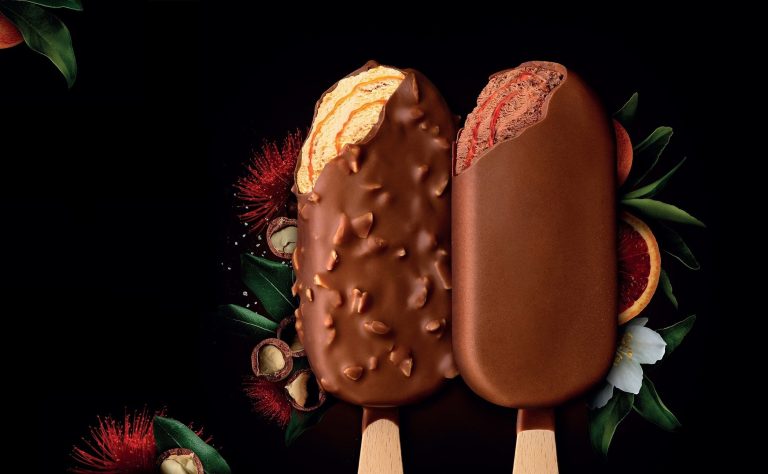
On 6 December 2025, Unilever completed the demerger of its Ice Cream business, with The Magnum Ice Cream Company N.V. (TMICC) listed as a standalone, pure-play global Ice Cream business in Amsterdam, London and New York. We have retained a minority stake of approximately 19.9% in TMICC, which will be sold down in an orderly and considered manner to pay demerger costs and to maintain capital flexibility.
Capital allocation
Our capital allocation priorities remain unchanged. We will invest in the growth and productivity of Unilever as a priority. Alongside this we will continue to reshape our portfolio, return capital to shareholders through our attractive dividend and use surplus cash to fund share buybacks.
In 2025, we significantly shifted Unilever’s portfolio through several key activities, including the demerger of Ice Cream:
• December 2025: Completed the demerger of The Magnum Ice Cream Company, creating a more focused Unilever.
We undertook targeted acquisitions and divestments to access growth opportunities in our priority areas and to focus on fewer, bigger and more scalable brands. In aggregate, we have completed or announced 10 transactions since the start of 2025.
• In April 2025 and September 2025, Unilever completed the acquisitions of Wild and Dr. Squatch, respectively. These brands enhance our premium Personal Care portfolio.
• April 2025: Hindustan Unilever Limited completed the acquisition of premium actives-led beauty brand Minimalist, as it continues to evolve its Beauty & Wellbeing portfolio towards higher growth and demand spaces in India.
• April 2025: Unilever completed the sale of Conimex.
• September 2025: Unilever completed the sale of The Vegetarian Butcher.
• November 2025: Unilever completed the sale of Kate Somerville.
• January 2026: Unilever announced the sale of our Indonesia Tea Business. The transaction is expected to close in the first half of 2026.
• January 2026: Unilever announced the agreement to sell our Home Care businesses in Colombia and Ecuador. The transactions are expected to close during 2026.
• February 2026: Unilever completed the sale of Graze.
In 2025, we returned €6.0 billion to shareholders through cash dividends and share buybacks.
The quarterly interim dividend for the fourth quarter is €0.4664 per share, an increase of 3.0% versus the third quarter.
Today we announce a new share buyback of up to €1.5 billion that is expected to commence in the second quarter of 2026, this follows the completion of a €1.5 billion share buyback programme in May 2025.
Upcoming Events
| Date | Events |
| 17 February 2026 | CAGNY Conference 2026 |
| 30 April 2026 | Q1 2026 Trading Statement |
Full Year Review: Business Groups
| Full Year 2025 | Fourth Quarter 2025 | |||||||||
| (unaudited) | Turnover | USG | UVG | UPG | UOM | Change in UOM | Turnover | USG | UVG | UPG |
| Unilever | €50.5bn | 3.5% | 1.5% | 2.0% | 20.0% | 60bps | €12.6bn | 4.2% | 2.1% | 2.0% |
| Beauty & Wellbeing | €12.8bn | 4.3% | 2.2% | 2.1% | 19.2% | (20)bps | €3.2bn | 4.7% | 2.8% | 1.8% |
| Personal Care | €13.2bn | 4.7% | 1.1% | 3.6% | 22.6% | 50bps | €3.3bn | 5.1% | 0.6% | 4.5% |
| Home Care | €11.6bn | 2.6% | 2.2% | 0.4% | 14.9% | 40bps | €2.8bn | 4.7% | 4.0% | 0.6% |
| Foods | €12.9bn | 2.5% | 0.8% | 1.7% | 22.6% | 130bps | €3.3bn | 2.3% | 1.3% | 1.0% |
Beauty & Wellbeing (25% of Group turnover)
| (unaudited) | Turnover | USG | UVG | UPG | A&D | Currency | Turnover change | UOM% | Change in UOM |
| Full Year | €12.8bn | 4.3% | 2.2% | 2.1% | (0.6)% | (5.8)% | (2.3)% | 19.2% | (20)bps |
| Fourth Quarter | €3.2bn | 4.7% | 2.8% | 1.8% | 0.5% | (8.4)% | (3.7)% |
Beauty & Wellbeing underlying sales grew 4.3%, with 2.2% from volume and 2.1% from price. Growth was driven by double-digit growth in Wellbeing, Vaseline, and Dove reflecting the ongoing elevation of the portfolio through science-led, premium innovations. In the fourth quarter, underlying sales growth was 4.7% with 2.8% from volume, supported by improved performance in several key markets in Asia Pacific Africa. Wellbeing continued to outperform its market, despite growth moderating as category conditions softened.
• Hair Care grew low-single digit with positive price partially offset by negative volume. Dove grew double-digit with balanced volume and price, driven by the launch of its new fibre repair technology range. This was partially offset by actions taken to reduce tail brands in the portfolio and softness in some emerging markets impacting brands such as Sunsilk and Clear.
• Core Skin Care delivered mid-single digit growth, with positive contributions from volume and price. Growth was led by Vaseline, which delivered double-digit growth for the third straight year.
• Wellbeing grew double-digit led by volume. Nutrafol and Liquid I.V. delivered double-digit growth, while Olly grew high-single digit, supported by premium gummy innovations.
• Prestige Beauty delivered low-single digit growth driven by price. Growth was led by strong double-digit growth in Hourglass and K18, while Dermalogica and Paula’s Choice declined but returned to growth in the second half.
Underlying operating profit was €2.5 billion, down (3.2)% versus the prior year. Underlying operating margin decreased (20)bps to 19.2% as a significant improvement in overheads was offset by a slight decline in gross margins and a significant increase in brand and marketing investment behind Power Brands and premium innovations.
Personal Care (26% of Group turnover)
| (unaudited) | Turnover | USG | UVG | UPG | A&D | Currency | Turnover change | UOM% | Change in UOM |
| Full Year | €13.2bn | 4.7% | 1.1% | 3.6% | (1.8)% | (6.0)% | (3.4)% | 22.6% | 50bps |
| Fourth Quarter | €3.3bn | 5.1% | 0.6% | 4.5% | 4.7% | (7.1)% | 2.2% |
Personal Care underlying sales grew 4.7%, with 1.1% from volume and 3.6% from price. This competitive growth was led by commodity-driven price increases, while volume was supported by premium innovation, particularly in Dove, which grew high-single digit. Strong volume growth in developed markets was partially offset by a decline in Latin America, where we outperformed a softer market. In the fourth quarter, underlying sales growth remained strong at 5.1%, with positive volumes and an acceleration in price growth.
• Deodorants grew low-single digit, with positive price and volume. Growth was led by double-digit growth in Dove, supported by the continued success of Whole Body Deodorants. This was partially offset by a volume decline in Latin America amidst softer market conditions. In the fourth quarter, growth improved sequentially to mid-single digit, reflecting early progress from actions taken to improve format mix in Brazil.
• Skin Cleansing grew mid-single digit, led by price and premiumisation. Dove grew mid-single digit, while Lifebuoy was flat as volumes were impacted by commodity-driven price increases.
• Oral Care grew mid-single digit, driven by strong growth in Close Up and Pepsodent as both brands launched premium innovations including whitening and naturals ranges.
Underlying operating profit was €3.0 billion, down (1.4)% versus the prior year. Underlying operating margin increased 50bps to 22.6% driven by improvements in gross margin and overheads, which was partially offset by a strong step-up in brand investment, particularly in the US and premium segments.
Home Care (23% of Group turnover)
| (unaudited) | Turnover | USG | UVG | UPG | A&D | Currency | Turnover change | UOM% | Change in UOM |
| Full Year | €11.6bn | 2.6% | 2.2% | 0.4% | (1.7)% | (7.1)% | (6.4)% | 14.9% | 40bps |
| Fourth Quarter | €2.8bn | 4.7% | 4.0% | 0.6% | (0.2)% | (8.5)% | (4.4)% |
Home Care underlying sales grew 2.6%, with 2.2% from volume and 0.4% from price. Performance improved sequentially through the year, driven by strong growth in Europe supported by premium innovations and improved execution. This was partially offset by a decline in Brazil due to slower market conditions and pricing actions taken to restore competitiveness. In the fourth quarter, underlying sales growth accelerated to 4.7% with 4.0% from volume, which was supported by a return to growth in Brazil as pricing actions took effect and continued strong volume in India.
• Fabric Cleaning was flat with flat volume and price. Wonder Wash continued to scale and delivered another year of strong growth following its launch in 2024, and is now in 30 markets. Performance was offset by a decline in Brazil, Home Care’s second-largest market. Pricing actions taken to restore competitiveness have started to show early progress with Brazil returning to growth in the fourth quarter.
• Home & Hygiene grew mid-single digit, with strong performances from Cif and Domestos. Growth was led by premium innovations, including the launch of Cif Infinite Clean, a multi-purpose cleaner powered by probiotics.
• Fabric Enhancers grew high-single digit, led by volume. Comfort delivered high-single digit volume led growth, supported by premium formats and fragrance-led innovation.
Underlying operating profit was €1.7 billion, down (3.8)% versus the prior year. Underlying operating margin increased 40bps to 14.9% as commodity and foreign exchange headwinds to gross margin were more than offset by improved overheads and disciplined brand investment focused on fewer, higher-impact innovations.
Foods (26% of Group turnover)
| (unaudited) | Turnover | USG | UVG | UPG | A&D | Currency | Turnover change | UOM% | Change in UOM |
| Full Year | €12.9bn | 2.5% | 0.8% | 1.7% | (0.8)% | (4.7)% | (3.2)% | 22.6% | 130bps |
| Fourth Quarter | €3.3bn | 2.3% | 1.3% | 1.0% | (1.2)% | (6.1)% | (5.1)% |
Foods underlying sales grew 2.5%, with 0.8% from volume and 1.7% from price, with growth driven by strong performance in emerging markets. Developed market underlying sales growth was flat despite declining markets as Hellmann’s continued to perform well, benefitting from the strength of its flavoured mayonnaise range across over 30 markets. In the fourth quarter, underlying sales growth was 2.3% with 1.3% from volume, reflecting a continued slower market.
• Cooking Aids grew low-single digit, driven primarily by price. Knorr grew low-single digit with a slight decline in developed markets offset by positive volume and price in emerging markets.
• Condiments delivered mid-single digit growth with balanced volume and price. Hellmann’s grew mid-single digit led by volume with continued premiumisation and particularly strong momentum in emerging markets.
• Unilever Food Solutions was flat, with positive volume in North America offset by declines in China, reflecting weaker out-of-home consumption and macroeconomic pressure.
Underlying operating profit was €2.9 billion, up 2.7% versus the prior year. Underlying operating margin increased 130bps to 22.6%, driven primarily by improvements in gross margin and overheads, alongside disciplined brand investment as we continue to drive our focused Foods strategy.
Full Year Review: Geographical Areas
| Full Year 2025 | Fourth Quarter 2025 | |||||||
| (unaudited) | Turnover | USG | UVG | UPG | Turnover | USG | UVG | UPG |
| Unilever | €50.5bn | 3.5% | 1.5% | 2.0% | €12.6bn | 4.2% | 2.1% | 2.0% |
| Asia Pacific Africa | €22.4bn | 4.6% | 3.0% | 1.6% | €5.5bn | 6.9% | 5.7% | 1.2% |
| The Americas | €18.6bn | 3.3% | -% | 3.2% | €4.7bn | 3.0% | (0.8)% | 3.8% |
| Europe | €9.5bn | 1.5% | 1.2% | 0.3% | €2.4bn | 0.1% | (0.2)% | 0.3% |
| Full Year 2025 | Fourth Quarter 2025 | |||||||
| (unaudited) | Turnover | USG | UVG | UPG | Turnover | USG | UVG | UPG |
| Emerging markets | €30.0bn | 3.5% | 0.8% | 2.7% | €7.4bn | 5.8% | 3.2% | 2.5% |
| Developed markets | €20.5bn | 3.6% | 2.6% | 0.9% | €5.2bn | 1.7% | 0.5% | 1.1% |
| North America | €11.2bn | 5.3% | 3.8% | 1.4% | €2.8bn | 2.8% | 1.3% | 1.5% |
| Latin America | €7.4bn | 0.5% | (5.1)% | 5.9% | €1.9bn | 3.2% | (3.6)% | 7.1% |
Asia Pacific Africa (44% of Group turnover)
Underlying sales growth was 4.6%, with 3.0% from volume and 1.6% from price.
• India grew 4% on a consolidated basis, with underlying volume growth of 3%. Underlying sales growth accelerated to 5% in the fourth quarter, with 4% volume, with gains in market share. Growth was led by our premium portfolio in Personal Care, Beauty & Wellbeing and strong delivery in laundry liquids.
• China underlying sales were flat, with improvement in the second half including mid-single digit growth in the fourth quarter. Actions taken to reset the business, including strengthening our go-to-market approach and accelerating premiumisation, drove improved results, although market growth remained weak. Fourth quarter growth was led by Beauty & Wellbeing and Personal Care, while Foods continued to be affected by a decline in restaurant traffic.
• Indonesia delivered underlying sales growth of 4%, with a significant recovery in the second half as a result of our extensive reset of the business. Fourth quarter growth was 17% due to our operational improvements and significant de-stocking in the prior year, which will not benefit future periods.
• Africa delivered low-single digit growth with a slight volume decline against a challenging consumer environment.
The Americas (37% of Group turnover)
Underlying sales growth was 3.3%, with flat volume and 3.2% from price.
• North America grew 5.3%, led by 3.8% from volume, reflecting the benefits of the multi-year transformation of our portfolio towards Beauty & Wellbeing and Personal Care. Growth was ahead of the market and was led by Wellbeing, Skin Cleansing and Deodorants. In the fourth quarter, while we continued to outperform our markets, our growth moderated as category growth softened across most categories.
• Latin America grew 0.5%, with 5.9% from price largely offset by (5.1)% from volume. Performance was impacted by economic and political uncertainty in the region, which weighed on consumer sentiment. Brazil and Mexico, our two largest markets, both declined low-single digit, largely offsetting price-led growth in Argentina. In Brazil, the fourth quarter showed early signs of stabilisation with flat underlying sales growth led by a return to growth in Home Care.
Europe (19% of Group turnover)
Underlying sales growth was 1.5%, with 1.2% from volume and 0.3% from price.
• Europe delivered low-single digit growth as strong volume growth in Home Care, behind further roll out of Wonder Wash and other premium innovations, was partially offset by declines in Foods. Growth was uneven across the markets, with good growth in France and Italy partially offset by weakness in Germany. In the fourth quarter, underlying sales growth was 0.1% as market growth slowed across our categories, as low single-digit growth in Beauty & Wellbeing and Personal Care was offset by a decline in Foods.
Additional commentary on the financial statements – Full Year
Finance costs and tax
Net finance costs decreased by €17 million to €503 million in 2025. Higher pension and other interest income was partially offset by an increase in other interest costs.
The underlying effective tax rate for 2025 was 25.7% (2024: 25.9%). Decreases in non-deductible interest and irrecoverable WHT were largely offset by lower benefits from tax settlements versus 2024. The effective tax rate was 29.4% which includes the impact of the separation of the Ice Cream business. This compares to 28.7% in the prior year which included impacts linked to disposals.
Joint ventures, associates and other income from non-current investments
Net profit from joint ventures and associates was €245 million, a decrease of €5 million compared to 2024. Other loss from non-current investments was €(17) million, versus a gain of €13 million in the prior year, primarily due to currency movements.
Share consolidation
In December 2025, we implemented a share consolidation to maintain comparability of Unilever’s share price, earnings per share and dividends per share before and after the demerger of Ice Cream. The share consolidation was implemented on an 8 for 9 basis, whereby shareholders received 8 new Unilever shares for every 9 shares previously held.
Earnings per share
For underlying, basic and diluted earnings per share, the impact of the share consolidation has been applied retrospectively to prior periods to ensure consistent comparability.
Underlying earnings per share increased 0.7% to €3.08, including (8.8)% of adverse currency. The increase, despite adverse currency, reflects constant currency profit growth, a reduction in the average number of shares driven by the share buyback programme, which contributed 1.5%, and benefits from lower tax. Diluted earnings per share of €2.59 increased by 6.2% versus the prior year.
Restructuring costs
Restructuring costs were 1.2% of turnover at €599 million, a decrease from €710 million in the prior year. This reduction reflects the higher productivity programme restructuring costs in 2024. 2025 spend was concentrated in supply chain, productivity initiatives and functional transformation.
Free cash flow
100% cash conversion for the year, with free cash flow of €5.9 billion. This was down €0.4 billion compared with €6.3 billion delivered in 2024 due primarily to tax on disposals related to the Ice Cream demerger. Working capital improvements during the year were more than offset by an increase in tax on disposals and restructuring payments. Capital expenditures were largely flat.
Underlying return on invested capital
Underlying return on invested capital remained strong at 19.0%. The slight decline versus 19.1% in 2024 reflected the fall in underlying operating profit primarily due to adverse currency impacts. Average invested capital in 2025 was largely flat versus 2024.
Net debt
Closing net debt was €23.1 billion compared to €24.5 billion at 31 December 2024. This translated into a net debt / underlying EBITDA ratio of 2.0x. The decrease in net debt was primarily driven by free cash flow and a €3 billion payment by TMICC to Unilever ahead of the demerger as TMICC raised separate debt facilities as a standalone entity. This was partially offset by dividends paid and the €1.5 billion share buyback programme executed during the first half of 2025.
Pensions
Pension assets net of liabilities were in surplus of €3.5 billion at 31 December 2025, compared with €3.0 billion at 31 December 2024. Higher discount rates led to a decrease in liabilities and growth assets delivered positive returns.
Share buyback programme
In February 2025, we announced a share buyback programme of up to €1.5 billion to be completed on or before 6 June 2025. The programme commenced on 13 February 2025 and was completed on 30 May 2025. We repurchased 27,815,955 ordinary shares.
Reflecting the Group’s continued strong cash generation, the Board has approved a new share buyback with an aggregate market value equivalent of up to €1.5 billion, which will be bought back in the form of Unilever PLC ordinary shares. The new share buyback is expected to commence in quarter two of 2026. The purpose of the share buyback is to reduce the capital of Unilever PLC.
Finance and liquidity
In 2025, the following notes matured and were repaid:
• January: €650 million 0.50% fixed rate notes
• March: $350 million 3.375% fixed rate notes and €1,000 million 1.25% fixed rate notes
• July: $500 million 3.10% fixed rate notes and €650 million 0.875% fixed rate notes
The following notes were issued:
• May: €700 million 2.75% fixed rate notes due May 2030 and €800 million 3.375% fixed rate notes due May 2035
• September: €600 million floating rate notes due September 2027 and $150 million 4.824% fixed rate notes due September 2035
• October: €850 million 2.875% fixed rate notes due October 2032 and €800 million 3.50% fixed rate notes due October 2037
On 31 December 2025, Unilever had undrawn revolving 364-day bilateral credit facilities in aggregate of $5,200 million and €2,600 million with a 364-day term out.
Discontinued operations
The results of Ice Cream, for the period of ownership until the demerger on 6th December 2025, are included in discontinued operations. This is not included in non-GAAP measures including underlying earnings per share (UEPS).
In 2025, our discontinued operations generated €7,691 million turnover, with operating profit of €4,050 million and profit after taxation on demerger of discontinued operations of €3,798 million. Our profit after taxation on demerger of discontinued operations in 2025 reflected the gain on demerger. Cash flow from discontinued operations included an operating inflow of €0.3 billion. Investing outflow was €0.7 billion, mainly from the cash de-recognised at the time of the demerger and capital expenditure. Financing activities contributed a €3.0 billion inflow, primarily from the bond issuance completed by The Magnum Ice Cream Company.
Non-GAAP measures
Certain discussions and analyses set out in this announcement include measures which are not defined by generally accepted accounting principles (GAAP) such as IFRS. We believe this information, along with comparable GAAP measurements, is useful to investors because it provides a basis for measuring our operating performance, ability to retire debt and invest in new business opportunities. Our management uses these financial measures, along with the most directly comparable GAAP financial measures, in evaluating our operating performance and value creation. Non-GAAP financial measures should not be considered in isolation from, or as a substitute for, financial information presented in compliance with GAAP. Wherever appropriate and practical, we provide reconciliations to relevant GAAP measures.
Unless specifically mentioned, our non-GAAP measures for 2025 and comparative periods are presented on a continuing operations basis.
Unilever uses ‘constant rate’, and ‘underlying’ measures primarily for internal performance analysis and targeting purposes. We present certain items, percentages and movements, using constant exchange rates, which exclude the impact of fluctuations in foreign currency exchange rates. We calculate constant currency values by translating both the current and the prior period local currency amounts using the prior year average exchange rates into euro, except for the local currency of entities that operate in hyperinflationary economies. These currencies are translated into euros using the prior year closing exchange rate before the application of IAS 29. The table below shows exchange rate movements in our key markets.
| Annual average rate in 2025 | Annual average rate in 2024 | |
| Brazilian real (€1 = BRL) | 6.297 | 5.761 |
| Chinese yuan (€1 = CNY) | 8.092 | 7.751 |
| Indian rupee (€1 = INR) | 97.630 | 90.652 |
| Indonesia rupiah (€1 = IDR) | 18,481 | 17,177 |
| Mexican peso (€1 = MXN) | 21.710 | 19.589 |
| Philippine peso (€1 = PHP) | 64.488 | 62.055 |
| Turkish lira (€1 = TRY) | 49.277 | 36.671 |
| UK pound sterling (€1 = GBP) | 0.855 | 0.848 |
| US dollar (€1 = US$) | 1.124 | 1.085 |
Underlying sales growth (USG)
Underlying sales growth (USG) refers to the increase in turnover for the period, excluding any change in turnover resulting from acquisitions, disposals, changes in currency and price growth in excess of 26% in hyperinflationary economies. Inflation of 26% per year compounded over three years is one of the key indicators within IAS 29 to assess whether an economy is deemed to be hyperinflationary. We believe this measure provides valuable additional information on the underlying sales performance of the business and is a key measure used internally. The impact of acquisitions and disposals (A&D) is excluded from USG for a period of 12 calendar months from the applicable closing date. Turnover from acquired brands that are launched in countries where they were not previously sold is included in USG as such turnover is more attributable to our existing sales and distribution network than the acquisition itself.
The reconciliation of changes in the GAAP measure of turnover to USG is as follows:
| (unaudited) | Beauty & Wellbeing | Personal Care | Home Care | Foods | Total |
| Fourth Quarter | |||||
| Turnover (€ million) | |||||
| 2024 | 3,310 | 3,235 | 2,960 | 3,434 | 12,939 |
| 2025 | 3,189 | 3,307 | 2,830 | 3,260 | 12,586 |
| Turnover growth (%) | (3.7) | 2.2 | (4.4) | (5.1) | (2.7) |
| Effect of acquisitions (%) | 0.6 | 4.7 | – | – | 1.3 |
| Effect of disposals (%) | (0.1) | – | (0.2) | (1.2) | (0.4) |
| Effect of currency-related items (%), of which: | (8.4) | (7.1) | (8.5) | (6.1) | (7.5) |
| Exchange rates changes (%) | (8.7) | (7.6) | (9.1) | (6.3) | (7.9) |
| Extreme price growth in hyperinflationary markets* (%) | 0.4 | 0.5 | 0.7 | 0.3 | 0.5 |
| Underlying sales growth (%) | 4.7 | 5.1 | 4.7 | 2.3 | 4.2 |
| Full Year | |||||
| Turnover (€ million) | |||||
| 2024 | 13,157 | 13,618 | 12,352 | 13,352 | 52,479 |
| 2025 | 12,848 | 13,161 | 11,565 | 12,929 | 50,503 |
| Turnover growth (%) | (2.3) | (3.4) | (6.4) | (3.2) | (3.8) |
| Effect of acquisitions (%) | 0.4 | 1.9 | – | – | 0.6 |
| Effect of disposals (%) | (1.0) | (3.6) | (1.7) | (0.8) | (1.8) |
| Effect of currency-related items (%), of which: | (5.8) | (6.0) | (7.1) | (4.7) | (5.9) |
| Exchange rates changes (%) | (6.2) | (6.5) | (7.7) | (5.1) | (6.3) |
| Extreme price growth in hyperinflationary markets* (%) | 0.4 | 0.5 | 0.6 | 0.4 | 0.5 |
| Underlying sales growth (%) | 4.3 | 4.7 | 2.6 | 2.5 | 3.5 |
| (unaudited) | Asia Pacific Africa | The Americas | Europe | Total |
| Fourth Quarter | ||||
| Turnover (€ million) | ||||
| 2024 | 5,691 | 4,831 | 2,417 | 12,939 |
| 2025 | 5,497 | 4,707 | 2,382 | 12,586 |
| Turnover growth (%) | (3.4) | (2.6) | (1.5) | (2.7) |
| Effect of acquisitions (%) | 0.3 | 2.7 | 1.2 | 1.3 |
| Effect of disposals (%) | – | (0.3) | (1.7) | (0.4) |
| Effect of currency-related items (%), of which: | (9.9) | (7.6) | (1.0) | (7.5) |
| Exchange rates changes (%) | (10.6) | (7.9) | (1.0) | (7.9) |
| Extreme price growth in hyperinflationary markets* (%) | 0.7 | 0.3 | – | 0.5 |
| Underlying sales growth (%) | 6.9 | 3.0 | 0.1 | 4.2 |
| Full Year | ||||
| Turnover (€ million) | ||||
| 2024 | 23,448 | 19,605 | 9,426 | 52,479 |
| 2025 | 22,427 | 18,622 | 9,454 | 50,503 |
| Turnover growth (%) | (4.4) | (5.0) | 0.3 | (3.8) |
| Effect of acquisitions (%) | 0.2 | 0.9 | 0.9 | 0.6 |
| Effect of disposals (%) | (2.4) | (1.1) | (1.9) | (1.8) |
| Effect of currency-related items (%), of which: | (6.5) | (7.8) | (0.1) | (5.9) |
| Exchange rates changes (%) | (7.0) | (8.4) | (0.1) | (6.3) |
| Extreme price growth in hyperinflationary markets* (%) | 0.5 | 0.7 | – | 0.5 |
| Underlying sales growth (%) | 4.6 | 3.3 | 1.5 | 3.5 |
*Underlying price growth in excess of 26% per year in hyperinflationary economies has been excluded when calculating the underlying sales growth in the tables above, and an equal and opposite amount is shown as extreme price growth in hyperinflationary markets.
Turnover growth is made up of distinct individual growth components namely underlying sales, currency impact, acquisitions and disposals. Turnover growth is arrived at by multiplying these individual components on a compounded basis as there is a currency impact on each of the other components. Accordingly, turnover growth is more than just the sum of the individual components.
Underlying price growth (UPG)
Underlying price growth (UPG) is part of USG and means, for the applicable period, the increase in turnover attributable to changes in prices during the period. UPG therefore excludes the impact to USG due to (i) the volume of products sold; and (ii) the composition of products sold during the period. In determining changes in price, we exclude the impact of price growth in excess of 26% per year in hyperinflationary economies as explained in USG above.
Underlying volume growth (UVG)
Underlying volume growth (UVG) is part of USG and means, for the applicable period, the increase in turnover in such period calculated as the sum of (i) the increase in turnover attributable to the volume of products sold; and (ii) the increase in turnover attributable to the composition of products sold during such period. UVG therefore excludes any impact on USG due to changes in prices.
Non-underlying items
Some of our non-GAAP measures are adjusted to exclude items defined as non-underlying. Management considers non-underlying items to be significant, unusual or non-recurring in nature and so believe that separately identifying them helps users to better understand the financial performance of the Group from period to period.
• Non-underlying items within operating profit are: gains or losses on business disposals, acquisition and disposal related costs, restructuring costs, impairments and other approved one-off items within operating profit classified here due to their nature and frequency.
• Non-underlying items not in operating profit but within net profit are: net monetary gain/(loss) arising from hyperinflationary economies and significant and unusual items in net finance cost, share of profit/(loss) of joint ventures and associates and taxation.
• Non-underlying items after tax is calculated as non-underlying items within operating profit after tax plus non-underlying items not in operating profit but within net profit after tax.
Consequently, within underlying operating profit we exclude the following items:
• Restructuring costs are costs that are directly attributable to a restructuring project. Management define a restructuring project as a strategic, major initiative that delivers cost savings and materially change either the scope of the business or the manner in which the business is conducted.
• Acquisitions and disposal related costs are costs that are directly attributable to a business acquisition or disposal project.
• Impairment of assets including goodwill, intangible assets and property, plant and equipment.
• Gains or losses from the disposal of group companies which arise from business disposal projects.
• Other approved one-off items are those additional matters considered by management to be significant and outside the course of normal operations.
The breakdown of non-underlying items is shown below:
| € million | Full Year | |
| (unaudited) | 2025 | 2024(g) |
| Non-underlying items within operating profit before tax | (1,047) | (1,369) |
| Acquisition and disposal-related costs(a) | (288) | (293) |
| Gain on disposal of group companies(b) | (36) | (229) |
| Restructuring costs(c) | (599) | (710) |
| Impairments(d) | (43) | (134) |
| Other(e) | (81) | (3) |
| Tax on non-underlying items within operating profit | 7 | 88 |
| Non-underlying items within operating profit after tax | (1,040) | (1,281) |
| Non-underlying items not in operating profit but within net profit before tax | (34) | (167) |
| Interest related to non-underlying items(f) | 34 | 35 |
| Net monetary loss arising from hyperinflationary economies | (68) | (201) |
| Tax impact of non-underlying items not in operating profit but within net profit, including non-underlying tax items | (39) | 85 |
| Non-underlying items not in operating profit but within net profit after tax | (73) | (82) |
| Non-underlying items after tax | (1,113) | (1,363) |
| Attributable to: | ||
| Non-controlling interests | (34) | 22 |
| Shareholders’ equity | (1,079) | (1,385) |
(a) 2025 includes a charge of €98 million (2024 €225 million) relating to the revaluation of the minority interest liability of Nutrafol and Oziva, and €91 million related to the Ice Cream separation.
(b) 2025 net loss arises from the disposals of The Vegetarian Butcher and Kate Somervile partially offset by gain on Conimex disposal. 2024 net loss related to the disposals of our Russian business, Elida Beauty, PureIt, and Qinyuan.
(c) In 2024, we announced the launch of a company-wide Productivity programme to support margin improvement through specific interventions. The majority of the costs incurred that relate to the Productivity programme were for redundancy and are recognised as restructuring in line with our policy. The remaining cost comprise technology and supply chain projects.
(d) 2025 includes an impairment charge of €42 million relating to REN .
(e) Other includes a charge for the settlement of cases reached during the year with plaintiff law firms, and an estimated amount for potential future claims relating to litigation arising from products which are no longer manufactured and sold by the Group.
(f) 2025 includes impact of Elida Beauty seller note settlement. 2024 impact was driven by interest related to UK tax audit of intangible income and centralised services.
(g) 2024 comparatives have been re-presented to reflect the demerger of the Ice Cream Business Group.
Underlying operating profit (UOP) and underlying operating margin (UOM)
Underlying operating profit and underlying operating margin mean operating profit and operating margin before the impact of non-underlying items within operating profit. Underlying operating profit represents our measure of segment profit or loss as it is the primary measure used for making decisions about allocating resources and assessing performance of the segments. The reconciliation of operating profit to underlying operating profit is as follows:
| € million | Full Year | |
| (unaudited) | 2025 | 2024(a) |
| Operating profit | 9,037 | 8,829 |
| Non-underlying items within operating profit | 1,047 | 1,369 |
| Underlying operating profit | 10,084 | 10,198 |
| Turnover | 50,503 | 52,479 |
| Operating margin (%) | 17.9 | 16.8 |
| Underlying operating margin (%) | 20.0 | 19.4 |
(a) 2024 comparatives have been re-presented to reflect the demerger of the Ice Cream Business Group
Underlying effective tax rate
The underlying effective tax rate is calculated by dividing taxation excluding the tax impact of non-underlying items by profit before tax excluding the impact of non-underlying items and share of net (profit)/loss of joint ventures and associates. This measure reflects the underlying tax rate in relation to profit before tax excluding non-underlying items before tax and share of net profit/(loss) of joint ventures and associates. Tax impact on non-underlying items within operating profit is the sum of the tax on each non-underlying item, based on the applicable country tax rates and tax treatment. This is shown in the following table:
| € million | Full Year | |
| (unaudited) | 2025 | 2024(a) |
| Taxation | 2,481 | 2,332 |
| Tax impact of: | ||
| Non-underlying items within operating profit | 7 | 88 |
| Non-underlying items not in operating profit but within net profit | (39) | 85 |
| Taxation before tax impact of non-underlying items | 2,449 | 2,505 |
| Profit before taxation | 8,693 | 8,371 |
| Share of net profit of joint ventures and associates | (245) | (250) |
| Profit before tax excluding share of net profit of joint ventures and associates | 8,448 | 8,121 |
| Non-underlying items within operating profit before tax | 1,047 | 1,369 |
| Non-underlying items not in operating profit but within net profit before tax | 34 | 167 |
| Profit before tax excluding non-underlying items before tax and share of net profit of joint ventures and associates | 9,529 | 9,657 |
| Effective tax rate (%) | 29.4 | 28.7 |
| Underlying effective tax rate (%) | 25.7 | 25.9 |
(a) 2024 comparatives have been re-presented to reflect the demerger of the Ice Cream Business Group
Underlying earnings per share
Underlying earnings per share (underlying EPS) is calculated as underlying profit attributable to shareholders’ equity divided by the diluted average number of ordinary shares. For 2025 and 2024, the number of shares used in the calculation has been adjusted for the impact of the share consolidation as if it took place at the start of each period presented. In calculating underlying profit attributable to shareholders’ equity, net profit attributable to shareholders’ equity is adjusted to eliminate the post-tax impact of non-underlying items. This measure reflects the underlying earnings for each share unit of the Group. Refer to note 5 for reconciliation of net profit attributable to shareholders’ equity to underlying profit attributable to shareholders’ equity.
The reconciliation of net profit attributable to shareholders’ equity to underlying profit attributable to shareholders’ equity is as follows:
| € million | Full Year | |
| (unaudited) | 2025 | 2024(a) |
| Net profit | 6,213 | 6,039 |
| Non-controlling interest | (531) | (609) |
| Net profit attributable to shareholders’ equity – used for basic and diluted earnings per share | 5,682 | 5,430 |
| Post-tax impact of non-underlying items attributable to shareholders’ equity | 1,079 | 1,385 |
| Underlying profit attributable to shareholders’ equity – used for basic and diluted earnings per share | 6,761 | 6,816 |
| Diluted average number of shares (millions of share units) | 2,195 | 2,229 |
| Diluted EPS (€) | 2.59 | 2.44 |
| Underlying EPS – diluted (€) | 3.08 | 3.06 |
(a) 2024 comparatives have been re-presented to reflect the demerger of the Ice Cream Business Group
Net debt
Net debt is a measure that provides valuable additional information on the summary presentation of the Group’s net financial liabilities and is a measure in common use elsewhere. Net debt is defined as the excess of total financial liabilities, excluding trade payables and other current liabilities, over cash, cash equivalents and other current financial assets, excluding trade and other current receivables, and non-current financial asset derivatives that relate to financial liabilities. Net debt for 2024 is not re-presented and is based on the reported balance sheet as at 31 December 2024.
The reconciliation of total financial liabilities to net debt is as follows:
| € million | Full Year | |
| (unaudited) | 2025 | 2024 |
| Total financial liabilities | (28,278) | (32,053) |
| Current financial liabilities | (2,582) | (6,987) |
| Non-current financial liabilities | (25,696) | (25,066) |
| Cash and cash equivalents as per balance sheet | 3,941 | 6,136 |
| Cash and cash equivalents as per cash flow statement | 3,870 | 5,950 |
| Add: bank overdrafts deducted therein | 65 | 180 |
| Less: cash and cash equivalents held for sale | 6 | 6 |
| Other current financial assets | 1,121 | 1,330 |
| Non-current financial asset derivatives that relate to financial liabilities | 140 | 68 |
| Net debt | (23,076) | (24,519) |
Underlying earnings before interest, taxation, depreciation and amortisation (UEBITDA)
Underlying earnings before interest, taxation, depreciation and amortisation means operating profit before the impact of depreciation, amortisation and non-underlying items within operating profit. We only use UEBITDA to assess our leverage level, which is expressed as net debt to UEBITDA. UEBITDA for 2024 is presented on a continuing results and therefore will show a different leverage level compared to what has been previously reported. The reconciliation of operating profit to UEBITDA is as follows:
| € million | Full Year | |
| (unaudited) | 2025 | 2024(a) |
| Net profit from continuing operations | 6,213 | 6,039 |
| Net finance costs | 503 | 520 |
| Net monetary loss arising from hyperinflationary economies | 68 | 201 |
| Share of net profit of joint ventures and associates | (245) | (250) |
| Other loss/(income) from non-current investments and associates | 17 | (13) |
| Taxation | 2,481 | 2,332 |
| Operating profit | 9,037 | 8,829 |
| Depreciation and amortisation | 1,310 | 1,236 |
| Earnings before interest, taxes, depreciation and amortisation (EBITDA) | 10,347 | 10,065 |
| Non-underlying items within operating profit | 1,047 | 1,369 |
| Underlying earnings before interest, taxes, depreciation and amortisation (UEBITDA) | 11,394 | 11,434 |
(a) 2024 comparatives have been re-presented to reflect the demerger of the Ice Cream Business Group
Free cash flow (FCF)
Within the Unilever Group, free cash flow (FCF) is defined as cash flow from operating activities, less income taxes paid, net capital expenditure and net interest payments. It does not represent residual cash flows entirely available for discretionary purposes; for example, the repayment of principal amounts borrowed is not deducted from FCF. FCF reflects an additional way of viewing our liquidity that we believe is useful to investors because it represents cash flows that could be used for distribution of dividends, repayment of debt or to fund our strategic initiatives, including acquisitions, if any.
The reconciliation of cash flow from operating activities to FCF is as follows:
| € million | Full Year | |
| (unaudited) | 2025 | 2024(a) |
| Cash flow from operating activities | 10,772 | 10,913 |
| Income tax paid | (2,720) | (2,452) |
| Net capital expenditure | (1,465) | (1,599) |
| Net interest paid | (666) | (559) |
| Free cash flow | 5,921 | 6,304 |
| Net cash flow (used in)/from investing activities | (2,394) | (423) |
| Net cash flow used in financing activities | (9,884) | (6,829) |
(a) 2024 comparatives have been re-presented to reflect the demerger of the Ice Cream Business Group
Cash conversion
Unilever defines cash conversion as free cash flow excluding tax on disposal as a proportion of net profit, excluding gain/loss on disposal and income from JV, associates and non-current investments. This reflects our ability to convert profit to cash.
| € million | Full Year | |
| (unaudited) | 2025 | 2024(a) |
| Net profit | 6,213 | 6,039 |
| Loss/(gain) on disposal of group companies | 36 | 229 |
| Share of net profit of joint ventures and associates | (245) | (250) |
| Other (income)/loss from non-current investments and associates | 17 | (13) |
| Tax on gain on disposal of group companies | 239 | 140 |
| Net profit excluding P&L on disposals, JV, associates, NCI | 6,260 | 6,145 |
| Cash flow from operating activities | 10,772 | 10,913 |
| Free cash flow | 5,921 | 6,304 |
| Cash impact of tax on disposal | 328 | 111 |
| Free cash flow excluding cash impact of tax on disposal | 6,249 | 6,415 |
| Cash conversion from operating activities (%) | 173 | 181 |
| Cash conversion (%) | 100 | 104 |
(a) 2024 comparatives have been re-presented to reflect the demerger of the Ice Cream Business Group
Underlying return on invested capital (ROIC)
Underlying return on invested capital (ROIC) is a measure of the return generated on capital invested by the Group. The measure provides a guard rail for long-term value creation and encourages compounding reinvestment within the business and discipline around acquisitions with low returns and long payback. Underlying ROIC is calculated as underlying operating profit after tax divided by the annual average of: goodwill, intangible assets, property, plant and equipment, net assets held for sale, inventories, trade and other current receivables, and trade payables and other current liabilities.
To present a comparable underlying ROIC for 2024, previously reported 2024 assets and liabilities have been re‑presented to exclude those relating to the Ice Cream business.
| € million | Full Year | |
| (unaudited) | 2025 | 2024(c) |
| Operating profit | 9,037 | 8,829 |
| Tax on operating profit(a) | (2,657) | (2,534) |
| Operating profit after tax | 6,380 | 6,295 |
| Operating profit | 9,037 | 8,829 |
| Non-underlying items within operating profit | 1,047 | 1,369 |
| Underlying operating profit before tax | 10,084 | 10,198 |
| Tax on underlying operating profit(b) | (2,592) | (2,645) |
| Underlying operating profit after tax | 7,492 | 7,553 |
| Goodwill | 17,709 | 22,311 |
| Intangible assets | 17,055 | 18,590 |
| Property, plant and equipment | 8,992 | 11,669 |
| Net assets held for sale (d) | 93 | 119 |
| Inventories | 4,043 | 5,177 |
| Trade and other current receivables | 7,346 | 6,011 |
| Trade payables and other current liabilities | (16,939) | (16,690) |
| Period-end invested capital | 38,298 | 47,187 |
| Adjustment to 2024 period end balance for Ice Cream demerger (e) | – | (6,481) |
| Adjusted period end invested capital | 38,298 | 40,706 |
| Average invested capital for the period (f) | 39,502 | 39,559 |
| Return on invested capital (%) | 16.2 | 15.9 |
| Underlying return on invested capital (%) | 19.0 | 19.1 |
(a) Tax on operating profit is calculated as operating profit before tax multiplied by the effective tax rate of 29.4% (2024: 28.7%) which is shown on note 4.
(b) Tax on underlying operating profit is calculated as underlying operating profit before tax multiplied by the underlying effective tax rate of 25.7% (2024: 25.9%) which is shown on page 16.
(c) 2024 comparatives have been re-presented to reflect the demerger of the Ice Cream Business Group
(d) 2025 excludes €80 million relating to the India Ice Cream business which is classified as a discontinued operation
(e) The significant items adjusted are €3.6 billion of Goodwill, €2.4 billion of Property, Plant and Equipment, €0.8 billion of intangible assets and €0.3 billion of net working capital.
(f) In order to compute the average invested capital for 2024, we have adjusted the 2023 closing assets balance to also remove the Ice Cream assets and liabilities.