Physitrack is putting artificial intelligence to work inside physiotherapy rather than treating it as a standalone technology story. Its approach focuses on specific tasks that can save clinicians time while keeping treatment decisions in human hands.
One of the clearest examples is Physitrack’s AI Exercise Search. The tool allows clinicians to describe what they are looking for and retrieve relevant exercises from Physitrack’s library without depending entirely on exact exercise names or conventional filters. The clinician then decides which exercises are appropriate, sets the dosage and progression, and remains responsible for the patient’s programme.
Physitrack is using AI to improve an existing clinical workflow rather than attempting to automate the physiotherapist’s role. This reduces some of the risk associated with relying on AI for decisions that require clinical judgement and gives the technology a defined purpose within the company’s existing platform.
The wider opportunity extends beyond exercise selection. AI is increasingly being applied to documentation, remote monitoring, scheduling, billing and other administrative tasks within physical therapy. These are areas where repetitive work can consume clinical and staff time, creating a clear reason for healthcare providers to consider automation.
Physitrack’s position is that the most useful applications of AI are those that handle narrow, measurable tasks while leaving important decisions to qualified professionals. Documentation tools can prepare draft notes, for example, but clinicians still need to review them. Monitoring systems can flag changes in adherence or movement, but a physiotherapist must decide what those signals mean for treatment. Billing tools can identify possible errors, but staff remain responsible for confirming the final information.
This human review requirement is also one of the main risks in healthcare AI. Automated outputs can be wrong, incomplete or unsuitable for an individual patient. Exercise suggestions may not account for every diagnosis, precaution or clinical observation. Computer vision can also be affected by camera position, lighting and visibility. Physitrack therefore presents AI as support for clinicians rather than a substitute for assessment and professional judgement.
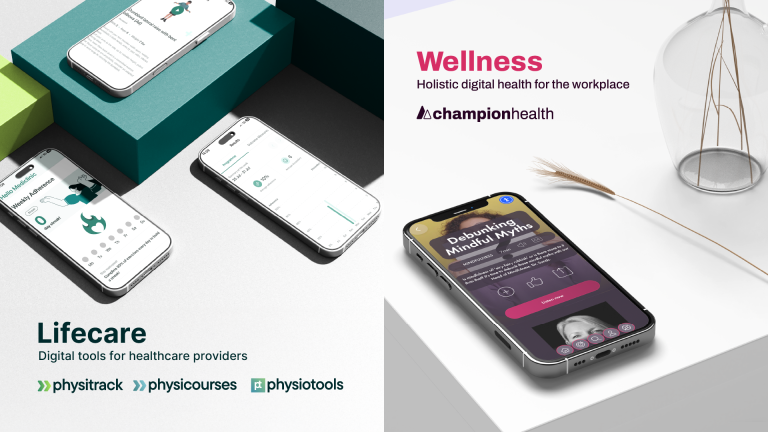
Physitrack plc (PTRK.ST), together with its subsidiaries, provides digital healthcare solutions in the United Kingdom, Europe, North America, and internationally. It operates through two segments, Lifecare and Wellness.