Oriole Resources plc (LON:ORR) Chief Executive Officer Martin Rosser caught up with DirectorsTalk to discuss the maiden 32.2 million tonne resource at Wapouzé, the potential for a multi-decade quarrying operation, commercial partnerships and how the project could help support the company’s gold exploration strategy.
Q1: Martin, you’ve announced a maiden resource at Wapouzé of 32.2 million tonnes of marble, with around a third of that contained in the highest-quality pit, one area. For investors, can you just put those numbers into context and explain what they’ll tell you about the potential scale and the longevity of the commercial operation at Wapouzé?
A1: I guess people aren’t so familiar with limestone, industrial minerals deposits but what I can say emphatically is this is an excellent size and very high-quality calcium oxide grade, averaging over 50%, which, as far as the industry is concerned, is very high. It also has the necessary low magnesium oxide, which is what you want.
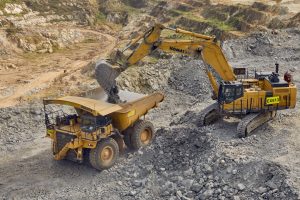
With the tonnage that we see in the maiden MRE, we see clearly, looking at a scale of operation that we currently envisage of around 400,000 tonnes per annum of limestone, a multi-decade potential quarrying operation.
So, this is great news, not just for the company. Clearly, it’s also very good news for Cameroon and its stated desire to boost its domestic cement manufacturing industry, which currently relies heavily on imported clinker.
So, this could certainly displace the significant volume of that material and, in the process, of course, provide valuable feed to a cement manufacturing opportunity in that part of the world.
Also important to note that this limestone, being of the high grade that it is, has major potential use in gold ore processing and also other industrial uses, including high-quality chemical-grade material.
Q2: Now, the resource is only part of the equation, obviously. What do you now need to demonstrate commercially and economically? How significant could the local market opportunity be given the demand from the cement industry in Cameroon, as you’ve just mentioned, and neighbouring Chad?
A2: It’s very conveniently located, not just for the important region, which it sits within Cameroon, which is economically very important to the country and already has some existing limestone cement manufacturing facilities.
It’s very close, adjacent near enough to the border with Chad, and the capital of Chad is very close by in the context of its ability to support manufacturing facilities in that country for cement as well.
So, as you’ve said, the project is at an exciting stage. We’ve reported the major mineral resource, mineral resources, mineral reserves so there’ll be some more technical, economic, and mining studies needed to convert them to mineral reserves. We’re well underway with that work as we speak.
Supporting the whole project momentum, we have the current application to submit for an Exploitation Licence this quarter. That’s going to be a very hefty technical document, which covers all the requisite requirements to support that application, including a critical piece of work, which is the preliminary economic assessment, and also the environmental and social impact assessment.
So, both those studies, in particular the ESIA, are well advanced and the ESIA will be finished to support that ELA application and now we’ve got these numbers, we can start crunching preliminary economics for the project.
So, very exciting phase that we’re entering at the moment.
Q3: You’ve said that you’re already talking to potential industry partners. Can you comment on what sort of partners that you’re actually looking for? What are the key milestones from here towards securing that Exploitation Licence and ultimately getting Wapouzé into production?
A3: As mentioned, there is a significant cement manufacturing industry in Cameroon, but there’s plenty of scope for growth, in particular that displacement of that imported clinker material.
So, we see that this could be attractive, this project, to either existing players in Cameroon seeking geographical diversification in their own country and/or expansion in that part of the world in northern Cameroon, or indeed a foreign industry player, which is looking to enter into what we see as a lucrative Cameroon and Chad market.
We’re being very open-minded to who we might talk to, and we’ve already cultivated some interest.
Now, that we’ve got this maiden MRE, we have a lot more material and information that we can present to develop that interest, as we hope it will do, to the point where we’ve got a good opportunity to bring in a serious partner with the requisite industry expertise to assist us on the transition from a project to a potential commercial operation.
As part and parcel of that exercise, of course, the key milestones will be linked to the PEA, the ELA application, that it’s been launched, and then its progress and ultimate outcome.
I guess it’s useful to highlight to people that going from an Exploitation Licence to commencing quarrying is more straightforward than a metal mining operation.
Quarrying is a pretty basic extraction method, and so it will be a swifter and a lower-capital-cost exercise to achieve commercial production. So, something that would, we think, quickly move to that status if everything clicks into place, as we hope it will do.
Q4: Wapouzé is somewhat different from the gold assets for which investors principally know Oriole. How should shareholders think about it all within the wider portfolio? Is the objective essentially to turn a non-core industrial mineral asset into a source of income to help fund Oriole’s gold strategy?
A4: Yes, it most definitely is.
We’re first and foremost a gold company, and we will continue to stick to that objective. This is a very valuable potential source of royalty-based income or some other basis for receiving a significant amount of money from the operation, which would be very useful to bolster and support our activities for gold exploration in the country.
So it’s a key part of our strategy. Wherever possible, we look to minimise dilution, and this could be a very valuable part of that objective.
Q5: Oriole Resources now has a 1.66 million ounce resource at Mbe, 460,000 ounces at Bibemi and this maiden 32.2 million tonne resource at Wapouzé, and as well as its interest in Senala. How do you think investors should now look at Oriole as a whole? What do you see as the principal value drivers and catalysts across the portfolio over the next 12 months?
A5: Well, they should look at Oriole as being at a very exciting stage in its corporate life.
We’ve now progressed to major MREs across all of our projects, except, of course, the Eastern CLP, where we’re still doing exploration, but we’ve got great encouragement there. So, the company is now in an exciting phase of transition from exploration to development.
Our task is to set out a route and the principal milestones to that significant goal of production that we believe we have the capacity to achieve.
So, we have the Bibemi Exploitation Licence Application, negotiations ongoing as we speak, and the next phase of work at Mbe with setting out conceptual economics and a timeline to an Exploitation Licence Application, and we have the Eastern CLP results to look forward to.
Very importantly, for geographical diversification, we have the great project Senala in Senegal, where the results from the exciting next-stage exploration, $2 million work programme conducted by our partner Managem are eagerly awaited.
We look forward to that and all the other things that I’ve just touched on.