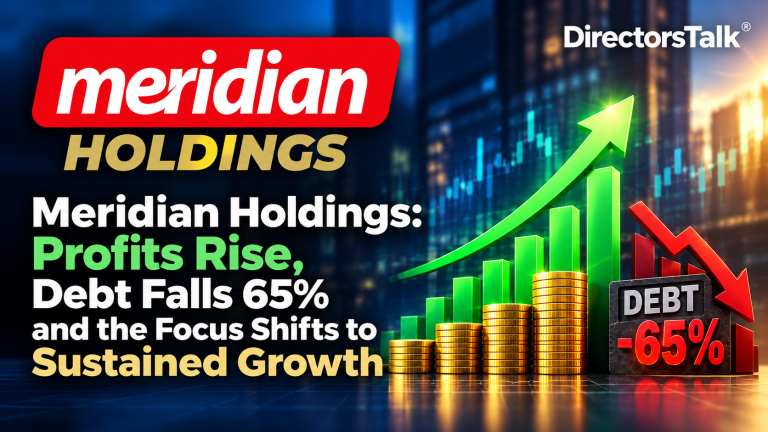
Meridian Holdings (NASDAQ:MRDN) Chairman and Chief Financial Officer William Scott caught up with DirectorsTalk to discuss the company’s second consecutive profitable quarter, improving balance sheet, gaming technology, regulatory developments in Brazil and priorities for the next 12 months.
Q1: William, it’s been a significant year for Meridian Holdings. Where does the business stand now?
A1: As you point out, it has been a significant year. Quite a lot has changed.
We firstly rebranded from Meridian to Meridian Holdings, trading as MRDN on NASDAQ in March. That really brought the corporate name in line with really what we do, we’re a large part of the business as MeridianBet, which is the brand which everyone knows on the high street and on the internet.
We also recently reshaped the leadership with Zoran Milosevic, who built Meridian over two decades, who now became Chief Executive, and I took the role as both CFO, as you point out, and Chairman of the Board.
The thing I’d like to point out to investors is the numbers. It was our second consecutive profitable quarter. In this quarter, we were up 16% in the second quarter and adjusted EBITDA was up 43%.
For a company of ours, our 100% focus is delivery of our numbers and the focus on operational efficiency and making sure that we’re a profitable business.
Q2: Now, MeridianBet is the brand that most people know, as you said. What else is in the group? What makes your model different to any others?
A2: I think the key thing is that 71% of our revenue comes from MeridianBet. So MeridianBet is the consumer side of the business, online sports, and casino with retail where it’s logical to have it and in some jurisdictions where we are allowed, we have slot machines in the betting shops. That’s been around since 2001.
On the B2B side, we’ve got Expanse, which firstly builds casino content for ourselves but also, we then licence it to third parties as well, because we design games which perform in the markets in which we operate.
We also have a platform which is GMAG, which is the Golden Matrix platform, which what we do is we are an aggregator of content, and we sell it to customers to make it very easy for them to have one integration and a significant number of providers of casino content.
Alongside that, we also do have MexPlay and MexPlay is a B2C brand in Mexico. That’s been around for a while and it really is largely casino and focused, but also with a sportsbook and in the process of actually moving that onto our own platform.
We have two other businesses which are really, what I would say, raffle businesses, R Kings in the UK, and we have Classics for A Cause in Australia, which is not quite a raffle business, but not too dissimilar a model.
What makes us very different in this space is we actually own our own technology. As I mentioned, in MexPlay, we’re moving to our own platform and we start to licence other people, as mentioned, with Expanse.
The ownership of your platform really allows you to be very flexible with regards to managing the roadmap and dealing with changes in regulation, and also obviously adding features and functions which we believe the customer will like.
As I said before, we’re not only an online business, we are a physical business. We’ve got 700 shops with just over half of them are what we call franchises, they’re all under our brand.
So, we have a physical real estate and certain jurisdictions, you need that for branding and a presence. We’re a taxpayer and an employer where we operate. We’re just not a website coming from offshore, we are a highly regulated business, and we have licences where we operate.
Q3: Now, you’ve also made significant changes to the balance sheet.
A3: Yes, we have. The first thing we’d be paying down our debt. At the end of the second quarter, net debt was down 65%. This is six quarters of reducing in a row. Entry pay is obviously down 80%.
Secondly, the other thing we did in October, we agreed amendments with the MeridianBet sellers. They had some publishing notes, which we’ll do in November, what we’ve done, we pushed them out to 2031, but the company has the option to repay them early if it chooses.
Also what we’ve done is that they agreed to have no interest on that so that means that more of the money retains in the company and we then can use that to invest in the business to keep growing.
Q4: Right now, everybody seems to be talking about Brazil. How exposed are you to this market and how should investors interpret the developments there?
A4: Brazil’s an interesting one. I was at the SBC show in Lisbon last week and obviously, that was the talk of the town because it just happened.
Firstly, it’s not a material part of our business and it was a business which we were looking to grow. We started all slow because we wanted to make sure that we didn’t commit to large-scale marketing spend. We believe in slowly, slowly, conservative and go forward so it’s not a significant impact on us.
We 100% understand, it’s very disappointing. Who knows what’s going to happen? I know there’s a judgement with Stake there yesterday with regards to this, but regulatory change is constant in this business.
We operate in close to 20 markets in the world and that enables us to really bounce where regulatory change is always going to happen. That’s what we know.
All we have to do is make sure that we work very closely to deal with those regulatory changes. But having numerous markets means that therefore an individual market, we don’t have a risk.
Q5: What are the group’s strategic priorities now?
A5: Clearly, the objective is to carry on building on the customer base which we have already because registrations are really where you start.
The World Cup helped us get lots of registrations. Now, we need to start working with those new customers to engage with them in a responsive way and have them constantly now playing with us as now that the football/soccer seasons have started.
We also want to carry on with the distribution of our own platform, whether it’s content, whether it’s our core platform, and stay disciplined.
Where we invest, we are very, we are a conservative company. We will look to make acquisitions, but I don’t know where they actually augment the business, whether it is where we can change the technology, whether it’s a market which we’re in or a market we want to go into.
We do it at the price which makes sense, we will not acquire just for scale’s sake. We are very careful about what we do. Very disciplined.
Q6: What are you doing to keep on investors’ radars?
A6: That’s always the challenge. There’s lots of businesses listed, there’s lots of gaming companies listed and so therefore, it’s a challenge for a small-cap business to keep on their radar.
However, that said, we constantly meet analysts, which we did in New York. We did a G2E in Vegas and also in Lisbon and the plan is to carry on those conversations, keep growing the business.
The point is that we need to make sure that customers or investors understand what we are, what we do and how we believe that we’re a great investment so they can make a proper judgement on businesses, investors to start following us and then ultimately potentially invest.
Q7: What would you say then to your retail shareholders?
A7: They’re very important. All investors are equally as important, but retail investors are an important part of the register.
What I would say is that we’re trying to communicate with them better. Brazil is a great example of why that matters because it was a headline and so we made sure we got ahead of this and put a press release out with regards to that.
So, it’s making sure that we communicate on a regular basis with our investors, whether they are the institutions or whether they are the retail investors.
Q8: Finally, what should be watched over the next 12 months?
A8: I think the priority is delivery. We’re 100% focused on delivery with regards to business and also consistency more than anything else. We want a long, regular profitability, constant cash generation, a balance sheet that keeps on improving.
Obviously then looking at new markets to enter, whether it’s through acquisition or what we’ve done a lot of the time is entering new markets where they make logical sense and working as a positive part of the gaming industry.