Cora Gold Limited (LON:CORA) Chief Executive Officer Bert Monro caught up with DirectorsTalk to discuss the company’s standout 2026 drilling results at Zone B, the potential to expand the Sanankoro resource and mine life, permitting progress, financing and the key milestone ahead of construction.
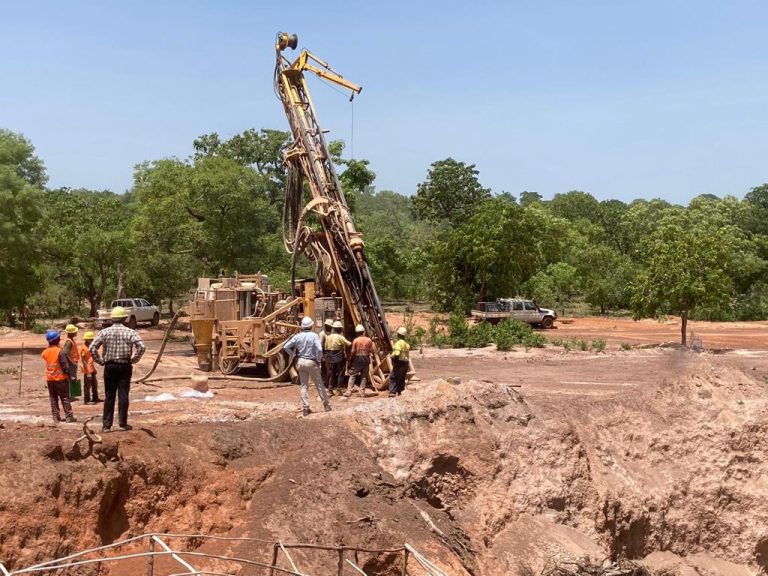
Q1: First off, Bert, I’ve got to say congratulations on the first assay results from your 2026 drilling programme. These look very, very positive, and the 34 metres at 6.78 grams per tonne of gold, including the nine metres at nearly 24 grams per tonne is a standout. That hole was drilled beneath the existing resource pit shell at Zone B, I believe. Can you just talk us through what that tells you about the mineralisation depth and the potential for Zone B now to grow significantly from here?
A1: As you said, they were fantastic drill results. If the rest of the programme comes in as well as that, we’ll be absolutely delighted and over the moon. I think any company getting intercepts like that at those depths is going to be extremely happy. Full credit to the geology team for subsequently executing on this programme and getting it going and, obviously, fingers crossed for the rest of the results.
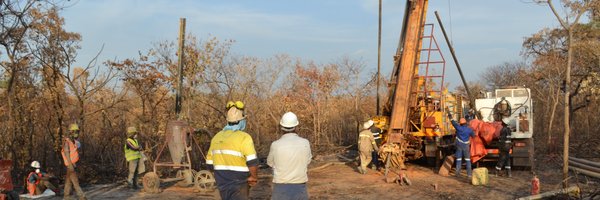
Just to explain that a little bit in terms of the terminology. As everyone knows, we currently have around a million-ounce MRE – mineral resource estimate. Effectively, you are designing a theoretical mining pit to design that mineral resource estimate. This drill hole was outside of that effective pit that was designed within that MRE to define how many ounces there are.
So, we were drilling both effectively to the side and underneath the existing MRE pit shell. If you’re intersecting mineralisation outside of your existing pit shell, obviously the hope and expectation is that that will then be looking to grow your resources.
I think the real significance of those results is all of those intercepts were outside of an existing pit shell. Assuming they all string together and other results continue to correlate and come together, one would expect, all things being equal, that that resource would grow and that pit shell would obviously get bigger and you’d be encompassing more gold into it. So, the intercept in itself was obviously great and there were three or four of them there which were all looking really good.
I think the more significant importance and the reason we’re doing this drilling is because Cora’s currently got a 10-year reserve life. The last year or so is a little bit less production than the first seven or eight but we’ve always said this project is really going to grow. We’re going to add a lot more ounces and you’re going to get a much longer mine life. I think this drill programme will hopefully go a little bit of a way to obviously proving that.
Q2: Now, you mentioned in the announcement that the higher-grade zones in the fresh rock could open up the opportunity for underground mining alongside the pit. How significant could that be for the longer-term mine plan? Is that something that you’re actively factoring in and you’re thinking now?
A2: At the moment, our million ounces is effectively 100% oxide and what that means is essentially it’s a free-digging material. In layman’s terms, it’s basically dirt and that’s quite rare. We’ve got that oxide material to 100, sometimes 140 metres in places. If you dig up your garden, you’re probably going to expect to hit rock at a slightly shallower depth than that.
So, I think just the significance of not having to drill and blast and do the levels of crushing on that material is obviously massive. Our focus to date has all been about 100/120 metres deep. All this oxide material, it’s cheaper to mine, cheaper to process.
Historically, there have been two or three holes which have gone much deeper and they’ve hit mineralisation. I think one of the things we are also looking to test in this drill programme is some deeper holes into the fresh rock and if they keep coming through, it shows the ability potentially to grow an MRE, which is also in the fresh rock as well, which will be exciting, and showing the ability for the mine life to extend and to have an addition to the mine plan, which isn’t just an oxide mine plan.
Q3: With 10,600 metres drilled now out of a planned 12,000 metres, and the results still pending from Selin, Zone A, Zone C and Dakounkoura South, when can the market expect the next batch of results? Are you seeing similarly encouraging signs across other target areas?
A3: I’ve not seen any further results. Obviously, as we get them in batches, we’ll get them released. They never come as quickly as you want when they’re looking good, so we’ll keep pushing with the lab and try to get them out and processed.
Clearly, as you say, we’ve only released a pretty small proportion of those results of what we’ve drilled to date. So, on the ground, our focus is on going through the metres and working with the assay labs to make sure we get those results back as quickly as we can.
Over the course of the next couple of months, one would expect to get the rest of the assay results out.
Q4: The market seemed to be encouraged following the approval of the Sanankoro II exploration permit renewal. You’ve described this as a part of a broader permit reshaping exercise to bring the mining infrastructure under a single permit area. Can you just walk us through the remaining steps, though, including the Bokoro II and Kodiou renewals?
A4: It’s been quite a long time, and it can come across, when you write it down, as a little bit complicated. I guess we’ve tried to set out the steps historically over the last few years, and we’ve talked about the permitting.
Effectively, as people will be aware, there was a three-year permit moratorium in Mali and every three years, you have to renew exploration permits. So, the impact of the moratorium was such that effectively every single exploration permit in the whole of Mali for all companies needs to get renewed.
You can only get a mining permit over a valid exploration permit so the first step is to get your exploration permits renewed and then you can go through the process of converting your exploration permit into a mining permit.
Where it gets slightly more complicated for us is the Sanankoro II permit, which has, say, 99% of our resources on it. Selin North just tips into Kodiou, the next-door permit, which is ours as well is an 84 square kilometre permit. A mining permit can be 100 square kilometres. We’ve always seen and treated those contiguous permits as one project area. If you look on our various maps, you’ll see that certain aspects of the mine infrastructure camp, tailings and other things are on the neighbouring Bokoro II permit to the east.
So, as well as renewing the three contiguous permits, Sanankoro II, Bokoro II and Kodiou, we also need to do a reshaping exercise. The paperwork for this has been completed a long time ago but cannot be processed until the other two renewals have come through.
Then you have a 100 square kilometre permit area, which can then be converted into a mining permit. You don’t lose any of the ground. The remaining ground that’s been reshaped which isn’t in the 100 square kilometres, remains within those exploration permits.
So, we don’t lose any total ground, but we create a 100 square kilometre mining permit zone out of the Sanankoro II permit, but also a little bit of Bokoro II and Kodiou as well.
Q5: Now, you announced at the end of August that Eagle Eye, your major shareholder and provider of your Goldstream, has agreed to extend the deadline for replacing 50% of the Goldstream with senior debt, pushing it out to October 2027 or six months after the mining permit is granted. What does that blending in senior debt mean in practical terms for the project economics and how are those conversations going on?
A5: It’s massively significant being able to replace 50% of the stream with traditional debt. In terms of equity returns, it makes it, on a per-share basis, very attractive. So for us, it’s obviously a key focus. I’ve been to Mali quite a few times this year, had meetings with various West African banks around that.
I guess the first part of the question, it’s obviously very important to optimise and maximise existing shareholder returns, making sure we replace the stream with debt.
Secondly, in terms of the process, yes, it’s been positive. There’s obviously a number of banks who are showing strong interest in placing out that debt and it’s ongoing. I’ve got to limit exactly what I say but it’s been a positive process. It’s good to have Eagle Eye being very supportive and taking away any time pressure around that debt replacement, which was obviously good of them as well.
Q6: Just taking everything together; the drill results, the permit progress, the funding in place, the appointment of additional operational expertise to the Board, it feels like a lot of the pieces are coming together at once now. What would you say is the single biggest milestone that’s ahead of you?
A6: Just to touch on that, because I haven’t properly, we also just recently appointed Russell White to our Board as an Independent Non-Executive Director. He’s got a fantastic track record of building and delivering mines on time and on budget across Africa, but also specifically in West Africa. He’s been a great addition to the team and obviously a very timely appointment as we’re looking to transition into construction as soon as possible.
I think the most key milestone ahead of us is getting our mining permit. Clearly, that’s the impediment to getting into construction. We’re making good progress on the FEED, everything’s coming together operationally on the ground and we’re getting as ready as we can be, but the biggest piece is the mining permit.
We’re working closely with the government. The government wants more projects getting built in-country, it’s going to be really good for their economy. We’re all aligned in terms of the government and ourselves in terms of delivering that, so it’s been really positive progress. Hopefully there’ll be more news on that in the near future.