The AI investment boom is no longer only a technology story. Oliver Shale, Investment Specialist, US at Ruffer LLC, argues that the money being made and spent around artificial intelligence is beginning to affect other parts of the economy. His focus is on where that money goes next.
Large technology companies are spending heavily on AI infrastructure, while semiconductor businesses and their employees are benefiting from strong demand. Shale believes this creates opportunities in sectors that may not appear directly connected to AI but could benefit from the resulting increase in incomes, bonuses and capital spending.
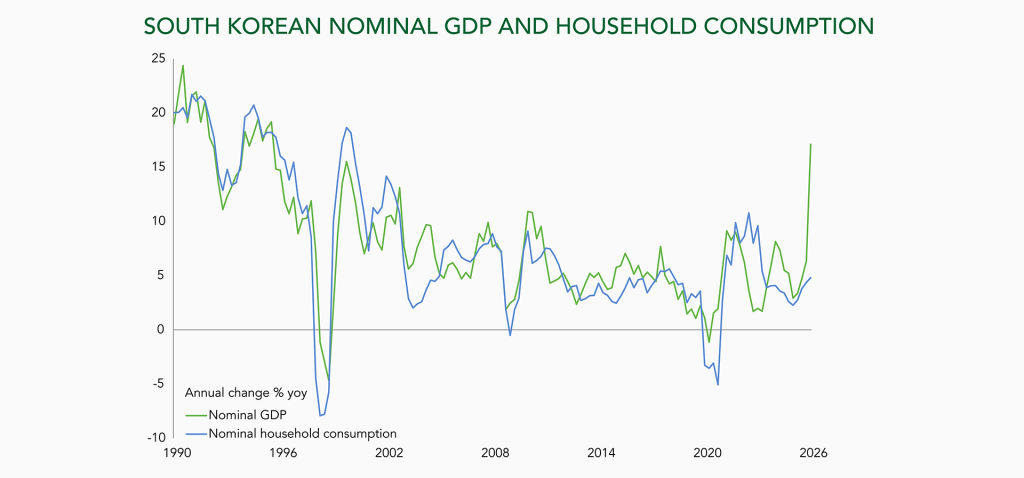
South Korea provides a clear example. Strong semiconductor demand has allowed major companies to pay substantial employee bonuses. Shale highlights this because higher compensation can quickly move into consumer spending, particularly in areas such as luxury goods, travel and hospitality.
That creates a different way to gain exposure to the AI cycle. Instead of relying solely on technology shares, capital can be positioned around companies that may benefit as AI-related wealth moves through the wider economy.
Shale sees a similar dynamic in the United States. Technology wealth generated through rising company valuations, employee equity and large initial public offerings can support higher discretionary spending. At the same time, the rapid build-out of data centres is creating income for landowners, contractors and businesses supplying the infrastructure required to support them.
AI capital expenditure cycle extends well beyond chips and software. Data centres need power systems, cooling equipment, electrical components and significant construction activity. Continued investment could therefore support industrial companies as well as local employment and household incomes.
Ruffer is looking at these second-order effects across several areas of the market. Shale points to consumer businesses, luxury groups, travel and hospitality companies, home improvement firms and asset managers as examples of sectors that could benefit if AI-generated wealth and spending continue to spread.
The argument is not that every company exposed to consumer spending will benefit. Timing and valuation remain important. Shale also acknowledges that the same mechanism can work in reverse.
If technology valuations fall or AI investment slows sharply, some of the income and spending effects could weaken. Households are also still dealing with higher living costs and other pressures that can limit discretionary spending.
That makes risk management important. Rather than assuming the AI investment cycle will continue indefinitely, Ruffer is looking for companies that could benefit from a broader economic impact while maintaining protection against a reversal in technology markets.
Shale’s central point is straightforward. The biggest opportunities created by AI may not all sit inside the technology sector.
As capital spending increases, employee compensation rises and wealth is created, more of that money can flow into other industries. Companies positioned to capture that spending may therefore offer a different route into the AI theme, with less dependence on the most crowded areas of the market.
Chart source: Bank of Korea