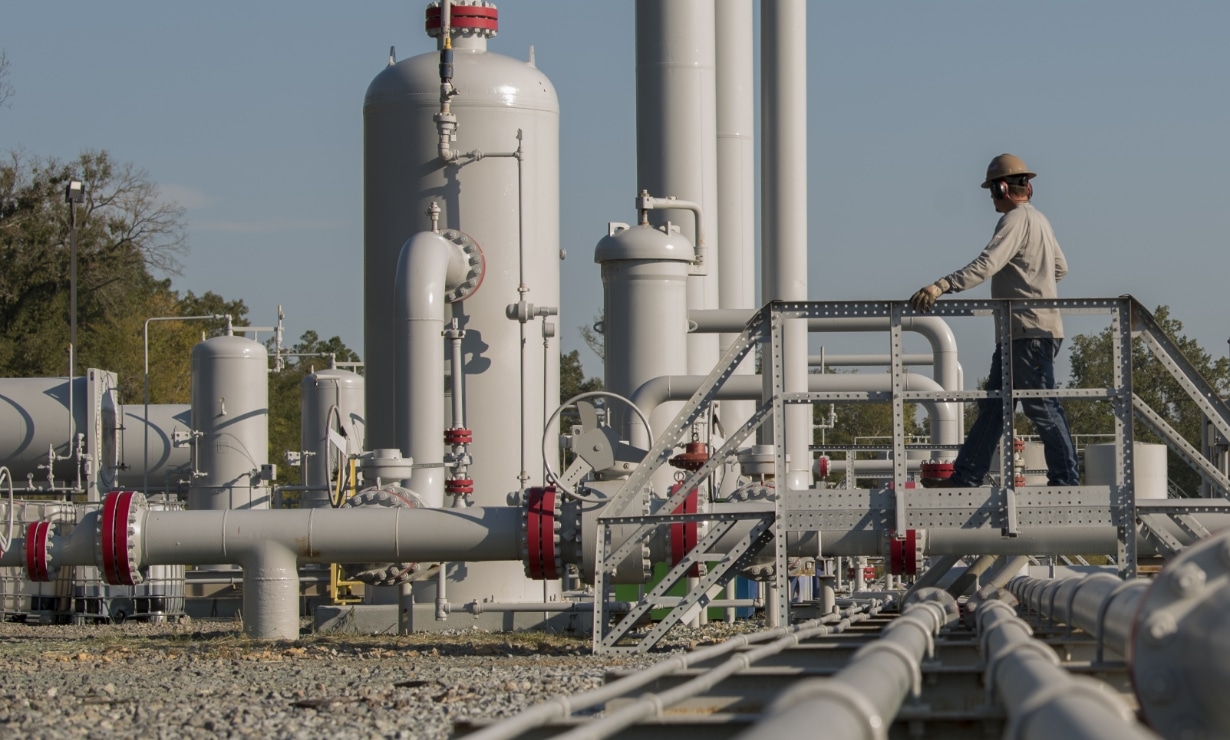
Diversified Energy Company (LON:DEC) is broadening its growth strategy with the launch of its first operated drilling campaign, adding another potential source of production alongside acquisitions and its existing non-operated drilling programmes.
The latest research note from Tennyson Securities, dated 27 August 2026, says the move represents an evolution of Diversified Energy’s model as the business grows in scale. The broker has reiterated its BUY recommendation and 2,000p per share target price, compared with a share price of 1,062p at the time of publication.
Tennyson believes the new operated drilling strategy gives Diversified greater control over costs and timing, while potentially reducing the company’s reliance on acquisitions simply to offset the natural decline of its existing production base.
Research Analyst Tim Hurst-Brown wrote:
“We believe the fact acquisitions are no longer required just to stand still enhances the overall investment case.”
Diversified Energy launches Oklahoma operated drilling programme
Diversified Energy plans to invest approximately US$145 million across 2026 and 2027 in its initial operated drilling programme, including US$35 million to US$50 million during 2026.
The programme is expected to involve 19 liquids-rich gas wells, with approximately half of the production mix comprising oil and natural gas liquids. The wells will be drilled in Oklahoma through a multi-year, one-rig programme led by Chief Operating Officer Rick Gideon.
The strategy builds on acreage accumulated through acquisitions, including Maverick Natural Resources and Camino. According to Tennyson, Diversified now has around a 20-year drilling inventory in Oklahoma at a one-rig pace.
Operating the drilling programme itself gives Diversified the ability to adjust spending according to factors including commodity prices and acquisition activity.
The programme will sit alongside Diversified Energy’s three existing non-operated drilling arrangements with Mewbourne, Continental and another private operator.
Tennyson estimates the non-operated programmes could offset approximately 50% of the company’s natural production decline, equivalent to additions of around 12.5 kboepd during 2026. The broker believes material production from the new operated programme should begin contributing during 2027.
Diversified Energy Q2 and FY26 highlights
The research note also reviews Diversified Energy’s second-quarter performance and upgraded full-year guidance.
- Q2 hedged revenue was US$459 million, up 8% quarter-on-quarter.
- Q2 production increased 5% quarter-on-quarter to 209 kboepd.
- Q2 EBITDA was US$240 million.
- Q2 free cash flow was US$115 million.
- Underlying EBITDA increased 16% quarter-on-quarter after adjusting for the impact of undeveloped acreage sales
- Underlying free cash flow increased 53% quarter-on-quarter.
- Liquidity stood at US$678 million, compared with US$529 million at the end of the first quarter.
- Leverage was 2.45 times at the end of Q2, compared with 2.2 times at the end of Q1.
- FY26 EBITDA guidance midpoint increased 3.7% to US$985 million.
- FY26 free cash flow guidance increased 2.3% to US$440 million.
A financial table within the research note also shows Tennyson forecasting US$985.1 million of hedged EBITDA and US$439.3 million of free cash flow for 2026, followed by US$987.5 million of EBITDA and US$470.6 million of free cash flow in 2027.
Capital spending remains below gas-sector peers
Diversified is guiding towards annual group capital expenditure of between US$250 million and US$300 million.
Around half of this is expected to be allocated to operated drilling, with 30% going towards non-operated drilling and the remaining 20% towards maintenance activities.
Tennyson estimates this level of spending equates to approximately 25% to 30% of annual EBITDA, which the broker says remains materially below the capital intensity of the wider peer group.
The chart on page two of the research note compares Diversified with other US gas producers. It shows DEC with a production decline rate of around 10% and capital intensity of approximately 25%, compared with a peer average decline rate of 31% and materially higher capital spending requirements across the comparison group.
This relatively low natural decline rate is an important part of the broker’s investment case because Diversified requires less replacement capital to maintain production than businesses with faster-declining portfolios.
Portfolio sales unlock additional value
Diversified has also continued to reshape its portfolio.
The company completed two non-core divestments involving approximately 9 kboepd of lower-margin Barnett and Arkansas production for US$147 million.
Tennyson notes that the assets contributed approximately US$15 million of annual EBITDA, implying a transaction multiple of around 10 times. That compares with Diversified’s 3.7 times trading multiple cited in the research note.
The transactions generated more than US$50 million of liquidity after costs, hedge termination and debt repayment, while the exit from higher-cost assets is expected to improve pro-forma cash margins.
These sales followed US$126 million of undeveloped acreage disposals during the year, further illustrating how Diversified is seeking to realise value from assets that are not central to its production strategy.
Tennyson sees valuation gap
Tennyson continues to describe Diversified Energy as undervalued.
The broker says the shares were trading at approximately 3.7 times FY26 EV/EBITDA, below the company’s historical 4.3 to 5.3 times range between 2021 and 2024 and at an approximately 30% discount to the US gas-weighted peer group.
Tennyson also forecasts an 8% dividend yield, with 2026 free cash flow covering the dividend 6.5 times.
Its valuation table on page four calculates a risked total NAV of 2,000p per share, matching the broker’s target price. The analysis incorporates producing assets, projected year-end 2026 net debt and additional value attributed to land sales.
Final Thoughts
Diversified Energy’s new operated drilling programme adds another component to a business model historically centred on acquiring and optimising mature producing assets.
The significance of the strategy is less about replacing M&A and more about giving the company another option for maintaining or growing production. Together with existing non-operated drilling programmes, Tennyson believes the initiative could allow Diversified to offset much of its natural decline through organic investment.
With FY26 guidance upgraded, liquidity of US$678 million reported at the end of the second quarter and further portfolio optimisation underway, Tennyson continues to see scope for the market to place a higher valuation on the business.