Frac sleeves used in oil and gas operations are exposed to high-velocity fluids containing sand and ceramic proppant. These materials can quickly wear down internal surfaces, particularly around ports, ball seats and changes in bore diameter.
Conventional surface treatments can struggle to protect frac sleeves from this type of erosion.
Gas nitriding hardens only the surface of the steel. Once this hardened layer wears away, the softer material underneath becomes exposed. Hard chrome plating can also deteriorate under repeated particle impact, while applying it evenly inside deep bores can be difficult.
HVOF thermal spray coatings provide a hard surface but can be difficult to apply consistently inside complex components. The metallic binder within these coatings can also wear faster than the carbide particles, weakening the coating over time.
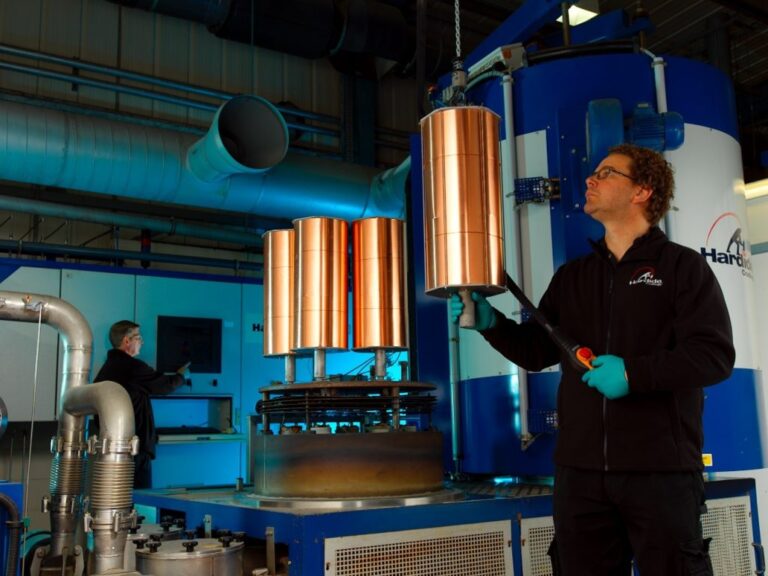
Chemical vapour deposition (CVD) tungsten carbide offers an alternative. The process creates a dense coating that can cover internal bores, ports and other areas that are difficult to reach using conventional coating methods.
The coating combines hardness with resistance to repeated particle impact. This is important because a coating must withstand both abrasion and impact to protect components operating in demanding downhole conditions.
Testing cited by Hardide found that its Hardide-T CVD tungsten carbide coating experienced seven times less erosion than HVOF 85WC-10Co-4Cr and 125 times less erosion than stainless steel under ASTM G76-95 testing conditions.
Hardide plc (LON:HDD) is a pioneer in advanced tungsten/tungsten carbide CVD coatings. They showcase unmatched capabilities to greatly extend the life of complex geometry components facing extreme wear, erosion and corrosion.