Emerging market equities have returned to prominence in 2026, supported by strong gains across parts of the technology sector and growing enthusiasm around artificial intelligence investment. Much of the attention has centred on a small group of very large companies, particularly Taiwan Semiconductor Manufacturing Company, Samsung Electronics and SK Hynix, which together account for around 30% of the MSCI Emerging Markets Index.
Rising expenditure on artificial intelligence infrastructure has increased demand across advanced semiconductor production and memory, while capacity remains constrained in several areas of the supply chain. These conditions have created a supportive backdrop for some of the largest technology businesses in emerging markets.
However, index concentration also increases the importance of looking beyond the most prominent names. Emerging markets span a wide range of sectors, company sizes and countries, with significant differences in valuations, competitive positions and growth prospects. This creates scope to identify businesses whose prospects are driven by structural themes that may not yet be fully reflected in their market profile.
One example is Sieyuan Electric, a Chinese manufacturer of high-voltage switchgear and transformers used in electricity transmission. The company is not currently included in the emerging markets index because of foreign ownership limits, meaning it sits outside the universe most closely followed by index-focused capital.
The wider backdrop for China remains mixed. Weakness in the property market continues to weigh on household confidence, while banks face pressure from declining asset quality and lower interest rates. At the same time, selected industrial businesses are benefiting as China moves into more technically advanced areas of manufacturing.
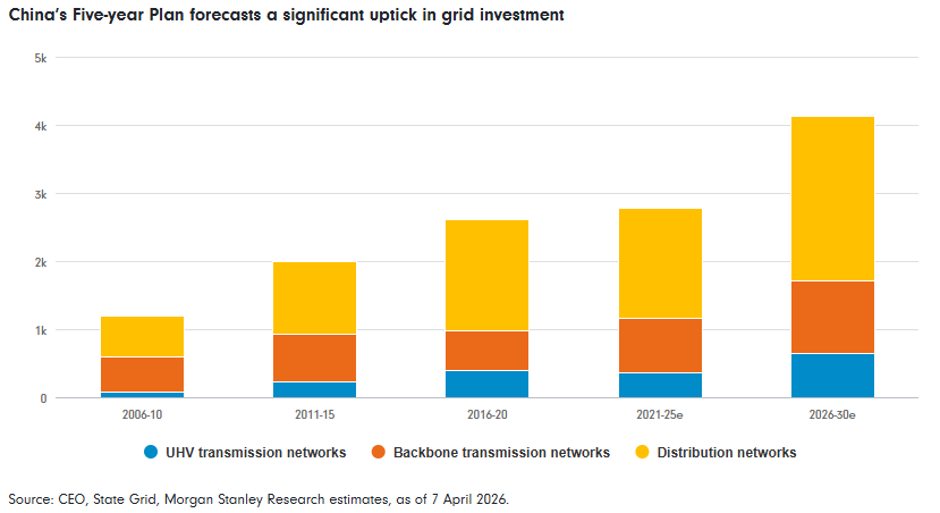
Electricity infrastructure is one such area. Power grids in many countries require substantial upgrades, while renewable energy development and the increasing electricity requirements of AI data centres are adding to long-term investment needs. China’s Five-Year Plan also anticipates a significant increase in domestic grid spending.
Sieyuan appears well positioned within this environment. Its private ownership distinguishes it from many state-owned competitors and may help it compete for engineering talent, develop new products and gain market share. The company also invests heavily in research and development relative to global peers, supporting its role in the development of Chinese grid components.
Its international opportunity could also become increasingly important. Global supplies of high-voltage transformers remain constrained, while established competitors are dealing with lengthy order backlogs. This has encouraged customers to consider alternative suppliers capable of delivering equipment more quickly. With Sieyuan estimated to hold only around 0.8% of its addressable overseas market in 2025, further export growth could provide a meaningful source of expansion if execution remains strong.
A different type of opportunity can be found in Georgia through TBC Bank. Financial companies in emerging markets often trade at lower valuations than developed-market peers, while some smaller economies benefit from highly consolidated banking systems that can support stronger competitive positions.
TBC Bank is one of two dominant banks in Georgia, with the pair accounting for around 80% of the market. The country’s relatively small population limits the incentive for new competitors to enter at scale, helping reinforce the position of established operators.
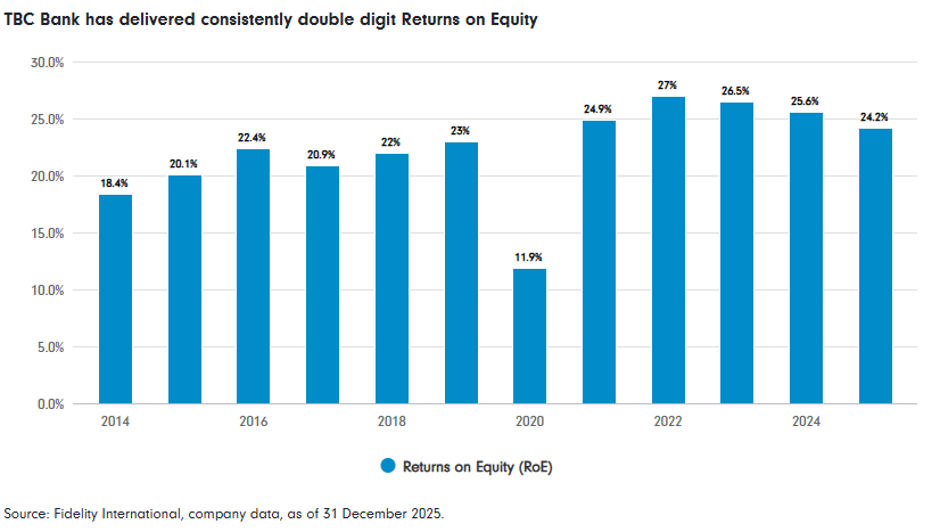
The bank combines this market structure with strong capitalisation, consistent returns on assets and continued loan growth. Its ability to deploy surplus capital into an expanding lending market supports its capacity to generate returns on equity. Despite these characteristics, the shares trade on a mid-single-digit earnings multiple, creating a valuation contrast between the bank’s current profitability and the price placed on those earnings.
TBC is also expanding into Uzbekistan through a recently launched digital bank. Uzbekistan has a population approximately seven times larger than Georgia’s and a less mature banking system. This gives the group access to a substantially larger potential market, although the eventual contribution will depend on the pace of customer adoption and the bank’s ability to build scale efficiently.
Technology opportunities also extend beyond the most visible semiconductor companies. Taiwan-based Elite Material manufactures copper-clad laminate, a material used in printed circuit boards. While traditionally associated with a broad range of electronics, higher-end versions are increasingly required in AI servers.
Demand for advanced copper-clad laminate is rising as server projects expand, while only a limited number of manufacturers are able to produce the required grades. Elite holds close to a 50% share of this segment, giving it a strong position in a market where supply remains tight.
The company could also benefit from a shift in its sales mix towards higher-end AI infrastructure products. These products command higher prices, while increasing printed circuit board complexity may support further increases in average selling prices. If these trends continue, the combination of stronger pricing and a more profitable product mix could provide additional support for margins.
This makes Elite an example of how exposure to AI infrastructure can be found further down the supply chain rather than solely through the largest semiconductor manufacturers. That distinction also has portfolio relevance at a time when technology index concentration is rising and certain UCITS funds are restricted by limits on individual stock positions.
The broader emerging markets opportunity therefore extends well beyond a small number of mega-cap technology companies. China’s electricity infrastructure investment, Georgia’s concentrated banking market and Taiwan’s specialist AI supply chain each illustrate how different structural drivers can create opportunities across regions and industries.
The trade-off is that these opportunities also come with distinct risks. Smaller companies can face lower liquidity, frontier markets can be more volatile, international expansion can introduce execution challenges and emerging markets remain sensitive to political, regulatory and currency changes. Investment trusts can also experience share-price movements that differ from the value of their underlying assets, while gearing and derivatives can increase volatility.
Against that backdrop, the case for a selective approach rests on identifying companies with defensible competitive positions, credible growth drivers and valuations that leave room for execution. As emerging markets become increasingly concentrated at the top of the index, businesses operating outside the largest constituents may offer a broader range of ways to access long-term structural themes while reducing reliance on a narrow group of market leaders.
Fidelity Emerging Markets Limited (LON:FEML) is an investment trust that aims to achieve long-term capital growth from an actively managed portfolio made up primarily of securities and financial instruments providing exposure to emerging markets companies, both listed and unlisted.