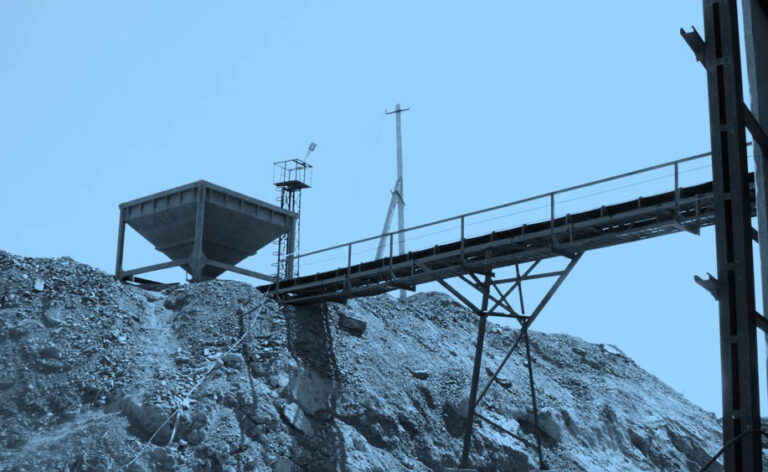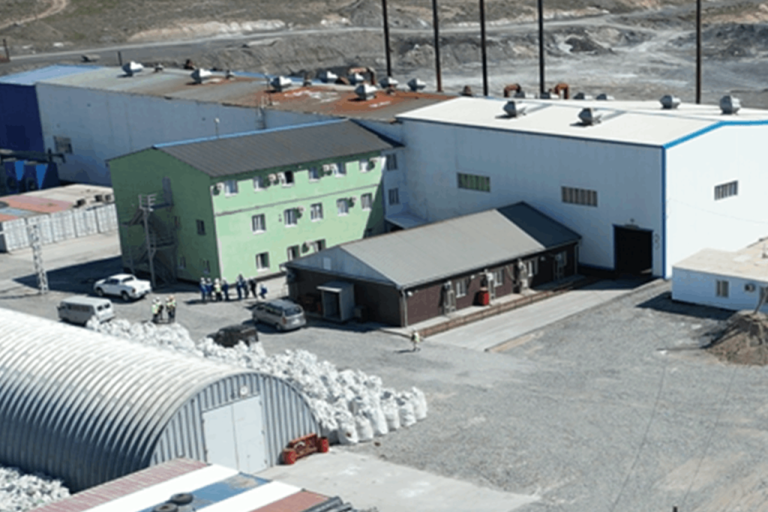
Ferro-Alloy Resources is developing the Balasausqandiq vanadium deposit in Kazakhstan, a project with the potential to support large-scale vanadium production alongside the recovery of several additional materials.
The deposit contains seven identified ore bodies, with the first, OB1, hosting an estimated 32.89 million tonnes of ore at an average vanadium pentoxide grade of 0.62%. This equates to approximately 203,634 tonnes of contained vanadium pentoxide.
The company’s development strategy is based on a phased approach, beginning with planned processing capacity of 1.65 million tonnes of ore annually, with potential expansion to 5 million tonnes. The longer-term development concept envisages processing up to 10 million tonnes per year, potentially producing approximately 55,000 tonnes of vanadium pentoxide annually.
Vanadium is primarily used in steel production, where it improves strength and durability. It also has applications in aerospace and transport materials, while vanadium redox flow batteries offer another potential source of demand through their use in large-scale electricity storage.
These batteries are designed for stationary energy storage and can provide extended discharge periods. Their electrolyte can be reused through repeated charging cycles, while their design allows storage capacity to be increased independently of power output.
The Balasausqandiq deposit also contains molybdenum, uranium and carbon, providing potential opportunities for additional product recovery. Carbon represents more than 8% of the ore and has been identified as a potential source of material for industrial applications.
Testing of the carbon concentrate has indicated its potential use as a partial substitute for conventional carbon black in rubber manufacturing, including tyre production. Test work has examined replacement levels of up to 10%, with results indicating comparable physical properties to conventional formulations.
The project’s location also provides access to established infrastructure, including road connections, high-voltage electricity, telecommunications and regional rail links. The deposit is approximately 70 kilometres from Shieli in Kazakhstan, with the railway providing connections along a major transport corridor.
Ferro-Alloy Resources Ltd (LON:FAR) is developing the giant Balasausqandiq vanadium deposit in Kyzylordinskaya oblast of southern Kazakhstan. The ore at this deposit is unlike that of nearly all other primary vanadium deposits and is capable of being treated by a much lower cost process.