Gemma Cairns-Smith, Investment Specialist at Ruffer Plc, believes financial markets could be approaching a change in regime, with rising bond yields and increased interest rate volatility creating a more uncertain investment environment.
In her latest Green Line commentary, titled “Out of the woods?”, Cairns-Smith examines how market conditions have changed following several years of relative stability and considers the potential implications for equities, government bonds and other asset classes.
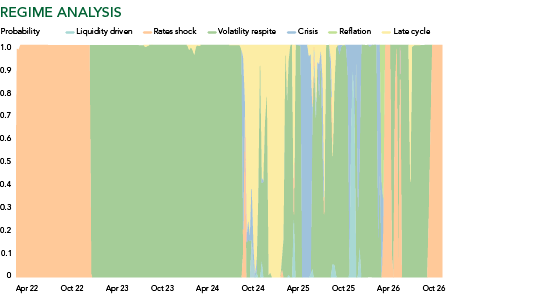
She explains that markets experienced a period of relatively calm conditions and buoyant asset prices during much of 2023 and 2024. However, since the end of 2024, markets have moved between different regimes with increasing frequency, suggesting a less stable underlying environment.
Cairns-Smith points to developments in September 2026, when the US 10-year Treasury yield increased rapidly from 5.0% to 5.3% during the final ten days of the month. This movement indicated that pressure in the bond market was beginning to affect other asset classes, with credit spreads also widening.
According to Cairns-Smith, the most likely near-term scenario is that markets remain in a rates shock regime. However, she identifies two possible alternative outcomes: a return to calmer conditions as yields stabilise, or a broader crisis involving declines across equity and credit markets.
Ruffer has positioned its portfolio to account for both possibilities. Cairns-Smith explains that the firm increased its exposure to interest rate sensitivity, doubling portfolio duration from approximately two years to four years as higher yields created more attractive opportunities in government bonds.
This adjustment has already contributed positively as yields declined during October. Cairns-Smith notes that a one percentage point fall in yields could now add approximately 4% to portfolio returns, compared with around 2% before the increase in duration.
She also highlights the potential defensive role of government bonds if a deflationary downturn develops, while explaining that Ruffer retains other forms of protection should inflationary pressures cause equities and bonds to fall together.
Cairns-Smith’s assessment is that the direction of markets remains uncertain, making portfolio positioning across different potential outcomes an important consideration. Rather than relying on a single market forecast, Ruffer combines quantitative analysis with investment judgement to prepare for changing conditions.
Chart source: Ruffer, November 2026