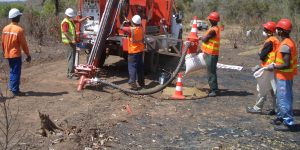
Cora Gold Limited (LON:CORA) Chief Executive Officer Bert Monro caught up with DirectorsTalk to discuss the fully funded Sanankoro Gold Project and its plans to expand resources through a major drilling campaign.
Q1: Bert, could you just give us a quick overview of this morning’s news and why now is the right time to launch a major drilling campaign at Sanankoro?
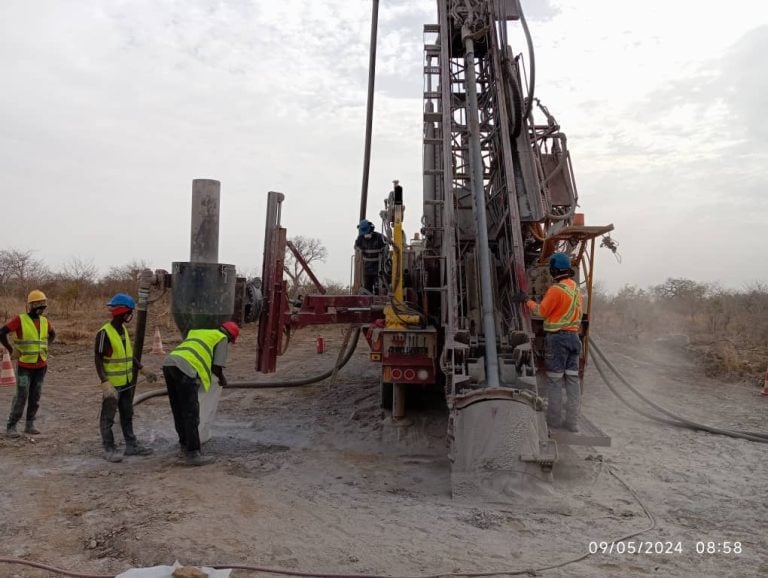
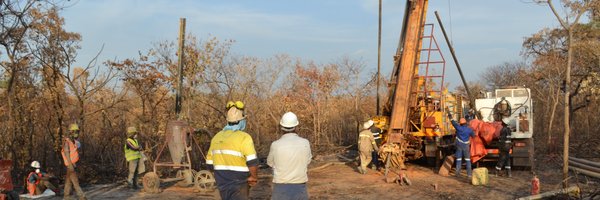
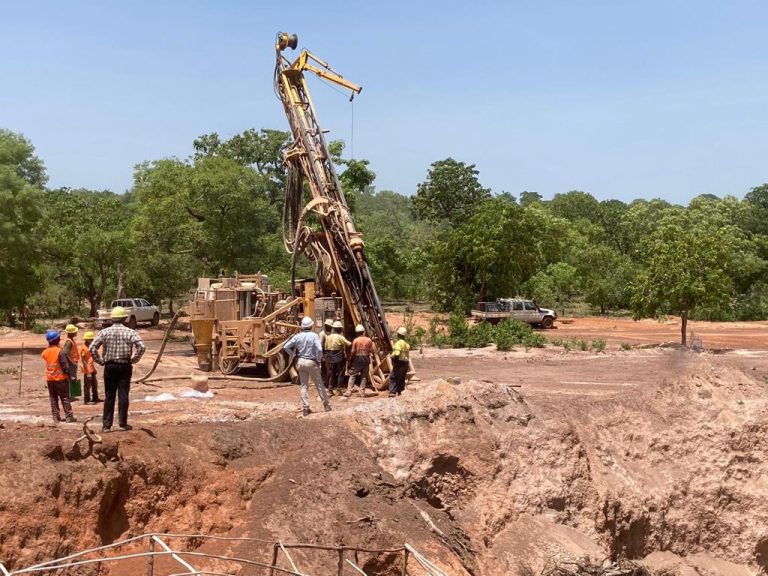
A1: This morning, we announced we’re going to drill around 12,000 metres of drilling at Sanankoro. Obviously, Sanankoro is our primary asset. We’ve got currently an MRE of about a million ounces of gold there in JORC compliant resources. All of our deposits are currently open at depth and along strike as well. So, obviously very keen to do more drilling and look to expand those resources as we look to the future.
In terms of why now obviously we recently fully funded the project so now we’re looking to move the project forward. We recently announced that we’re commencing the FEED and following from that doing some additional drilling work to make sure we look to optimise this project as much as we can as we move towards construction and into production.
Q2: Now, as investors are aware, following your news in March and April this year, Sanankoro is now fully funded to production. How does being fully funded change the way that you’re thinking about exploration and long-term value at Sanankoro?
A2: It’s been obviously great news and a great position for Cora Gold to be in to be fully funded at this stage. We’re looking to move the project forward as quickly as we can. We announced our commencement of our FEED last week, which is a significant step forward while we wait for final permits to be in place.
As it stands, we’ve currently got a 10-year reserve life on the project, currently got a million ounces of resources. Within our 10 years of reserve life the last few years, the production starts to dip off. We also know that all of our deposits are currently open, both along strike and at depth. So, the ability to have funds in the account and the ability to remain fully funded and do this drilling means that we can look to drive forward and optimise our resources and reserves.
So really now is a good moment. There’s a window now before the wet season starts in Mali to get this drilling done. It allows us through the wet season to analyse the results and data and obviously look to update an updated MRE later on in the year.
For us, the timing is a combination of our financial position, which is significantly stronger, which is great. Looking to make sure that when we move into construction, we’re building the optimum project that we can.
Q3: Now, as you mentioned, the current mine plan already outlines a 10-year mine life. What gives you confidence that Sanankoro has the potential to become a significantly larger operation than what’s captured in today’s resource and reserve base?
A3: As I touched on before, our resources are currently at a million ounces, of which we’ve got about half of that currently converted into reserves. We’ve got just over half a million ounces of reserves. In addition to our million ounces of resources, we’ve also got an exploration target of up to over a million ounces as well and as I touched on, all of our deposits are currently still open.
So, this project has been very under drilled in many ways and ultimately, we’ve been very focused on trying to keep our costs as lean as possible and get ourselves in a position where we’re construction ready.
Additional drilling, we’re almost certain, will add to additional resources so that’s obviously an exciting prospect for us.
Q4: Almost 40% of the planned drilling is allocated to Zone B. Can you just talk us through the decision to focus so many metres on that area, and why do you see it as the bigger near-term opportunity for resource growth?
A4: I think when people have hopefully looked at maps of our project, you can see that you’ve got these parallel mineralised structures. Zone B is an interesting one. It’s formed up of a number of different deposits in Zone B and there’s obviously gaps between those deposits.
I think there’s a huge amount of value if you can look to infill drill between the existing deposits and look to see if you can’t join up and make it one larger pit. Significant benefits of not having multiple pits and obviously looking to have a lesser number of larger pits.
So for us, we think there’s a big opportunity at Zone B to expand resources fundamentally, but I think also, as well as expanding resources there, there’s the opportunity to optimise the mine plan in that regard as well.
Q5: Now, Selin is already your largest resource at 430,000 ounces. What are you hoping to learn from this next phase of drilling, particularly around the western mineralised zone and the deeper extensions below the current pit shells?
A5: I think what we’ve seen is Selin is our most northerly deposit, it’s often had some of our best grades there as well so adding better grade ounces is always a good thing to do. I think historical drilling has shown that there’s potentially additional resources heading west. It’s something which you picked up on from the press release we’re looking to follow up on.
I think the other exciting prospect at Selin is this looks to be quite a strong transitional zone there, which is very under drilled. I think if we can look to define that transitional zone, that could have a lot of advantages for us.
Just to recap on the technical side of that. One of the big strengths of Sanankoro is it’s a predominantly oxide deposit, and by oxide, I mean effectively a free digging ore that you don’t need to drill or blast or go through multiple phases of crushing. At the base of your oxide zone, you then go into what’s traditionally called a transitional zone before you get into fresh hard rock.
The benefit of a transitional zone, it acts sort of quasi like an oxide zone, so you get some of the benefits of the free digging material and minimal crushing at the process plant as well. So, if you can find good grade transitional material at Selin, that could be very positive for the mine plan.
Q6: One of the interesting aspects of the programme is the balance between extending known deposits and testing new targets. How important are the greenfield targets in Cora Gold’s broader growth strategy?
A6: I think the vast majority of the resources is targeted on the lowest hanging fruit, so looking to expand existing deposits. We have allocated around 5% of the drilling budget towards greenfield targets. I think over the last few years, we’ve put up various exploration updates, and we’ve touched on the fact that from soils and trenching and other forms of earlier stage exploration, we’ve made new discoveries on the project area.
So, the ability to stick a few holes in those and see if the drill bit can also deliver some similarly good results and it could be really exciting, I think. I think projects can often get pigeonholed by the ounces you have when you deliver your feasibility study, but we certainly feel that Sanankoro has got a lot more to give.
I think we can hit some nicer discovery holes into these greenfield targets with a drill rig for the first time. I think that hopefully will start to show our investors additional ways that we can expand resources over and above expanding existing deposits.
Q7: Before we finish up, for investors who see Sanankoro primarily as a near term development story, what message would you like them to take away about the project’s longer term exploration upside?
A7: I think it’s a very large permit area. Sanankoro itself is an 80 plus square kilometre permit and there’s obviously neighbouring permits, which we have as well. The Sanankoro project area, it’s a significant land mass. We’ve done very focused exploration and drilling around the existing deposits but there’s a huge area which has been relatively untouched.
Our firm belief is that this project will continue to expand significantly. We’ve got an awful lot of historical data on the project from an earlier stage. The project was historically owned by Gold Fields, one of the major gold companies in the world, who did a lot of work on it over a dozen years ago now. For us being able to follow up on historical targets, as well as following up on work we’ve done as well at an earlier stage over the last five to ten years as well, with additional resources, as in additional money, the ability to put the money into exploration, I have no doubt will bear very good fruit for us. So, yes, it’s certainly very exciting.
As you touched on, the project economics for our feasibility study look absolutely fantastic. I think we’re really excited to be getting this project moving forward. They commenced another FEED. I was in Johannesburg last week sitting with SENET for a few days and going through the FEED, which is effectively the first phase of your construction as you start to do all the detailed design and engineering work. So, it’s a really exciting phase for the project and really looking forward to moving it forward.