Uranium supply is becoming a more immediate issue as nuclear capacity expands and new mine development struggles to keep pace.
More than 8.1 million tonnes of identified uranium can be recovered at costs below US$260 per kilogram, enough to cover projected requirements through 2050. The challenge is bringing those resources into production quickly enough.
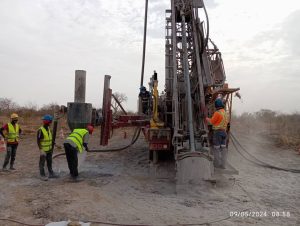
New uranium mines can take 15 to 20 years to move from exploration through permitting, construction and production. That long development cycle limits the industry’s ability to respond rapidly as nuclear fuel demand rises.
As of 1 January 2025, 418 commercial nuclear reactors were operating worldwide, representing 378 GWe of net generating capacity and requiring about 64,500 tonnes of uranium each year. Another 23 reactors representing 19.7 GWe were in suspended operation.
Annual uranium requirements are projected to rise to between roughly 84,800 tonnes and 143,900 tonnes by 2050 as more nuclear capacity comes online.
China is a major part of that expansion. It has around 68 GWe of existing nuclear capacity, with another 42 GWe under construction and 26 GWe planned. More than 30 GWe is also under construction or planned elsewhere in Asia, while Europe has more than 20 GWe in development.
Global uranium exploration and development expenditure exceeded US$1.78 billion in 2023 and 2024, around 46% higher than in 2021 and 2022.
Geiger Counter Limited (LON:GCL) is a Jersey closed-end investment company, which invests in uranium exploration and production stocks.