Tantalum is a rare metal used in products that require durability, compact size and resistance to heat or corrosion. Its main markets include electronics, medical devices, chemical processing and aerospace components.
Its most important commercial use is in capacitors. Tantalum forms a stable oxide layer that acts as an electrical insulator. This allows manufacturers to produce small capacitors with high capacitance. These components are used in mobile phones and other compact electronic devices.
This gives tantalum a direct role in electronics supply chains. Demand depends on the production of devices that require reliable performance in limited space. Substitution is possible in some cases, but alternative materials may involve design changes, lower performance or higher costs.
Tantalum can be used in equipment exposed to aggressive chemicals and other demanding operating conditions. Applications include chemical processing equipment, electrodes, rectifiers and specialist optical glass.
The metal also performs well at very high temperatures. It has a melting point of 3,017°C and a boiling point of 5,455°C. Tantalum alloys are used where strength and heat resistance are essential, including turbine blades, rocket nozzles and parts for supersonic aircraft.
Tantalum is non-toxic and causes no known immune response in mammals. It is used in surgical implants, skull plates, wire for connecting damaged nerves and woven gauze that supports abdominal muscle.
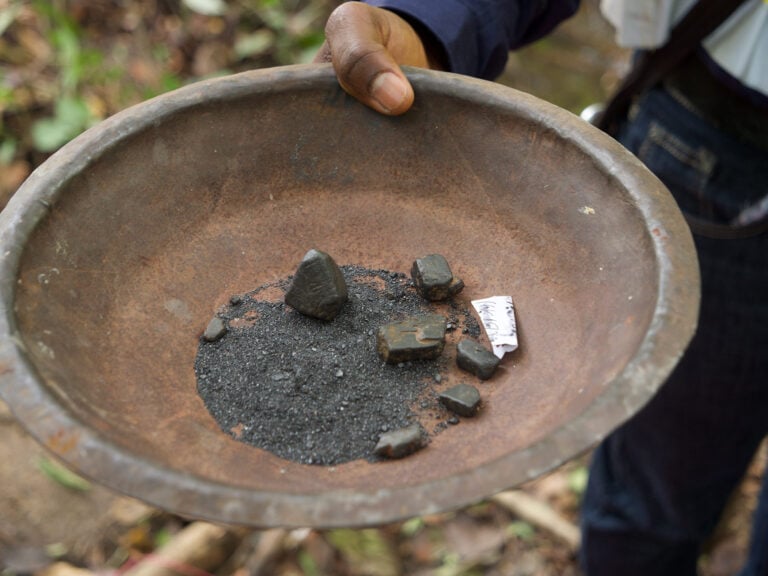
Supply is limited by geology and processing complexity. Tantalum is not normally found as a pure metal. It is mainly extracted from columbite-tantalite, which also contains niobium. The two elements have similar chemical properties, making separation difficult. Tantalum can also be produced as a by-product of tin extraction.
Switch Metals plc (LON:SWT) is the largest holder of coltan (tantalum and niobium) and lithium licences in Côte d’Ivoire with over 3,000 km2 including our licence applications.