SSP Group plc (LON:SSPG), a leading global travel food and beverage operator, has issued its results for the half year ended 31 March 2026.
| Underlying Pre-IFRS 161,2 | Statutory IFRS | |||||
| (unaudited) | H1 2026 | vs 2025 | H1 2026 | vs 2025 | ||
| At actual FX rates | At constant FX rates3 | At actual FX rates | At actual FX rates | At actual FX rates | ||
| Sales growth | 6.2% | 6.2% | Revenue | £1,763m | 6.2% | |
| Operating profit | £50m | 17.8% | 9.3% | Operating profit | £63m | 320.0% |
| Operating profit margin | 2.8% | 30bps | 10bps | |||
| Earnings per share | 1.1p | n/m | +1.5p | Loss per share | (2.0)p | +5.7p |
| Free cash flow (pre-dividend and share buy-back) | £(176)m | n/a | £(34)m | |||
| Profit before tax | £7m | £44m | ||||
| Net debt4 | £(820)m | n/a | £(56)m | Net debt4 | £(2,096)m | £(189)m |
| Net debt/EBITDA 4,6 | 2.2x | n/a | 0.0x | |||
Financial Highlights (underlying pre-IFRS 16, unless otherwise stated)
· Revenue: £1.8bn, up 6% (on a constant currency basis) incl. LFL growth of 5% and net gains of 2%
· Operating profit: £50m at actual FX rates; £52m on a constant currency basis, up 18% with margin accretion of 30 bps YoY
· Free cash flow5: £(176)m (pre-dividend and pre-buy back) after £(124)m seasonal & planned one-off working capital outflows and capex of £93m (£130m LY)
· Net Debt/EBITDA6: 2.2x; expected to be at lower end of 1.5-2.0x guided range at FY
· EPS: 1.1p, up by 1.5p from loss per share of (0.4)p LY; includes benefit of targeted reduction in minority interest
· Proposed interim dividend: 1.6p (LY: 1.4p)
· Capital allocation: £100m share buyback now c.60% complete; 4% of share capital bought back
· IFRS operating profit: £63m (LY: £15m); YoY increase largely reflects lower net charge for non-underlying items
‘Focus 26’ plan to accelerate shareholder value delivery progressing well
· Like-for-like sales in Q2 sustained at 5% (Q1:5%), with group-wide trading momentum (incl. LFL improvement in North America from 1% in Q1 to 3% in Q2) offsetting the impact of Middle East conflict in the quarter
· Enhanced operational disciplines driving further Group margin improvement; e.g. in Continental Europe, we delivered operating profit improvement of 70bps and are on track to deliver >3.0% operating margin in the year
· Programme of activity to drive cash conversion progressing well including driving stronger operating standards, working capital initiatives and disciplined allocation of FY capital investment of <£200m
· Next phase underway following wide-ranging review of Continental European Rail business7; intention to exit approximately a third of estate; proposed focus on larger units and higher returning concepts; reduction in future capital requirements
· Board continues to consider options to create value for SSP shareholders in line with delivery of TFS free float requirement by July 2028; precise timing subject to market conditions
· Based on trading for first six weeks of H2 (LFL +3%) and assuming that the current operating environment remains substantially unchanged through H2, our FY26 EPS expectations remain within the market consensus8 range of 13.6-14.8p (post-buyback); we continue to expect free cash flow (pre-dividend, pre-buyback) of >£100m, and further year-on-year progress in ROCE
Patrick Coveney, Group CEO, said:
“This has been a period of resilience and progress for SSP. We’re pleased to have delivered good trading and profit improvements against a challenging backdrop for the global travel sector in the half, underlining the strength of our geographically diversified business model and disciplined operational execution across our portfolio.
The external environment is uncertain given current events in the Middle East, where I’d especially like to thank our colleagues for their remarkable focus and commitment during this period. That said, our strategy and priorities are unchanged. While we recognise there is of course more to do, through our ‘Focus26’ plan, we continue to strengthen operational performance across the Group, with clear initiatives underway to drive sustainable improvements in profitability, cash generation and returns on capital.
Having concluded the wide-ranging review of our rail business in Continental Europe, we are starting to implement our plans. I’m confident these will deliver a smaller, more profitable and more cash generative business in this region over time.
Our teams remain focused on what we can control – delivering for our customers, supporting our partners, and executing great operational discipline. Taken together, and given overall good trading at the start of the second half, we remain confident in our prospects for the remainder of the year.”
Full Year Outlook
The Group as a whole is currently trading solidly, with LFL growth of 3% in the first 6 weeks of H2 (from 1 April to 10 May), as compared to 5% LFL growth delivered in both Q1 and Q2. Assuming the current operating environment remains substantially unchanged through H2, and at today’s FX rates, our expectations for FY26 EPS remain within the market consensus8 range of 13.6p – 14.8p (post-buyback). On the same basis we also continue to expect to improve free cash flow (pre-dividend, pre-buyback) to >£100m in FY26, and as we tightly manage our capital allocation, we expect further progress in ROCE towards our medium-term target of 20%. However, if the operating environment were to deteriorate e.g. due to a resumption of the conflict in the Middle East, a material further decline in the availability of aviation fuel, or a marked softening of consumer travel sentiment, it would inevitably impact our full year performance.
Passenger numbers in the UK, North America and Continental Europe – which taken together comprise slightly more than 80% of group sales – have remained largely unaffected by the Middle East conflict to date. However, passenger flows in our hubs in the Asia PAC & EEME region (excl. the Gulf) – which comprise c.14% of our sales – were impacted in the first 6 weeks of H2 due to a drop in connecting flights as well as by lower local traffic. As a result, LFL sales performance in the Asia PAC & EEME region (excl. the Gulf) has reduced from 14% in March to 0% in the first 6 weeks of H2. In the Gulf, our operations (comprising c.2% of group sales) are running on average at 60% of usual capacity. More detail on regional sales performance can be found on page 8.
Visibility to the resolution of this conflict continues to be limited and we are monitoring developments closely. However, our focus remains on what we can control, including accelerating the actions we are taking to drive performance through our ‘Focus 26’ operational plan and through delivery of profit protection plans in the directly affected region. While mindful of the uncertainty surrounding the conflict and its likely duration, we are confident that the diversification of our global footprint and the resilience of our operating model will help alleviate any adverse effects on our trading.
We remain confident in our prospects for long-term growth and returns given our leading positions in structurally attractive markets.
Board Update
As previously announced, Andrew Martin has been appointed Chair of the Board with effect from 1 June 2026 and will succeed Carolyn Bradley who has served as Interim Chair since 23 January 2026. During the transition period, the Board has steered a ‘Focus 26’ Review Committee to provide appropriate oversight, support and challenge to the management team.
The Board regularly reviews its composition to ensure it remains well positioned to support the Group’s priorities. As a result, we have today announced the appointment of Candace McGraw as Non-Executive Director, effective from 1 June 2026. Candace has significant industry and relevant operational experience to further widen the Board’s expertise.
The Board remains resolutely focused on accelerating the delivery of value for shareholders through our ‘Focus 26’ operational plan and our additional levers for value creation.
‘Focus 26’ operational plan: Improving value delivery for shareholders
The elements of our ‘Focus 26’ operational plan to drive profit, cash and returns in FY26 are as follows:
· Drive profitable organic growth and contract retention, prioritising high growth and high returning markets, targeting mid-single digit sales growth
· Execute our recovery plan for Continental Europe, increasing regional operating profit margin from 2.2% to >3% in FY26
· Deliver Group-wide cost efficiencies across our cost base, particularly as we reset sub performing units and contracts; embed our recent corporate and regional overhead restructuring plan which will deliver an annualised saving of £30m (of which £5m in FY25, and the remainder in the current year), assess further efficiency opportunities to underpin profit growth in an uncertain demand environment and make targeted reductions in our minority interest outflows
· Build returns from recent investments and tighten new capital investment, with a year-on-year reduction in capital investment from £212m in FY25 to no more than £200m in FY26; building ROCE from 18.7% achieved in FY25 and ongoing de-prioritisation of M&A
· Strengthen free cash flow (pre-dividend and pre-buyback) to >£100m through operating performance, working capital initiatives and disciplined capital allocation – prioritising profitable organic growth and shareholder returns
Progress against this plan in H1 and actions to further drive performance in H2 are set out below, starting on page 4.
Our remuneration is set up to support the delivery of the objectives within this plan. The Annual Bonus for our Executive Directors this year will be determined by: free cash flow, a component which was newly introduced for this year and which excludes any further usage of supply chain financing over and above the level used at the end of FY25; operating profit, calculated after deductions for minority interests and additions of associates; and EPS. The Performance Share Award, which was introduced from the FY25 financial year, includes a medium-term target for ROCE.
Additional levers for value creation
As we seek to accelerate the delivery of value for shareholders, we have set two additional initiatives, as originally outlined at our FY Results in December 2025:
1) Wide-ranging review of Continental European Rail7
In December 2025, as part of our intensified focus on driving improved returns from the Continental European business, we initiated a wide-ranging review of Continental European Rail to enhance margins while protecting value for SSP shareholders.
Our rail investments in Continental Europe have not delivered adequate returns in recent years. Supported by the consultancy firm, Alvarez and Marsal, we have rigorously assessed potential value-driving options for this portfolio – including an immediate full channel exit – against strict criteria including the feasibility, execution risks and the expected cash costs and benefits of each option.
The review concluded that the strongest approach to protect value for shareholders is to fundamentally reduce the size of our European Rail footprint, focusing on formats with higher sales density and materially reducing its capital requirement. Across c.330 units, we are therefore planning the following actions:
i. Exit underperforming units: Our current proposal would be to exit approximately one third of the estate (subject to local assessment of units and potential consequences for employees). No further capital will be allocated to units in this cohort.
ii. Implement site-level plans to drive strengthened delivery in the remaining performing core and higher potential parts of the estate: Implement specific, site level turnaround plans identified during the review, each with defined performance targets and timelines.
Units in cohort (ii) typically benefit from scale advantages and are principally locations with larger units or locations with a concentrated number of units. We are also prioritising retaining the highest returning concepts and brands, while exiting our lower returning brands and concepts, typically bars and restaurants in this channel. As a result of the combination of these actions, we expect our future capital expenditure in Continental European Rail to reduce by c.50%.
Our intention is that this strategy will deliver a smaller, less capital intensive, and more cash generative Continental European Rail business with a strengthening and more sustainable margin.
Our teams are in place to deliver these planned actions which form part of a broader programme of enhanced operational intensity across our whole Continental European business. The margin improvement and capital discipline embedded in this strategy give the Board confidence that adequate returns from Continental European Rail can now be achieved.
Subject to local assessments and related information and consultation processes, the benefits from this revised strategy for Continental European Rail would be expected to commence largely in the FY27 financial year. Initially, cash benefits would likely be offset by one-off costs of implementation.
A progress update will be shared at our Preliminary Results in December.
2) Consideration of options to realise value for SSP shareholders in line with the delivery of the TFS free float requirement
On 14 July 2025, we successfully listed our Indian subsidiary, Travel Food Services (TFS) on the Indian stock exchanges. At the point of the TFS IPO, our partners and co-promoters, K Hospitality, sold down 13.8% of their shareholding to create an initial free float. Indian listing rules require a minimum free float of 25% of TFS shares within three years of listing. As at 15 May 2026, TFS is trading at a total equity value of c.£1.1bn. The SSP shareholding is currently 50.01%.
In December, we outlined that, as we work with our partner K Hospitality to develop forward-looking plans for TFS, the Board is exploring options to realise value for SSP shareholders in line with the delivery of the TFS free float requirement. This is ongoing with the precise timing dependent on market conditions.
Business Review
Our priority for this year is the delivery of our ‘Focus 26’ plan, facilitated by strengthening operational discipline and reinforcing core operating routines. Progress in H1 and plans for H2 include:
1) Drive profitable sales growth
We sustained group like-for-like sales growth of 5% across both the first and second quarters of the year. Continued strong trading in our UK business, an improving trend in North America, and positive sales momentum in Asia mitigated the impact at the end of Q2 of the conflict in the Middle East.
Across all markets, we focused on driving stronger passenger conversion rates and average transaction values. Recently introduced, improved concepts for customers and clients include the Reserve Bar in Dublin, The Rappahannock Oyster Bar in North America and Master Hungs and Petit Jardin in Hong Kong.
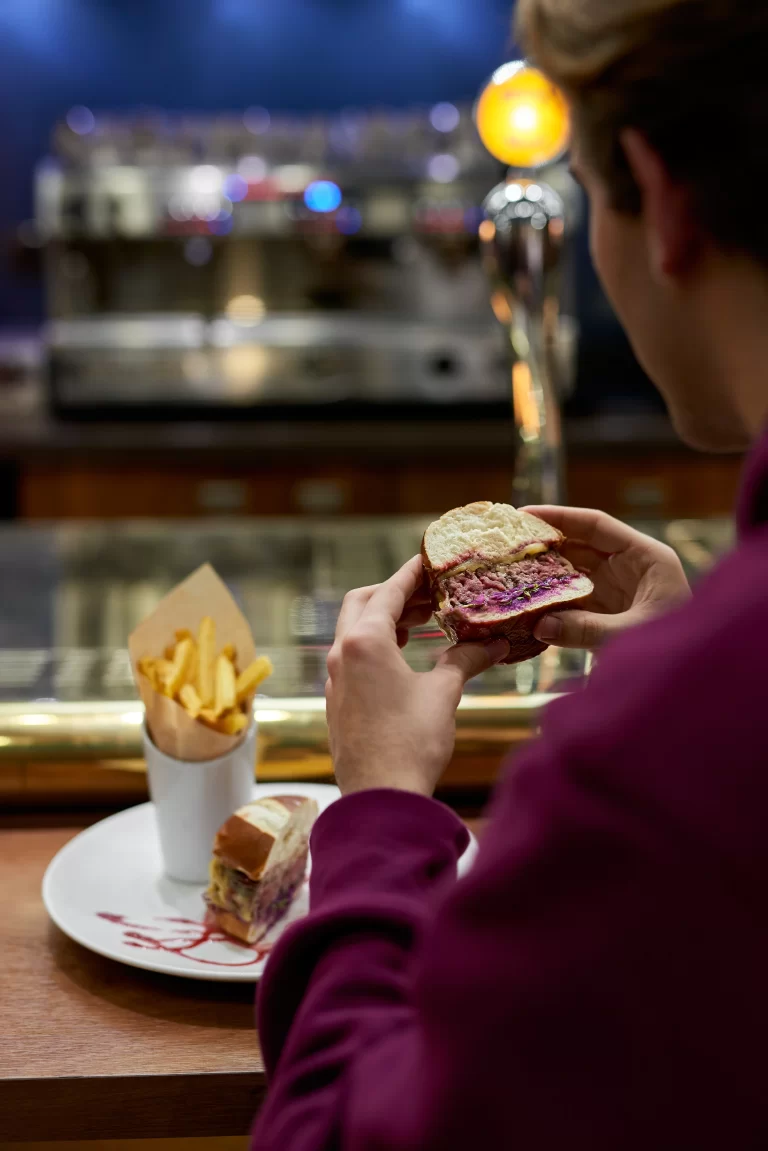
In North America, the focus of our growth strategy is on extending the number of restaurants within our current footprint and on driving initiatives to sustainably step up like-for-like sales growth. In the half, security disruption at airports led to significant daily fluctuations in both passenger numbers and dwell times across our network and we set out to maximise our passenger conversion with a focus on delivering great customer service and a stronger proposition. Enhancements to our offer included a new ‘grab n go’ premium sandwich and salads range, and an expanded ‘freshly baked’ pastry offer.
In APAC & EEME, we focused on building returns from our acquisition of ARE in Australia and our joint venture with PT Taurus Gemilang (TG) in Indonesia, which continue to track above business case, while at the same time building scale and profitability in our more recent new country entries. In India, we are scaling up operations at our recently won airport contracts in Delhi, Cochin and Navi Mumbai -and will shortly be starting operations at the soon-to-be-opened Noida Airport. At the end of H1, in Thailand, we opened our first Travel Club Lounge at Don Mueang Airport, combining local expertise in food service with the expertise of TFS in lounge development.
In the UK, as we renew contracts, we are rejuvenating our UK Air estate, in particular our units in Belfast and Leeds Bradford. Across the whole estate, the strength of our propositions as we renew is translating into improved perceptions of consistency and value, driving a high Reputation9 score of 4.6 out of 5. We continue to refurbish our M&S retail units, including new layouts, merchandising, digital tills, lighting, signage and flooring which, in combination with the strength of the M&S offer, led to double digit LFL sales growth in this format for the half.
2) Increase operating profit margin in Continental European business to >3% this year
Due to weak performances in France and Germany, as well as the challenging market, and Rail and Motorway Service Area (“MSA”) channel environments in these countries, overall profitability in Continental Europe in recent years has been significantly below acceptable levels. Having reset and embedded a new team last year, in December, we outlined a plan to deliver an operating profit margin improvement from 2.2% in FY25 to at least 3.0% in FY26 – and we are on track to deliver this. Performance driving initiatives that we have completed in H1 and our plans for H2 include:
| H1 | H2 | |
| 1) Driving returns from our investment programme | · Finalised three major rent renegotiations which will deliver in excess of £3m benefit in FY26 | · Additional rent negotiation opportunities identified and being progressed |
| 2) Leadership team and structure | · Embedding new leader and new wider team in France from October 2025 · New governance in Germany from March 2026 | · Closure of Marseille office and centralisation of support office activity in Paris · Continuing additional adjustments towards a leaner operating model |
| 3) Reducing and optimising the cost base | · Opportunities being progressed in labour planning, waste and cost of goods · £5m annualised saving due to overhead reduction | · Workforce optimisation and scheduling expected to deliver savings |
| 4) Exit of German MSA business | · Exited 21 further units of remaining 35 | · Continue to target close to breakeven profitability in FY26; full channel exit by end of 2026 |
| 5) Drive like-for-like sales | · Accelerated deployment of Point retail brand concept in Germany | · Continued focus on driving transaction growth through summer trading |
Our operating improvement plan also extends into the medium-term, complementing the initiatives that are being proposed as part of the Continental European Rail review. Levers to drive profitability include optimisation of new contracts and renegotiation of existing contracts, unit-level efficiencies in labour, cost of goods and operating processes, leaner structures and the acceleration of profitable LFL sales growth. The combination of these actions now gives the Board confidence in delivering an operating margin in the region of greater than 5% in the medium-term.
3) Deliver Group wide cost efficiencies
A programme of operating cost reductions within each region supports year-on-year margin improvement and counterbalances, where possible, the impact of cost inflationary pressures. The programme covers all areas of our cost base including gross margin optimisation, labour productivity, management of concession fees, and overheads.
Initiatives in H1 include a focus on driving stronger operating standards. In North America, this has led to numerous streams of activity including a new ‘Centres of Excellence’ programme for Operations Directors, a refreshed and improved ‘Operational Standards’ guide for unit managers and a “Ready, Set Go” briefing toolkit to ensure we are re-enforcing the right operational routines at the beginning of every shift.
Other initiatives include further optimisation of unit opening hours. For example, in the UK, using our ‘Work Force Management’ labour productivity tool to identify where profitability could be improved if we either extend or shorten opening hours. Progress to improve purchasing terms includes, in Australia, the consolidation of packaging suppliers from 19 to 1 and, in Malaysia, further use of digital to improve labour productivity and drive sales.
As outlined at our Preliminary Results, in H2 of last year, we simplified and scaled back our support costs across the world with a significant corporate and regional overhead restructuring programme. This had a £30m annualised benefit, of which £5m was delivered last year, with the balance being delivered through the course of this year.
4) Build returns from recent capital investments and strengthen cash flow
In October 2025, we initiated a £100m share buyback, consistent with our capital allocation strategy, reflecting leverage at the lower end of our target range and highlighting the Board’s confidence in our cash generation prospects into the current year and beyond. As at 15 May, we have completed £57m of this buyback, equivalent to buying back 4% of our share count.
In the half, notwithstanding some planned, one-off working capital investments, we have made good progress against our programme of activity to drive cash conversion, which we expect to deliver an improvement in free cash flow generation (pre-dividend and pre-buyback) from £80m last year to >£100m in the current year. The plan includes strengthened operating standards, working capital initiatives and disciplined use of capital expenditure of no greater than £200m in the year.
In the half we completed a working capital ‘deep dive’ in our key markets, uncovering a series of opportunities across all areas. With regard to payables, we expect improvements to be driven by optimising the timing and frequency of our payment runs in addition to aligning supplier payment terms. With regard to receivables, regions are – amongst other initiatives – building action plans for more disciplined billing and collection. Further opportunities stem from reviewing the timing of other payment flows such as rent and considering bank guarantees in lieu of rent deposits.
Management teams have embraced a ‘cash first’ culture and while we are still in the early stages, we have made a significant mindset shift when it comes to understanding the importance and levers of cash generation.
At the last full year, we delivered a ROCE10 of 18.7%, up from 17.7% in FY24, as we focused on building returns in our existing portfolio. As we prioritise shareholder returns by improving our operating performance through the initiatives outlined above and by scaling back our capital expenditure (from £212m last year to less than £200m this year), we are on track to deliver a further improvement in ROCE in the current year, including the delivery of a 70bps improvement in ROCE in H1.
| Focused cash generation plan: | |
| 1. Operating cashflow | · Strong execution at unit, airport and regional level · Disciplined operating standards |
| 2. Working capital | · Payment flows: timing of rent payments, use of bank guarantees · Focus on faster cash collection |
| 3. Capex | · Being more selective · More overt ‘competition’ for capital internally · Reviewing unit build specifications – “smart” capex |
| 4. Minority interest, interest and tax | · Optimising MI and JV models; accelerating cash collection · Tailoring funding structures |
| 5. Enablers for cash focus | · Emphasis on cash metrics in performance management · Market CFOs accountable for cash delivery |
Medium-term framework
Global demand for travel is well set for long-term structural growth. Against that back-drop, in the medium-term, we expect to generate sustainable growth and enhanced shareholder returns through our business model as follows:
| Revenue | Capabilities and competitive advantages delivering sustainable LFL growth |
| Profit conversion | Driving operating and structural efficiencies to offset cost inflation and grow profitability faster than sales |
| Cash flow generation | Aiming for sustained improvements in cash conversion to fund capital allocation priorities, including ongoing cash returns to shareholders |
| New business development | Selectively developing new business in structurally growing markets under a disciplined framework with clear hurdle rates |
1 Stated on an underlying basis, which excludes non-underlying items as further explained in the section on Alternative Performance Measures (APMs) on pages 18-22.
2 We have decided to maintain the reporting of our profit and other key financial measures like net debt and leverage on a pre-IFRS 16 basis. Pre-IFRS 16 profit numbers exclude the impact of IFRS 16 by removing the depreciation on right-of-use (ROU) assets and interest arising on unwinding of discount on lease liabilities, offset by the impact of adding back in charges for fixed rent. This is further explained in the section on Alternative Performance Measures (APMs) on pages 18-22.
3 Constant currency for FY26 is based on average FY25 exchange rates weighted over the financial year by FY25 results. These rates are applied to both the current year and the comparative where constant currency is referenced.
4 Net debt reported under IFRS includes lease liabilities whereas on a pre-IFRS 16 basis lease liabilities are excluded. Refer to ‘Net debt’ section of the ‘Financial review’ for a reconciliation of net debt.
5 A reconciliation of Underlying operating profit/(loss) to free cashflow is shown on page 16.
6 Underlying EBITDA (on a pre-IFRS 16 basis) is the measure of underlying operating profit excluding depreciation and amortisation.
7 Markets in scope of the review are France, Germany, Belgium, Switzerland and Austria.
8 Market consensus published on 15 May can be found at www.foodtravelexperts.com/investors/analyst-and-consensus-coverage/
9 As measured through our customer listening tool, Reputation
10 Return on capital employed is defined as underlying pre-IFRS 16 operating profit, adjusted for Associates and Non-controlling interests. Capital Employed is defined as Group Net Assets adjusted to exclude Net Debt, tax assets and liabilities, lease and other long term liabilities, Non-controlling interests share of equity and adding back capital written off through impairments. This is further explained in the section on Alternative Performance Measures (APMs) on pages 18-22.
Supplementary Financial Information (underlying pre-IFRS 16)
Regional Sales
| £m | H1 2026Revenue | LFL | Net Gains | Other* | Change at constant FX rates | Change at actualFX rates | LFLFirst 6 weeks H2 2026 | |
| N.America | 411 | 1.9% | 3.3% | 0.0% | 5.2% | 0.3% | 3% | |
| C.Europe | 565 | 2.2% | 0.8% | (2.0)% | 1.0% | 6.2% | 1% | |
| UK & I | 456 | 8.4% | (1.3)% | 0.0% | 7.1% | 7.3% | 11% | |
| APAC & EEME | 331 | 8.9% | 7.8% | (0.9)% | 15.8% | 12.5% | (4)% | |
| Group | 1,763 | 5.0% | 2.0% | (0.8)% | 6.2% | 6.2% | 3% |
*Other comprises impact from the staged exit of the German MSA business and the loss of reported sales from our repositioned AAHL joint venture in India, which is now reported as an associate and no longer consolidated
Underlying Pre-IFRS 16 Regional Operating profit
| £m | H1 2026Operating profit | Change at constant FX rates | Change at actualFX rates | H1 2026Operating profit margin | Change at constant FX rates |
| N.America | 28 | 20.6% | 17.4% | 6.9% | 90bps |
| C.Europe | (9) | 31.5% | 28.1% | (1.6)% | 70bps |
| UK & I | 22 | (6.0)% | (6.0)% | 4.8% | (70)bps |
| APAC & EEME | 35 | 11.6% | 3.8% | 10.6% | (40)bps |
| Non-attributable | (26) | (14.2)% | (8.3)% | n/a | n/a |
| Group | 50 | 17.8% | 9.3% | 2.8% | 30bps |
Underlying Pre-IFRS 16 Net Profit/(Loss)
| £m | H1 2026 | H1 2025 | Change |
| Revenue | 1,763 | 1,661 | 102 |
| Gross Profit | 1,286 | 1,210 | 76 |
| % sales | 72.9% | 72.9% | 3bps |
| Labour Costs | (550) | (538) | (12) |
| % sales | (31.2)% | (32.4)% | 121bps |
| Concession Fees | (386) | (357) | (29) |
| % sales | (21.9)% | (21.5)% | (39)bps |
| Overheads | (223) | (201) | (22) |
| % sales | (12.6)% | (12.1)% | (52)bps |
| EBITDA | 127 | 114 | 13 |
| % sales | 7.2% | 6.9% | 33bps |
| Depreciation | (77) | (69) | (8) |
| % sales | (4.4)% | (4.1)% | (25)bps |
| Operating Profit | 50 | 45 | 5 |
| Operating margin % | 2.8% | 2.7% | 8bps |
| Net Finance cost | (19) | (20) | 1 |
| Associates | 5 | 2 | 3 |
| Profit Before Tax | 36 | 27 | 9 |
| Tax | (7) | (6) | (1) |
| Minority interests | (20) | (25) | 5 |
| Net Profit | 9 | (3) | 12 |
2026 Technical Guidance on a pre-IFRS 16 basis
| Net finance costs | c.£40m |
| Associates | c.£10m |
| Effective tax rate | c.21-22% |
| Minority interests | c.£55m |
| Working capital | Inflow from ongoing working capital optimisation programme |
| Capex | <£200m |
| Leverage | Target range of 1.5x to 2.0x (Net Debt: EBITDA), with the usual seasonal profile |
| TFS | Ongoing repositioning and deconsolidation impacts in operating profit; offset at EPS level by increased associates and a reduction in post-tax minority interest |
Note: All figures stated on a constant currency basis
If the current spot rates (as of 13 May 2026) were to continue through this financial year, we would expect a currency impact on revenue and operating profit of +0.3% and (0.7)%, compared to the average rates used for 2025.
A presentation and live webcast will be held at 9am (UKT) today, and details of how to join can be accessed at:
https://webcasts.foodtravelexperts.com/results/2026interimresults