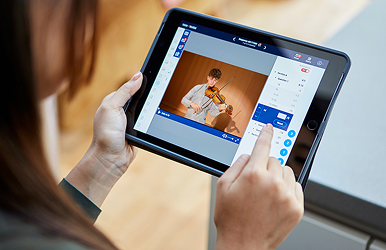
RM is positioning its Assessment business for a broader move towards digital examinations as schools, awarding bodies and education authorities reconsider how assessments should be delivered.
The company argues that the debate should not be reduced to choosing between paper and screens. Instead, different assessment formats should be used according to the needs of individual subjects and qualifications, creating scope for digital and traditional examinations to operate alongside each other. That approach gives RM exposure to digital adoption without depending on education systems replacing paper examinations entirely.
RM sees candidate experience as an important part of assessment reform. Traditional fixed-format examinations remain appropriate in some circumstances, but the company believes they can create unnecessary barriers when the assessment method differs significantly from how students normally learn and complete their work.
A student who routinely types essays in subjects such as History and English, for example, may be better suited to completing those examinations on screen. The same student may still prefer paper for Mathematics, where handwritten calculations and working through problems spatially can be more practical.
RM therefore supports a flexible model rather than an immediate move to fully digital assessment. The focus is on using technology where it can improve accessibility and the assessment experience while maintaining examination standards.
International experience suggests that this type of phased adoption is possible. RM points to New Zealand, where students can choose between paper and on-screen assessments. Participation in digital examinations has increased from around 14,000 students in 2019 to more than 180,000 students across 1,000 schools.
RM believes the UK could follow a similarly measured route. Rather than attempting to change the examination system at once, digital assessment could be introduced through pilots, followed by evaluation and refinement before wider deployment. This reduces implementation risk for awarding organisations and education authorities while creating a clearer path towards increased use of assessment technology.
RM argues that the UK has used this type of phased approach successfully in previous education reforms. Testing new assessment models before wider adoption would allow candidates, teachers and accreditation bodies to provide feedback while giving organisations the opportunity to identify which digital approaches work in practice.
A flexible approach allows organisations to introduce digital assessment where there is a clear benefit while retaining established formats elsewhere. It also lowers the threshold for institutions considering technology-led assessment because implementation can take place in stages.
RM plc (LON:RM) is a global EdTech provider of learning and assessment solutions, supporting the full learning journey, from early years through to higher education and professional qualifications.