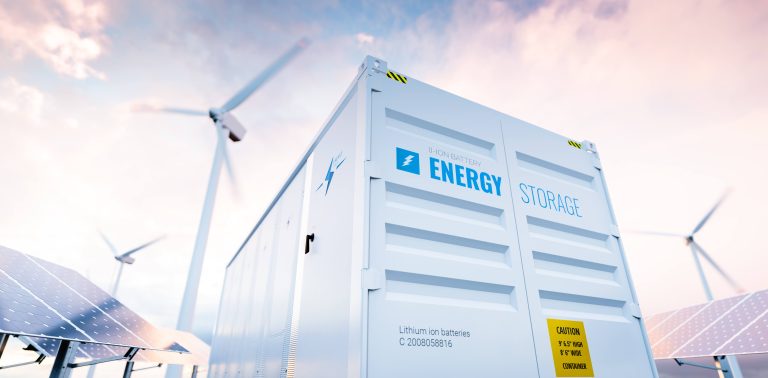
Battery Energy Storage Systems, or BESS, are increasingly integral to modern electricity networks. Their purpose is straightforward. They store electricity when supply exceeds demand and release it when demand rises or generation falls.
As renewable energy capacity expands, variability becomes a structural feature of the grid. Solar output peaks during daylight hours, while wind generation fluctuates with weather patterns. Without storage, surplus energy may be curtailed and peak demand may require expensive, fast-ramping generation. BESS addresses both challenges by shifting energy across time. Electricity generated at low-value periods can be stored and sold or deployed when prices are higher, improving overall asset utilisation and supporting grid reliability.
Advances in lithium-ion battery technology have reduced costs and improved performance, enabling utility-scale projects as well as commercial and industrial applications. Systems are composed of battery modules, power conversion equipment and software that manages charging and discharging in response to grid conditions and market signals.
For utilities and grid operators, BESS can defer or avoid capital expenditure on network upgrades. By smoothing peaks in demand and stabilising voltage and frequency, storage reduces strain on infrastructure. For commercial users, it can mitigate exposure to volatile electricity prices and enhance energy security.
Ampeak Energy Limited (LON:AMP) a developer, owner and operator of sustainable energy projects. Transitioning to become a major Independent Power Producer (IPP) with a project development arm specialising in Battery Storage and Tidal Stream generation.