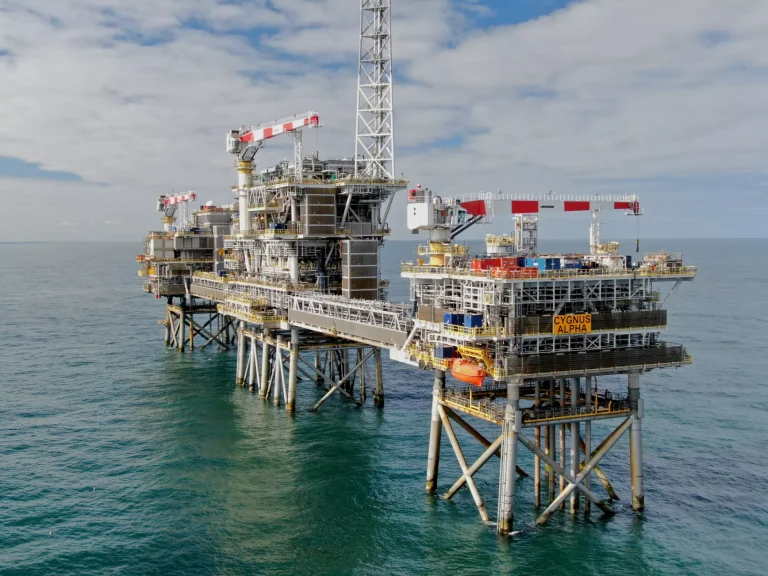
The UK government’s decision to approve production from the Jackdaw gas field in the North Sea has renewed attention on the future of domestic oil and gas development, with implications for operators and investors across the UK energy sector. The announcement on 21 October 2026 represents a significant development for an industry facing regulatory uncertainty, declining domestic production and growing concerns over energy security.
The decision also brings companies including Ithaca Energy, Jersey Oil & Gas and Serica Energy into focus as investors assess whether the government could adopt a more supportive approach towards existing North Sea licences and development projects.
Jackdaw approval signals a pragmatic approach to UK energy security
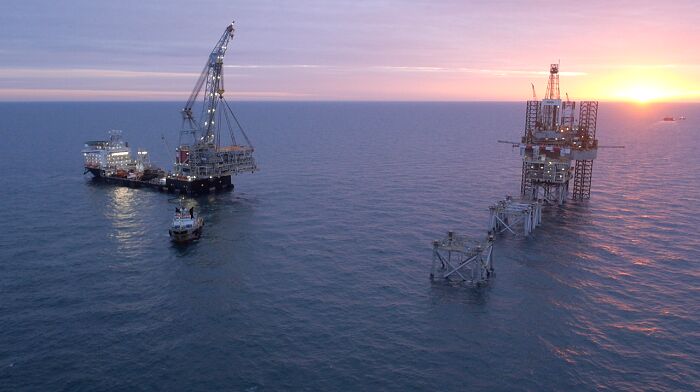
The government has approved production from Jackdaw following years of legal and political uncertainty and first gas could flow before the end of October, providing additional domestic supplies ahead of the winter period.
The field, approximately 150 miles east of Aberdeen, is operated by Adura, a joint venture between Shell and Equinor. Production will be transported through existing North Sea infrastructure, supporting the UK’s domestic gas supply while reducing some dependence on imported energy.
In its official announcement, the government estimated that Jackdaw could increase UK domestic gas production by approximately 6% at its peak, support hundreds of jobs and contribute around £2.9 billion to the British economy over a potential operating life of up to 11 years.
Prime Minister Andy Burnham defended the approval, arguing that the UK must make responsible use of existing energy resources while continuing its transition towards renewable and nuclear power.
However, the decision has intensified political debate over the government’s wider North Sea policy.
Conservative leader Kemi Badenoch welcomed the approval but criticised the time taken to reach a decision. She urged the government to reverse its ban on issuing new exploration licences, arguing that Britain should make greater use of its domestic resources.
Burnham responded that the previous Conservative government’s handling of the original consent had failed to meet the necessary environmental requirements, contributing to subsequent legal challenges.
The dispute follows a court ruling in January 2025 that the original development consents for Jackdaw and Rosebank were unlawful because environmental assessments had not adequately considered emissions resulting from the eventual combustion of the extracted hydrocarbons.
The government maintains that the revised Jackdaw decision is compatible with its legally binding climate commitments. It has also reiterated that the approval does not represent a reversal of its policy against issuing new exploration licences.
Alongside the decision, ministers announced a new Energy Wealth Fund, initially backed by £2 billion, which will use revenues associated with North Sea oil and gas to support investment in renewable and low-carbon energy infrastructure.
Although increased domestic production could strengthen security of supply, the government has acknowledged that Jackdaw is unlikely to deliver an immediate reduction in household energy bills. UK gas prices remain influenced by international wholesale markets.
Cavendish highlights wider opportunity for North Sea investment
James McCormack, Research Director at Cavendish, was interviewed on BBC TV about the government’s decision, highlighting its significance for energy security, energy prices and emissions.
McCormack welcomed the approval but suggested that the greater economic opportunity lies in the wider portfolio of North Sea projects awaiting development.
His comments pointed towards more than 100 potential projects, including the Rosebank field, which could provide additional domestic energy supplies, protect employment and support investment in the UK’s offshore industry.
McCormack also argued that the transition towards lower-emission energy sources must be considered alongside continuing demand for oil and gas. In his assessment, domestic production can offer both financial and environmental advantages over certain imported supplies while that demand remains.
The distinction is particularly relevant to the UK’s energy security debate. Domestic production cannot remove the country’s exposure to international energy prices, but it can reduce the volume of imported fuel required and support employment, tax revenues and established offshore infrastructure.
For North Sea investors, McCormack’s wider argument raises the question of whether Jackdaw represents an isolated approval or an indication that other already-licensed developments may progress through the regulatory process.
Ithaca Energy and Rosebank development prospects
Ithaca Energy plc (LON:ITH) is among the companies with a direct interest in the next major North Sea consent decision through its 20% stake in the Rosebank development, situated approximately 80 miles north-west of the Shetland Islands.
Rosebank is operated by Adura, which holds the remaining 80% interest. Its development has been affected by the same environmental assessment requirements that delayed Jackdaw, making the latest approval particularly relevant to Ithaca and its investment plans.
According to Ithaca Energy’s project information, Rosebank holds estimated recoverable resources of approximately 300 million barrels of oil across its first two development phases, with Phase 1 targeting around 245 million barrels.
The project received its original development approval in September 2023, but that consent was subsequently affected by the legal challenge concerning downstream emissions.
Jackdaw’s approval does not guarantee a similar outcome for Rosebank. Nevertheless, it demonstrates that previously licensed developments can potentially secure consent under the revised environmental assessment framework.
For Ithaca, a positive Rosebank decision would provide greater clarity over a substantial long-term development opportunity. Investors will be watching for the government’s next announcement, the outcome of the revised consenting process and any changes to the project’s anticipated production timetable.
Jersey Oil & Gas and the Greater Buchan Area
Jersey Oil & Gas plc (LON:JOG) also has a significant interest in how the government’s North Sea policy develops.
The company holds a 20% non-operated interest in the Greater Buchan Area, a portfolio of licences in the Central North Sea containing the Buchan redevelopment project alongside the J2 and Verbier discoveries.
The project partners comprise NEO Energy, with a 50% operating interest, Serica Energy with 30%, and Jersey Oil & Gas with 20%.
The Greater Buchan Area development is intended to establish a production hub centred on the redevelopment of the Buchan oil field, using subsea infrastructure connected to a floating production, storage and offloading vessel.
The wider licence portfolio contains estimated gross discovered oil and gas resources exceeding 100 million barrels of oil equivalent.
Jersey Oil & Gas has secured funding arrangements through its joint venture partners covering its share of qualifying Buchan development expenditure through to first oil, subject to the terms of those agreements.
However, progress towards development continues to depend on securing appropriate regulatory approvals and establishing a commercially viable development plan within the prevailing fiscal regime.
The Jackdaw decision could therefore provide some encouragement, particularly if it indicates a willingness to consider further developments of existing North Sea resources.
For Jersey Oil & Gas, the more significant test will be whether a clearer regulatory position allows its partners to progress Buchan towards development approval and ultimately production.
Serica Energy positioned across existing production and future developments
Serica Energy plc (LON:SQZ) provides another perspective on the potential implications of Jackdaw, combining established UK oil and gas production with additional development opportunities.
The company operates major producing assets including the Bruce Hub and holds interests across the Triton Hub, West of Shetland and Southern North Sea.
In its trading and operations update of 19 October 2026, Serica reported average production of 37,100 barrels of oil equivalent per day during the first nine months of the year, an increase of 44% compared with the corresponding period in 2025.
The company also reported that current production had exceeded 40,000 barrels of oil equivalent per day, supported by additions to its portfolio, despite the delayed resumption of operations at the Triton floating production facility.
Serica maintained its expectation of reaching production rates of approximately 65,000 barrels of oil equivalent per day following the resumption of Triton production.
Its development plans include further drilling at Bruce, potential near-field tiebacks to existing infrastructure and an interest in the Greater Buchan Area alongside Jersey Oil & Gas.
For Serica, the Jackdaw announcement is relevant not only to future development approvals but also to the government’s wider recognition that existing North Sea fields and infrastructure can continue contributing to UK energy requirements.
Policies supporting the economic life of established production hubs, together with greater certainty over investment and taxation, could influence the company’s ability to progress its portfolio of development opportunities.
What happens next for North Sea oil and gas?
Jackdaw’s approval creates an important precedent for considering the future of previously licensed North Sea projects, although individual developments will continue to face their own environmental, commercial and regulatory assessments.
The government has maintained its commitment to ending new exploration licences while allowing existing fields to continue operating and considering developments within already licensed areas.
It has also indicated that new Transitional Energy Certificates could support certain developments near established fields, potentially allowing additional resources to be connected to existing infrastructure.
This distinction matters for operators seeking to extend the productive lives of their assets without pursuing entirely new exploration areas.
The next major decision will concern Rosebank, where the outcome could have substantial implications for Ithaca Energy and provide a further indication of the government’s approach towards large-scale North Sea investment.
For Jersey Oil & Gas and Serica Energy, attention will remain focused on progress at Buchan, the regulatory treatment of existing licences and whether greater policy certainty encourages further investment.
James McCormack’s comments highlight the potential significance of the wider development pipeline, particularly as the UK attempts to balance energy security, employment, investment and emissions reduction.
Energy prices, the Energy Profits Levy, capital requirements and environmental obligations will continue to influence the commercial viability of individual projects regardless of the Jackdaw decision.