Low-alloy steel is widely used in oil and gas equipment because it is strong, practical and cost-effective. It is used in high-pressure systems, downhole tools, wellhead equipment, valve internals, hydraulic actuators, pump shafts, plungers and flow-control components. These are critical parts, and failure can mean downtime, repair costs and operational disruption.
The problem is that sour-service environments containing hydrogen sulphide can damage low-alloy steel through mechanisms that often begin at the surface. Corrosion, wear, roughness, machining marks and small defects can create entry points for hydrogen. Once hydrogen enters the steel, it can collect around stressed areas, inclusions, grain boundaries and flaws. This can reduce ductility and increase the risk of cracking.
Hydrogen-assisted cracking and sulphide stress cracking are serious risks in these applications. A component may still appear sound, but a small surface weakness can become the starting point for failure. Once cracking begins, fresh metal is exposed, which can allow further corrosion and hydrogen entry. This can speed up deterioration and reduce service life.
This makes the surface of the component commercially important. Operators need reliable ways to protect low-alloy steel without always moving to more expensive materials. Higher-grade alloys may improve resistance, but they can bring higher cost, longer lead times and qualification challenges. Standard coatings can also be limited if they are porous, uneven, cracked or unable to protect complex internal surfaces.
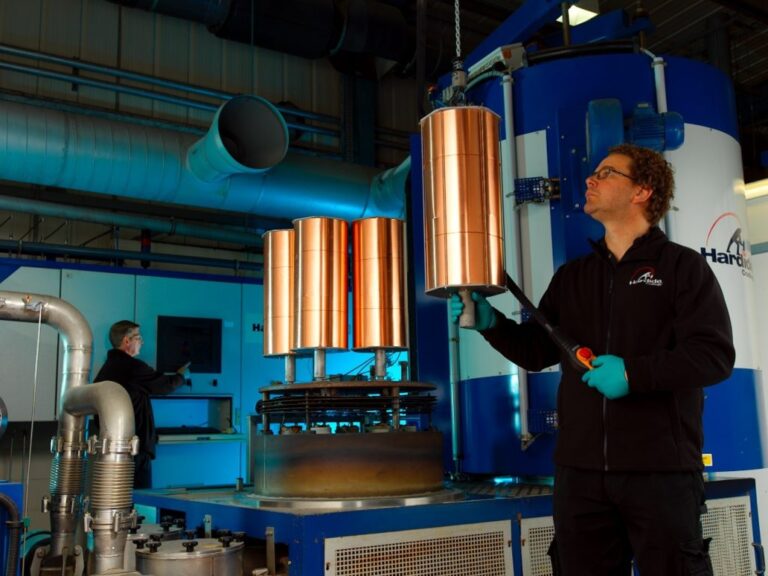
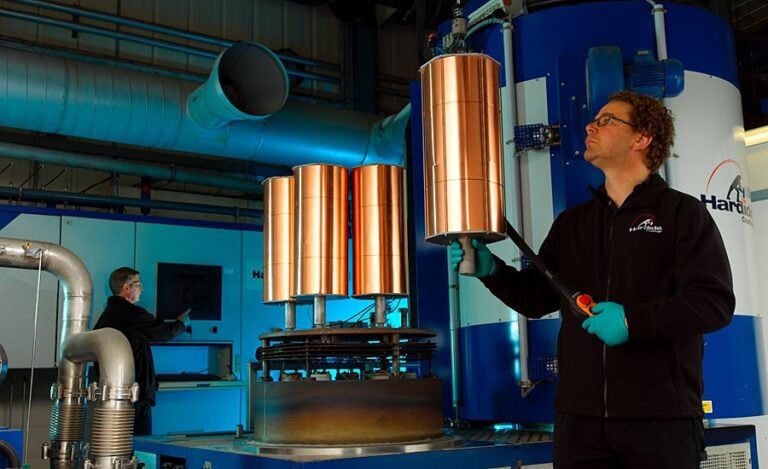
Hardide is positioned around this problem. Its chemical vapour deposition coatings form a dense, uniform tungsten carbide and tungsten layer on low-alloy steel parts. The coating is designed to protect against wear, corrosion, erosion and hydrogen-related surface damage in sour, abrasive and chemically aggressive environments.
Hardide plc (LON:HDD) is a pioneer in advanced tungsten/tungsten carbide CVD coatings. They showcase unmatched capabilities to greatly extend the life of complex geometry components facing extreme wear, erosion and corrosion.