DynaResource Inc (LON:DYNR) President and Chief Executive Officer Rohan Hazelton caught up with DirectorsTalk to discuss Q1 2026 results, exploration progress, new vein structures and plans to expand the resource base at San José de Gracia.
Q1: DynaResource Q1 2026 results released on the 15th of May. Can you just take us through the highlights?
A1: In Q1 2026, we continued our continued growth from quarter over quarter since taking over this role a couple of years ago. Our revenue in Q1 2026 was $18 million, up 31% the year before same quarter and up 22% over just under $15 million in the fourth quarter of last year.
Importantly, our net income was up to $2.5 million, significantly up from a year ago and up also from the fourth quarter. We had our sixth consecutive quarter of positive adjusted EBITDA at $6 million in the first quarter. Again, up significantly from $2.3 million in the first quarter of last year and up from $4.7 million in the fourth quarter.
Our gold production of just under 5,000 ounces, 4,840, was down somewhat from a quarter a year ago and also down slightly from fourth quarter, which we’ll discuss. Importantly, also our mill throughput was up to just under 70,000 tonnes, which is an increase from both the fourth quarter as well as fourth quarter last year. Our daily mill throughput was 760 tonnes per day.
Our production was impacted by slightly lower head grades of 2.9 grams during the quarter, which was down from both the same quarter a year ago and also from the fourth quarter. Recovery rates stayed steady at about 74%. Also, our operating cash flow before changes to working capital, which was about $4.5 million for the first quarter.
Importantly, on an operational basis, it was the first full quarter with our Falcon concentrators, our gravity circuit, which we installed just at the beginning of the fourth quarter last year. This circuit, which we now produce both a gravity concentrate as well as a flotation concentrate, is aimed at recovering the free gold.
There’s a substantial amount of both free gold in our overall deposits, in addition to our primary mineralogy, which is gold contained in chalcopyrite. So, we now produce a very high-grade gravity concentrate of about one to two tonnes per day, in addition to our flotation concentrate of about 40 to 50 tonnes per day.
The higher recoveries through the gravity concentrator, which the circuit is prior to the flotation circuit, which is increasing overall head grades by approximately 5%, was offset somewhat by the lower overall head grades for the quarter.
In addition, we’ve continued to increase mine development in the first quarter, which was we totalled just over 3,000 metres of development. With that continued investment in underground mine development through 2025 and into early 2026 has increased our flexibility to access different areas of the various deposits, and we’ll be able to back off a little bit on that underground development going forward.
So, overall, one of the strongest quarters financially, also thanks to higher gold prices, and now our focus is on continuing to optimise our underground operations in order to stabilise and achieve higher grades as well as improving our overall working capital structure.
Q2: Can you tell us more about the exploration results?
A2: In 2025 and into 2026, we’ve been looking to explore and expand our various deposits. We’ve got three primary deposits, which are Tres Amigos, Mochomera and San Pablo, primarily through underground drifting, delineation, short delineation drilling, and with those techniques, we’ve had some significant success in this past year.
We did discuss in the middle of the year that we had discovered a whole new vein structure, just very close to the overall Tres Amigos structure, which we’re calling the Victoria vein. We’ve now been mining significantly both from the Tres Amigos vein as well as the Victoria vein. That structure, we think contains approximately 100,000 tonnes of high-grade ore.
Speaking of the Tres Amigos structure, we did find extension of that Tres Amigos vein further to the north side. Beyond a faulting structure that hadn’t previously been tested, we’re now mining at the upper levels of Tres Amigos, which is approximately the 690 level. Also, last year, in addition in the Tres Amigos area, we found another vein structure called the Lexa vein, which also has strong high-grade results.
Last year, we had also went to test the historic underground extensions of what was called the Palos Chinos structure, which is close to our Mochomera deposit. In doing so, we found those extensions to the Palos Chinos and we’re now mining both from Mochomera and just to the side of that, the Palos Chinos structure.
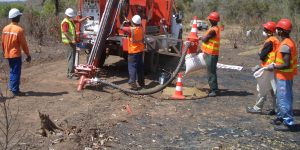
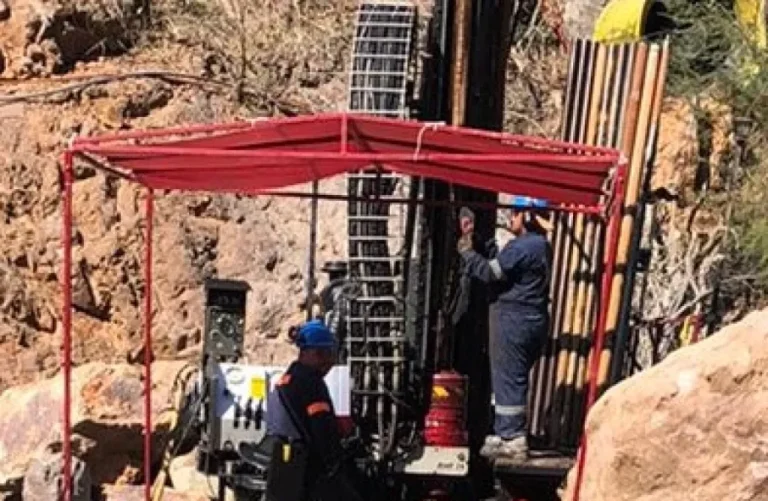
So again, we found those various exploration results and extensions all through drifting for exploration and drilling. We’re now focused on looking to begin a more formal exploration campaign. Again, initially from underground, but with larger drills, which is a focus of what we’re looking to do in the second half of 2026.
Q3: What exploration plans do you have for 2026?
A3: We were looking to initially start a modest drill programme of about 4,000 metres and then, depending on results, looking to expand on that.
The 4,000 metres, plus drifting of a few hundred metres in order to access drill pads for those drilling, that would be approximately 30 to 35 holes, and it would be focused on roughly a third at Tres Amigos, a third at Palos Chinos and a third at Mochomera. They had a very modest cost of just over $1 million and then, again, depending on results, looking to expand that.
In all cases, we’d be looking for a total combined estimated ounce discovery of approximately $20 an ounce. That’s been the past discovery rate at DynaResource. So, that would roughly translate to an expected possible 50,000 ounces or more in these targets.
Again, with additional drilling, both in terms of expanding the resource base, the other main goal would be to be able to further define our mine planning and be able to target more selectively and plan better for ore sequencing and grade sequencing.
Q4: Finally, Rohan, how do you see the outlook for 2026?
A: So for 2026, again, we’re focused primarily on improving and optimising the underground explorations.
We’ve been making some changes to our underground mining structure, which in the short term has seen some decline in grades, as we’ve seen in Q1, and there’ll be a transition into Q2. We’re focused on stabilising and then we’re increasing those grades back to our expectations for the year. So, our main focus is still on the operational side.
We are looking at continuing to increase our mining and milling rates. Again, milling rates for Q1 were 767 tonnes per day, we’re looking at targeting 800 plus. In the little bit longer term, we likely can achieve 825 to 850 tonnes a day, along with improved mining rates.
On a non-operational basis, we’re focused on recovering VAT refunds that are still outstanding from the government on one of our main files and that’s a significant amount that’s impacted our short-term working capital. We had been looking to begin to recover some of those in Q2 of this year. We’re now estimating Q3 of this year along with a legal resolution to a concession dispute that we’ve had with the government that we filed last year, and again, we also expect that to progress during this quarter, and we expect a resolution in Q3 of this year.
With those things combined with improving operations, we’re looking to see a strong second half of 2026 and then be able to build from there towards our medium to longer-term goals that we have for the company. This is to significantly increase our exploration, to expand the resource base to what we know is really the long-term potential of San José de Gracia which we believe strongly is a multi-million-ounce gold deposit, beginning with an investment exploration, we see a reasonable target to a million ounces of discovery.
With that information and sufficient exploration and then development, looking at a plan that would be to expand the daily throughput of the mine and mill in order to achieve something closer to 50,000 ounces a day in the medium term.
So again, we see the second half of 2026 being building blocks to be able to get towards that long-term goal.