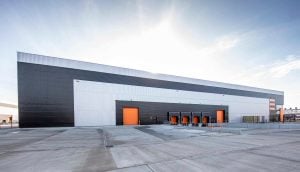
Drax has highlighted the infrastructure challenges facing the next generation of AI data centres, arguing that access to electricity alone will not be sufficient to meet growing demand.
The expansion of artificial intelligence is increasing demand for data centre capacity, placing greater pressure on electricity networks, generation and supporting infrastructure.
Drax argues that developers must consider the availability of reliable power, grid connections, cooling systems, land and planning permissions when selecting sites for new facilities.
Electricity demand is becoming a key consideration as AI workloads require greater computing capacity and higher energy consumption. However, securing a power supply does not guarantee that a data centre can become operational quickly.
Grid connection delays, infrastructure constraints and planning requirements can all affect development timelines and project costs.
The company believes closer coordination between energy providers, data centre developers and infrastructure operators will be necessary to support expansion. Access to reliable, low-carbon electricity will also be a consideration as operators seek to manage energy costs and emissions.
For the energy sector, increasing data centre demand creates opportunities for power generation and infrastructure investment. However, the ability to deliver electricity when and where it is needed will remain a determining factor in how quickly new capacity can be developed.
Drax Group plc (LON:DRX), trading as Drax, is a power generation business. The principal downstream enterprises are based in the UK and include Drax Power Limited, which runs the biomass fuelled Drax power station, near Selby in North Yorkshire.