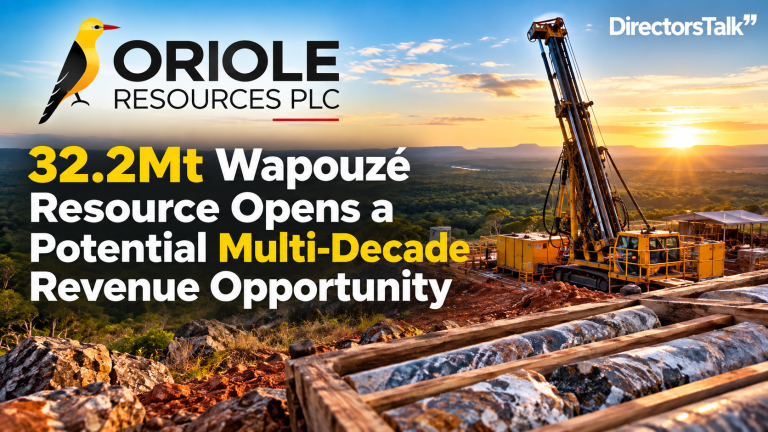
Oriole Resources plc (LON:ORR) Chief Executive Officer Martin Rosser caught up with DirectorsTalk to discuss how the Wapouzé limestone project could diversify the company’s Cameroon portfolio and potentially support its wider gold exploration activities.
Q1: Martin, you’ve recently made two announcements on your Wapouzé limestone project, including the start of a maiden drilling programme. Investors traditionally view Oriole as a gold exploration company, yet Wapouzé offers exposure to an industrial minerals opportunity. How does that addition of limestone diversify the company and what strategic advantages does it provide alongside your other projects?
A1: The discovery of limestone at Wapouzé is due to serendipity because the company was originally looking to discover gold on the Wapouzé licence. It wasn’t deemed to be as prospective as initially thought, and yet during the course of that initial exploration work, it became abundantly clear that there was great scope for a significant limestone resource to be delineated. We know that that part of the world surrounding the licence, there are some significant limestone quarries providing feed into existing clinker plants for making cement. So, it was a natural thing for us to recognise that this had very exciting potential and to capitalise on it, if we can, through some significant evaluation of what’s there.
So, definitely we are focused on gold, and we are very significantly exposed to our projects in Cameroon. This is a nice diversification from a commodity point of view, albeit that it’s in a country that we know very well and where we can bring our operating expertise and knowledge to bear and determine whether this has, as we hope it does, significant commercial potential.
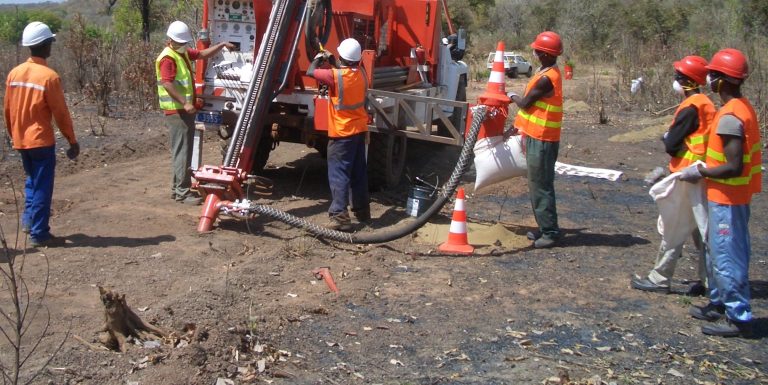
Q2: Now, Wapouzé has moved from concept to drilling very quickly, with the first hole already intersecting marble units and work aimed at delivering a maiden resource or exploration target later this year. How significant could this project become within the wider Oriole portfolio? How do you see it evolving alongside your gold exploration activities?
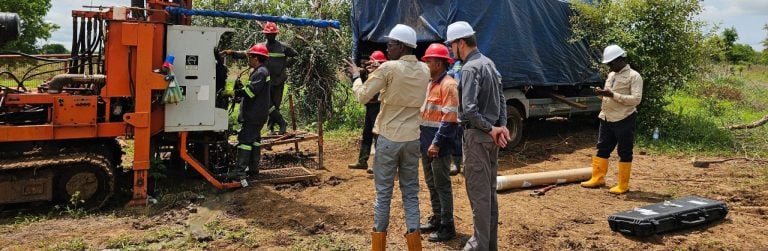
A2: Well, it’s important for people to note that determining if you have a resource of limestone of potential commercial quantity and quality is a lot easier than drilling out your typical gold exploration deposit. Given the different nature of what you’re trying to do, the fact is that it’s a process that we believe can be done quickly. We should have a good handle on what’s there not long after we finished this exploration programme drilling, and it will enable us to decide the best way forward.
We don’t intend to become a quarrier of limestone in our own right. We are very focused, as you’ve heard earlier, on the gold business, but we see this as a very exciting potential way of seeing if there’s a commercial project there to determine if we can bring in an industry partner in the cement business. We would be looking to realise an arrangement with that incoming partner where we could receive a royalty, for example, likely to be linked to the quantity of limestone that’s extracted through a quarrying exercise.
That income, of course, we have at this stage no real idea to a high level of accuracy as to how much it would be, but it would certainly be a meaningful amount of money, and it would be money that we could use very supportively for our exploration activities in the gold sector in the country.
Q3: BCM has again demonstrated its support, funding the Wapouzé drilling programme through a drill-for-equity arrangement. More generally, though, Oriole Resources has been successful in bringing partners to fund advancement across all its projects. How important is this partnership model in allowing Oriole to grow while minimising shareholder dilution?
A3: We’re always attuned to diluting shareholders’ value, and so we always have a balance between the benefit that it might bring at the time in question when we consider whether funding at the project level is possible. It’s a way of sharing risk at the earlier stage, certainly, of a project where the risk-reward is attractive, but the risk is quite high because you will be looking, in particular, at the earlier exploration stage as a discovery is made and therefore, you’re building up value through delineation of resources, then of course dilution is not so appealing from the point of view of your ownership of that asset. So, we match it to suit the circumstances.
We’re very happy to have BCM’s involvement and we think what we’ve agreed with them is a good way for us to reduce our cash outlay and to share the upside on any discovery with other partners on other projects is always something we look to do.
Q4: Now, just looking across the business as a whole, 2026 appears to deliver a number of potentially value-creating milestones, including an updated Mbe resource, progress towards formalising joint ventures, the Bibemi Exploitation Licence and now resource work at Wapouzé. Which of these milestones do you believe could be the most transformative for the company over the next 12 to 18 months?
A4: It’s always difficult to rank things in terms of the absolute impact it might have on the company, on the share price. There’s some very important milestones ahead, you just mentioned them. I think that certainly one that’s right up there from the point of view of its reception to when it happens in the market and importance to the company, would be the granting of the Exploitation Licence of Bibemi. It would be material, certainly for the project in its own right, but also a very important demonstration of the ability to go from early-stage exploration through resource delineation to project technical studies and ultimately an application for a mining licence.
Of course, the success that we envisage with that exercise later this year will be a demonstration for our other projects that you can go through that will be the Exploitation Licence, as I’ve mentioned. The accretive value that we’re building at Mbe through expectations on growing the resource, of course, is another significant milestone that we can see coming up and we’re very excited to hear what the updated resource will be there. That will certainly be a major way of determining the value in the business and how we look to grow the company in the future.