
Investing in China’s robotics and industrial automation sector is becoming an increasingly relevant theme as the country develops technologies designed to transform manufacturing, improve productivity and address labour shortages. For Fidelity China Special Situations plc (LON:FCSS), China’s expanding technology and manufacturing capabilities provide exposure to an evolving area of the Chinese market. While humanoid robots are attracting attention through impressive demonstrations, the bigger investment opportunity could lie in how quickly robotics moves from exhibitions into everyday industrial use.
China’s humanoid robots have learned to put on quite a show. From dancing and boxing to performing kung fu and taking part in sporting challenges, demonstrations are becoming increasingly sophisticated. However, beyond the impressive displays, a more important question is emerging: can these machines become commercially useful and deliver practical applications across different industries?
For investors looking at China’s technology and industrial sectors, the development of robotics presents a potential long-term opportunity. Advances in artificial intelligence (AI), government support and the country’s extensive manufacturing capabilities are helping businesses develop increasingly sophisticated machines. Chinese robotics companies are also gaining a significant share of global humanoid robot shipments.
However, the industry remains at an early stage. The next phase of growth will depend less on what robots can achieve during demonstrations and more on whether they can perform tasks reliably, safely and affordably.
Moving beyond the spectacle
There are already signs of how robotics could become part of everyday working life.
In the home, companies are developing robots capable of folding clothes, loading washing machines and preparing simple meals. In pharmacies, machines could retrieve medicines and prepare orders, while factories and warehouses offer opportunities for robots to move boxes, tighten bolts and sort products over extended periods.
These applications could have practical commercial benefits. Businesses facing labour shortages may increasingly look towards automation to improve productivity and manage operating costs. The potential is particularly relevant in China, where an ageing population and a shrinking workforce are creating longer-term challenges for employers.
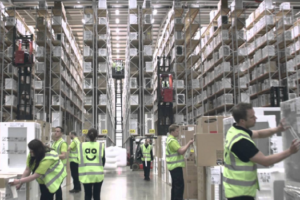
Factories and warehouses could become some of the earliest environments for widespread humanoid robot adoption. Their operations often involve controlled surroundings and repetitive tasks, making it easier to demonstrate the commercial value of automation than in less predictable domestic settings.
The development of industrial automation could therefore provide an important route towards wider adoption of robotics, with specialised machines potentially finding practical uses before general-purpose humanoid robots become commonplace.
The technology still has obstacles to overcome
Despite the growing interest, there are considerable challenges facing China’s robotics industry.
During recent visits to robotics businesses and exhibitions in China, the investment team encountered demonstrations that highlighted both the possibilities and limitations of current technology. Some machines struggled to complete relatively straightforward tasks, while others stopped working altogether.
One robot designed to open bottles of Coca-Cola attracted queues because of the time it took to complete the task. Other demonstrations encountered difficulties when machines were unable to follow instructions.
These experiences illustrate the difference between developing a robot capable of performing an impressive demonstration and producing a machine that can consistently complete useful tasks in a commercial environment.
One of the biggest technical challenges is developing the technology that effectively acts as a robot’s brain.
Modern AI systems, including chatbots, are largely trained using enormous quantities of text. Robots face a more complicated challenge because they must interpret their surroundings, process information from what they see and sense, decide what action to take and translate that decision into physical movement.
Reliability is particularly important when machines are operating alongside people or expensive equipment. An incorrect response from a chatbot may produce an inaccurate answer, but a mistake made by a physical robot could have more serious consequences.
Training these systems also presents difficulties. There is considerably less real-world robotics data available than the enormous volumes of text used to develop current AI models. This creates another potential barrier to improving performance and accelerating commercial adoption.
Competition creates opportunities and risks
The technology itself is not the only consideration for the sector. Competition is increasing rapidly as more robotics businesses enter the Chinese market, with many developing similar machines and targeting the same potential applications.
Not every business will succeed, making the ability to identify companies with viable technology and sustainable commercial prospects increasingly important.
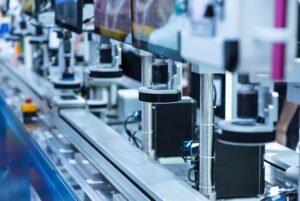
The investment opportunity may also extend beyond the manufacturers producing complete robots. China has an extensive manufacturing supply chain capable of producing essential components, including sensors, batteries, motors and gears.
Many of these capabilities have been developed through other industries, including electric vehicles, where Chinese manufacturers have built experience in battery technology, electronics and advanced manufacturing.
As robotics develops, suppliers of these components could play an important role in supporting the wider industry. This creates opportunities to consider businesses operating throughout the supply chain rather than focusing exclusively on companies developing humanoid robots.
What happens next for China’s robotics industry?
The prospect of general-purpose humanoid robots effortlessly performing a wide range of jobs remains some way off. More specialised machines could prove commercially viable sooner, particularly where they are designed to perform a limited number of clearly defined tasks.
These robots may be easier to train, test and introduce into existing operations than machines expected to undertake almost any activity.
Commercial adoption could become more visible over the next few years, with factories and warehouses potentially among the earliest adopters. Progress is likely to be gradual, with technical setbacks and competition continuing to influence which businesses ultimately establish themselves.
For China, robotics and industrial automation represent an area of technological development supported by its manufacturing capabilities and advances in AI. The potential to improve productivity and address workforce challenges provides a longer-term reason for businesses to continue investing in the sector.
For investors, the opportunity is not simply about identifying the companies producing the most impressive robots. Understanding which businesses can turn technological development into reliable products, commercial demand and sustainable growth will be central to assessing the sector’s prospects.
China’s robotics revolution remains at an early stage, but as machines move from exhibitions into workplaces, the focus is likely to shift towards practical applications and the businesses capable of supporting their adoption.
The development of robotics and industrial automation in China could create opportunities across manufacturers, technology businesses and the wider supply chain as the industry moves towards commercial adoption.
Fidelity China Special Situations PLC (LON:FCSS), the UK’s largest China Investment Trust, capitalises on Fidelity’s extensive, locally-based analyst team to find attractive opportunities in a market too big to ignore.