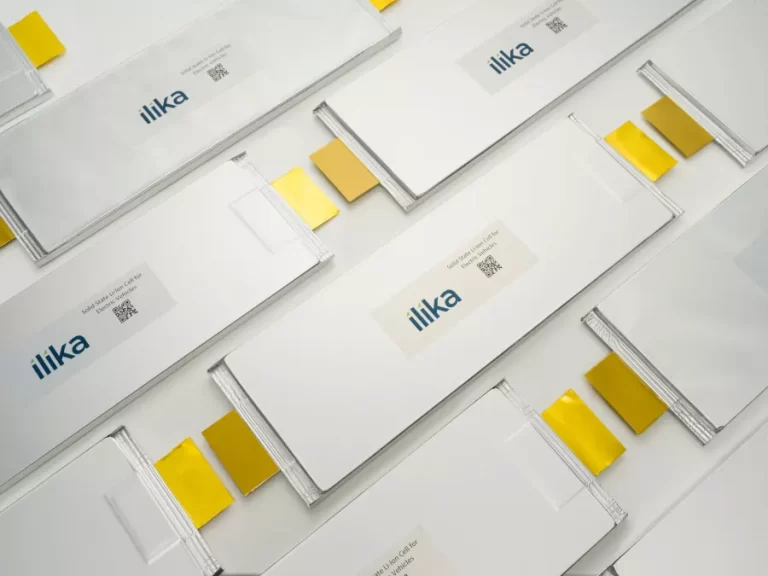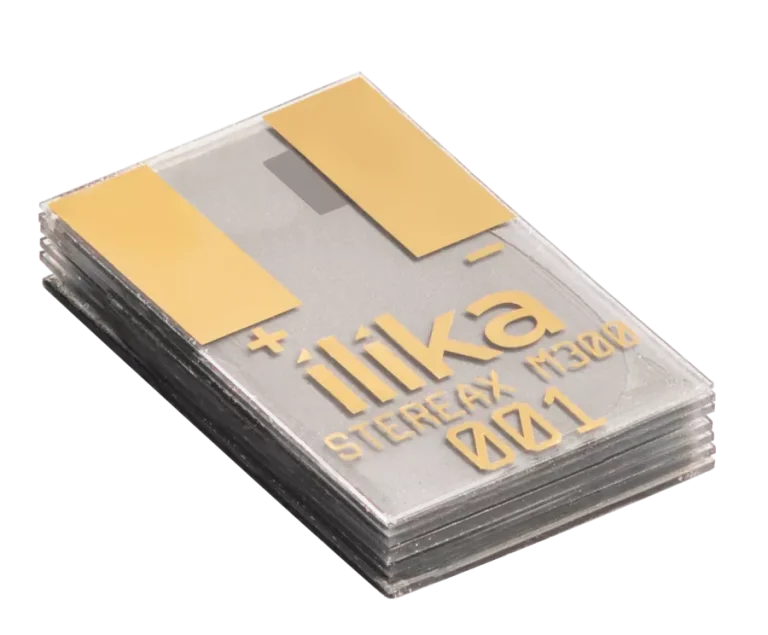
Ilika plc (LON:IKA) Chief Executive Officer Graeme Purdy caught up with DirectorsTalk to discuss the successful delivery of commercial-grade Stereax electrodes and their role in advancing miniature medical device applications.
Q1: In January, Ilika announced that it received a purchase order for the first batch of commercial-grade electrodes. How’s today’s press release different?
A1: So, what’s different actually about today’s press release is that we have delivered our first batch of commercial-grade electrodes. We have fulfilled that purchase order and that should give investors comfort that we can deliver and fulfil our promises to customers.
Q2: Can you just remind us then of the function of these electrodes in your product?
A2: Actually, we are making cathodes, which are the positive electrodes in a solid-state battery. We make these using a vacuum deposition process at our facility here in the UK and the cathode is where all of the lithium is stored when the battery is discharged. So, that’s the source of lithium, really, in the battery and when you charge the battery, the lithium goes from these cathodes through the electrolytes and into the anodes.
Q3: So why are these electrodes being made in the UK and the rest of the battery being made at Cirtec in the US?
A3: When we entered into the tech transfer agreement with Cirtec, we wanted to keep it as straightforward as possible, so we retained the cathode manufacturing process here in the UK. It’s probably the most complex of the process steps that we’ve defined in order to make a Stereax solid-state battery and we just wanted to make sure that the tech transfer went smoothly. So far, I think that strategy has proved to be correct.
Q4: What are the principal applications for Stereax M300?
A4: Well, the Stereax M300s are really part of an electroceutical revolution so there are all sorts of really fascinating applications, but they can be classified into a few broad categories.
We typically talk about miniature sensors that are powered, so implantable sensors, typically for things like blood pressure or perhaps oxygen concentration in blood. We’ve then got orthopaedics or SMART orthopaedics, where you put these sensors into replacement knee, hip, shoulder joints, so that actually you can track the movement of these joints through that critical physiotherapy period following the surgery.
We’ve then got neurostimulators for stimulating the peripheral nervous system, often used in pain relief and in particular lower back pain relief. Then orthodontic applications, where you might put them into aligners or salivary diagnostic applications. Finally, some cutting-edge ophthalmology applications too.
So, covering quite a few different categories of miniature medical devices.
Q5: Will this batch of electrodes be incorporated into products for customer release?
A5: Absolutely. So, these cathodes are actually of commercial grade so some of the batteries that are being produced are going into extended test programmes. You can imagine, some of these applications do require pretty extensive data to be acquired on the safety and performance of the product over a long period of time. Others are going to customers for early integration into product prototypes.
Q6: Do you expect that regular supplies of electrodes will happen from now on then?
A6: Yes, there will be a regular drumbeat of supply to feed the Cirtec production line and that will continue as volumes ramp throughout this year and into next. Ilika’s operational team is positioned to be able to fulfil that demand.