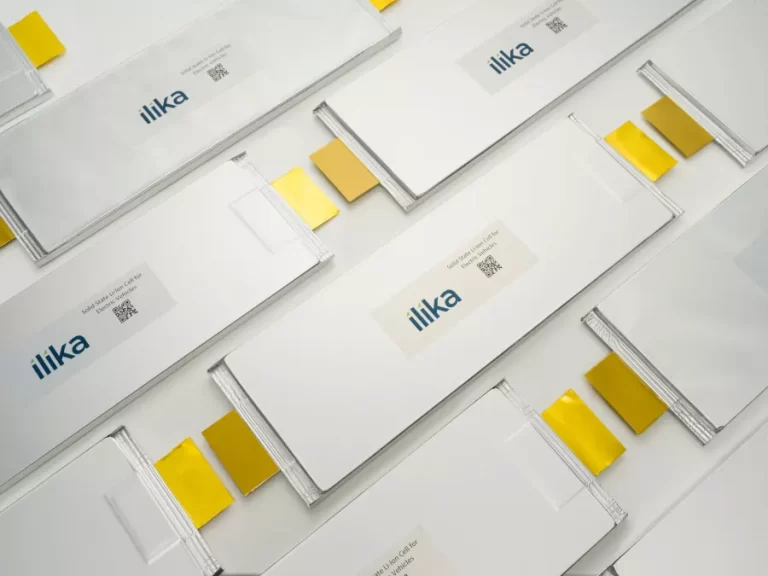
Ilika plc (LON:IKA) Chief Executive Officer Graeme Purdy caught up with DirectorsTalk to discuss positive feedback from a UK defence agency on safety tests of the company’s Goliath solid-state batteries under battlefield conditions.
Q1: Graeme, Ilika’s Goliath batteries, are they designed with defence applications in mind?
A1: Our Goliath batteries were really designed for EVs, and we’re still on that roadmap and still relentlessly pursuing those goals for EV implementation. However, the roadmap has intersected a very interesting technology demand point.
Unfortunately, as we know, there is demand, particularly here in Europe, as our defence agencies start to ensure that their technology is ready for any potential conflict. We’re living in, let’s say, slightly more heightened tension times. It’s really an opportunity that we’re interested in exploring.
Q2: Are firing range tests significantly different from the nail penetration tests that you’ve previously reported on?
A2: In a nutshell, the firing range tests are more violent. The calibre of the ammunition that’s used is greater than the nails that are used in nail penetration tests. You’ve probably seen one of the videos that we’ve published about our cells’ resilience to nail penetration.
Also, the velocity of the ammunition is greater than the velocity of the nail that might be used in a nail penetration test. Also multiple impacts might be tested and some of the results that we’ve published refer to that.
Q3: Now, you list a series of results from the tests. Which defence applications would benefit the most from those results?
A3: I think there’s a series of applications in the defence sector that would benefit from these batteries.
First of all, infantry carry around batteries in vests in order to power some of the electronic devices that they use for communication and for intelligence gathering. So, of course, it’s much better if those batteries are more resilient to impact from ammunition.
Secondly, the batteries go into auxiliary packs, say in the back of a Land Rover or something like that. Clearly, if those batteries are more difficult to damage by ammunition, then that’s an advantage too.
Thirdly, unmanned vehicles, land, sea and air including drones. If they’re more resilient to impact, then that improves the likelihood of a successful mission.
Q4: Now, in the event that you see significant demand for defence applications, would you license the technology for manufacturing in the same way that you’ve licensed Stereax?
A4: Absolutely. We have an asset-light business model, as you know, in which we demonstrate that the product works, demonstrate the functionality of the product, and also, we demonstrate the process for manufacturing it.
So, we have our own pilot line facility for manufacturing batteries. In this particular instance, the size of the defence market is a lot smaller than the size of the EV market, so we’d probably be able to supply some of the early applications through production on our pilot line.
That’s one of the options that we’re looking at at the moment but ultimately, again, it’s a licensing opportunity.
Q5: Finally, can we expect any other sets of results reported by other customers who have received Ilika’s prototypes?
A5: Absolutely. When we sent out the batteries in December, we sent them to more than just this defence agency. We also sent them to customers from our core markets in automotive and we would expect some feedback from those customers in the coming weeks.