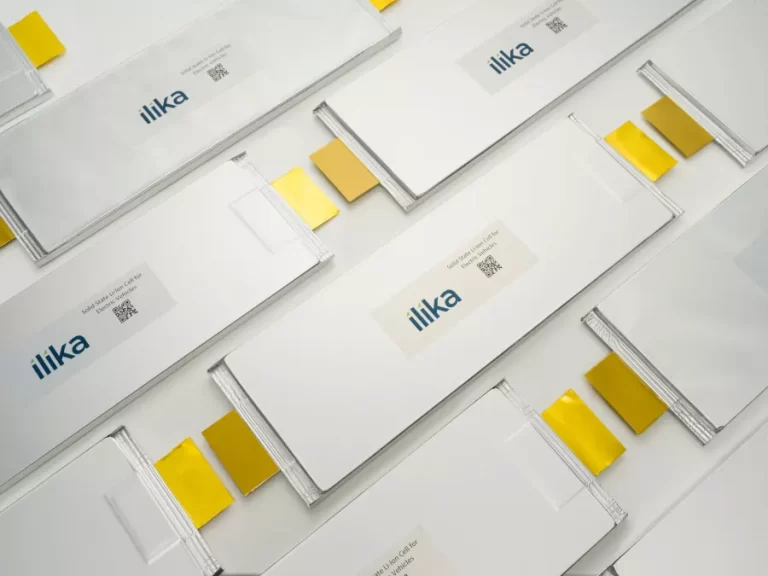
Ilika plc (LON:IKA) Chief Executive Officer Graeme Purdy caught up with DirectorsTalk to discuss the launch of a joint development programme with Brompton to test Ilika’s Goliath solid-state battery technology in next-generation foldable e-bike battery packs.
Q1: Graeme, good to have you back. It seems like news flow just keeps coming.
A1: We’re doing our best. This is an exciting development, and I guess it’s a reflection really of the maturity of Ilika’s Goliath technology now that we’ve got prototypes that actually are of use for quite a large number of real-world applications that we can all connect with and recognise.
Q2: E-bikes, they’ve been around for a while now so why aren’t current batteries good enough?
A2: Well, actually, current lithium-ion batteries are pretty effective but anybody that’s ridden a bike knows that weight is king and if you can get a higher energy density battery, then of course the weight of your e-bike is reduced and therefore you’ve got a greater range and better acceleration. So, there are some very advantages here.
The other one actually relates to safety. In general, there are restrictions to using e-bikes on all sorts of different modes of transport. For instance, you’re not allowed actually to put your e-bike on board an aircraft and that’s not so much specifically relating to e-bikes, but actually there is a blanket limit of 160 watt hours for batteries that you’re allowed to take on aviation.
So, if you can come up with an intrinsically safe battery that can address some of the concerns of putting large batteries on board aircraft, then you start to open up all sorts of new markets.
Q3: So, what is it that makes Goliath batteries more suitable for an e-bike?
A3: It’s actually specifically the greater energy density, so watt hours per kilo, that we can offer. It’s enhanced safety profile versus mechanical abuse.
Some great videos that you can look at actually on YouTube, where we demonstrate the resilience of the battery when it’s damaged.
Of course, when you ride a bike, you can have a crash and so it’s important that actually the batteries that are on e-bikes are resilient to that type of abuse.
Q4: Now, Goliath batteries, they were designed for EVs. Surely, they’re a little bit too big for an e-bike?
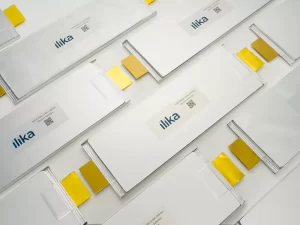
A4: That’s the key thing, actually, is that when you build a battery for an EV, you take thousands of individual cells, and you build them into modules, and ultimately the pack for the vehicle. So, actually, you can use similar building blocks to make e-bike battery packs. The 10 amp-hour type that we’ve got available at the moment is actually quite a good fit with the packs that they put on to the batteries that they build into e-bikes.
Q5: Now, as you say, the focus has been on EVs. Is this a distraction from Ilika’s EV roadmap?
A5: Well, we don’t think so and I think our shareholders are merely interested in an attractive return on investment. So, some of these near-return intersections that we’re seeing on our roadmap, I think are really useful for demonstrating the business case and the commerciality of our product.
Q6: Your release states that it’s an opportunity to export to China. Isn’t that a bit like trying to sell snow to Eskimos?
A6: Yes, that’s right. I think the key here is that the product has to be differentiated. There’s no point in just turning up with a commoditised product that perhaps can be manufactured less expensively in China. If you have a product that has some unique properties and meets some of the very stringent e-bike regulations that have in China, then actually that gives you a competitive advantage.
We sees that the Chinese market is very open and welcoming vis-à-vis premium products.