Digital assessment is developing in a more practical direction. The key issue is no longer whether exams should move from paper to screen, but where digital delivery improves the assessment experience and where it may add unnecessary risk.
Technology in education works best when it solves a clear problem. In assessment, the value comes from better fit, stronger reliability and greater confidence among candidates, teachers and awarding bodies. A broad move to digital exams is less compelling than a targeted model that uses the right format for the right subject and task.
Recent discussion across the sector shows why this matters. Candidates may be comfortable using digital tools in everyday life, but that does not mean they want every exam to be digital. A student may prefer typing a long written answer in history, where a keyboard helps with speed and structure. The same student may prefer paper in mathematics, where the process of working through calculations is part of the answer.
This makes the idea of the ‘digital native’ too simple. Familiarity with technology does not remove the need for careful assessment design. The format has to support what is being tested. If it gets in the way, trust can fall quickly.
Subject differences are also important. Some teachers and candidates may see clear benefits in digital formats for essay-based subjects. Others may be more cautious where handwriting, diagrams, notation or working-out are central to the assessment. That points to a slower but stronger adoption path. Digital assessment is more likely to gain ground where it is introduced with a clear purpose, not as a blanket replacement for paper.
The pace of change in general qualifications reflects this caution. Some awarding bodies have narrowed earlier ambitions for wide-scale digital exams. Others are testing limited digital delivery while still keeping paper as an option. That approach may reduce speed, but it also reduces execution risk. In high-stakes exams, reliability and fairness matter more than novelty.
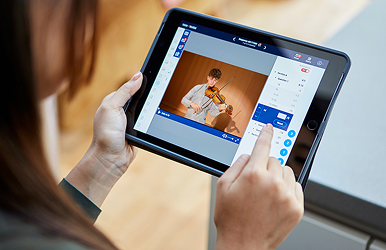
Professional qualifications offer a clearer route for digital assessment. In many careers, digital tools are already part of daily work. Accountancy candidates may use spreadsheets or specialist software. Performing arts assessments may rely on recorded evidence.
Students increasingly use technology in learning, including artificial intelligence, but those tools are often restricted in exams and coursework. This creates a gap between how students prepare and how they are assessed. Closing that gap will require careful rules, strong system design and clear decisions about what each qualification is meant to measure.
Candidates need to believe that digital assessment is fair, secure and accurate. Teachers and awarding bodies need confidence that the format will not distort results. Where artificial intelligence is used in marking or feedback, the need for transparency and accountability becomes even greater.
RM plc (LON:RM) is a global EdTech provider of learning and assessment solutions, supporting the full learning journey, from early years through to higher education and professional qualifications.