Cora Gold Limited (LON:CORA) Chief Executive Officer Bert Monro caught up with DirectorsTalk to discuss the company’s US$120 million gold stream financing package with Eagle Eye Asset Holdings and what it means for the development of the Sanankoro Gold Project in Mali.
Q1: First off, congratulations on this funding package. Could you talk us through the main points?
A1: So, today we’ve signed a binding term sheet for US$120 million for a gold stream with Eagle Eye, who are our largest equity investor. The US$120 million combined with the equity that we raised a month or so ago fully funds the project into first gold.
It’s a massive milestone day for us. I know that’s probably an often overused term in the business world, but I think it’s a massively significant milestone for the company to be fully funded into production. So yes, really excited.
Q2: Now, for listeners less familiar with streaming, can you just explain how it will work in practice and what it means for your long-term cash flow?
A2: Obviously, there’s multiple different ways of funding mining projects. I think streams have become a lot more common recently, as well as obviously royalty financing and other similar type mechanisms. I guess what might be seen as traditional, which would be a debt and equity where traditionally you might be in a 70/30 or 65/35 debt and equity split. We’ve obviously fully funded it with this stream combined with our existing equity but have the flexibility to replace 50% of the stream with traditional debt in time as well.
Effectively, the stream gives the streamer the right to pay a fixed discounted price for a proportion of the gold. So in our terms, effectively, they can pay 20% of the spot price to buy 30% of the gold.
What we expect to happen is that we would obviously replace 50% of the stream with debt and therefore, effectively, they have a stream over 15% of the gold where they’re able to pay 20% of the spot price to buy that gold.
Q3: So, how does this financing compare to a more traditional mix of senior debt and equity, as you mentioned earlier, particularly when you consider the long-term revenue impact compared to traditional debt?
A3: We obviously did a huge amount of analysis on this as a company. I guess for people’s benefit, had we gone down the traditional debt and equity route, it was likely we’d probably need to raise around US$20 million more of equity.
So, if you compare the equity returns for existing shareholders on the basis that they’re not going to be diluted going forward, and you compare that to the assumption that we’re on a 50% stream/50% traditional debt, the returns look very similar, to be honest.
For us, getting the certainty of being fully funded at this stage, I think also significantly the speed at which you can transition into construction from receiving all your permits, which we still need to get in place, will be much quicker than going through the process of also fully documenting a traditional debt process post getting your permit.
So, I think there’s a combination of factors there. There’s obviously the certainty, there’s obviously the speed and there’s also, when you look at the blended stream debt outlook on equity returns for existing equity holders, it looked very similar, to be honest.
Q4: You’ve retained the option to replace up to 50% of the stream with debt within 240 days. What conditions would make you pull that trigger? What does an optimal financing structure look like for you?
A4: That’s absolutely our intention is to replace 50% of the stream with debt. That obviously optimises the financing package that we put in place so that’s obviously what we’re going to be looking to do and focus on doing.
Clearly, when you’re fully funded already, it takes away some of the risk and the difficulty in getting that debt in place as well. So, we’re very confident we’ll be able to do that in the timeframe.
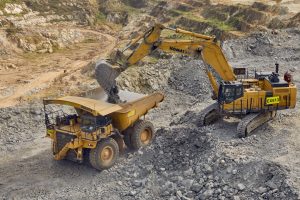
Obviously, the project has absolutely fantastic economics. Significant returns based on a very straightforward open pit oxide mining operation so that’s certainly something we’re going to be, obviously, fully focused on doing now.
Making sure we optimise that financing package, which would, in our mind, be that 50-50 stream debt for the US$120 million. Obviously, alongside being focused on driving the permit as quickly as we can to get ourselves fully permitted so we can transition into full-scale construction as soon as possible.
Q5: As you say, the DFS shows a strong IRR and relatively low capex. Did these project economics give Cora Gold leverage in negotiating the terms of the stream?
A5: Obviously, in every negotiation, you use everything you’ve got in your armoury to negotiate the best deal you can. So, we obviously negotiated the best deal we thought we could and obviously, it has lots of different factors which came into that.
As a business, we’re really pleased that we’re in this fully funded situation and we’re pleased with the outcome of those negotiations and where we landed with Eagle Eye, who are obviously also our new larger shareholder as well, having recently invested around £14 million into the company. They’ve been really supportive.
I think it’s probably worth noting that they are very active in Mali. They’ve got a number of businesses of which they’re either investors in or operating in Mali. So they’re extremely active on the ground in Mali, they know the country well, so it’s great to have a really supportive shareholder like that invested in the business and really looking to help us drive this forward into construction as quickly as possible.
Q6: Eagle Eye, they are already a major shareholder and now they’re your streaming partner. Other than their financial backing, what is it that makes Eagle Eye such an appealing partner?
A6: I think I probably just touched on that answer to the other question. I think the fact that they know Mali inside out, they’ve got a number of businesses there. They know that part of Africa and really, they’re active, but specifically in Mali, they’ve got a huge amount of interest in Mali.
I’m looking forward to being in Mali with them in the relatively near future and doing a number of meetings with government and trying to push the permitting forward as quickly as we can.
Q7: Now, assuming the permitting does come through as expected, what are the key milestones from here to first gold? How much faster does this financing allow you to move?
A7: I think in terms of timeline, it’s around an 18-month construction timeline for the project. The first four months or so of that timeline is taken up primarily with the FEED process, which is essentially your front-end engineering and design. So, that’s to a degree a largely desktop activity with obviously some work streams on the ground.
You’re then into a full-scale construction for around 14 months. One of the big advantages this project has always had is you’re talking about an open pit from surface oxide mining so there isn’t a need for significant drilling and blasting or any significant crushing at all. The ability to build a very straightforward gravity CIL processing plant and get into operations is, in mining terms, an extremely quick process, which is extremely good.
I think to the second part of your question, one of the big advantages of the stream is that effectively when you get the permit, you can start drawing the stream almost instantaneously. I think had we looked to go down the traditional debt route, you often end up in a period where from receiving the permit, the documentation on the debt could easily have taken four to six months. So, you could have had an additional delay from receiving the permit.
I believe this stream will enable us to transition significantly faster into full-scale construction on the ground, which is obviously another massive advantage of the stream.