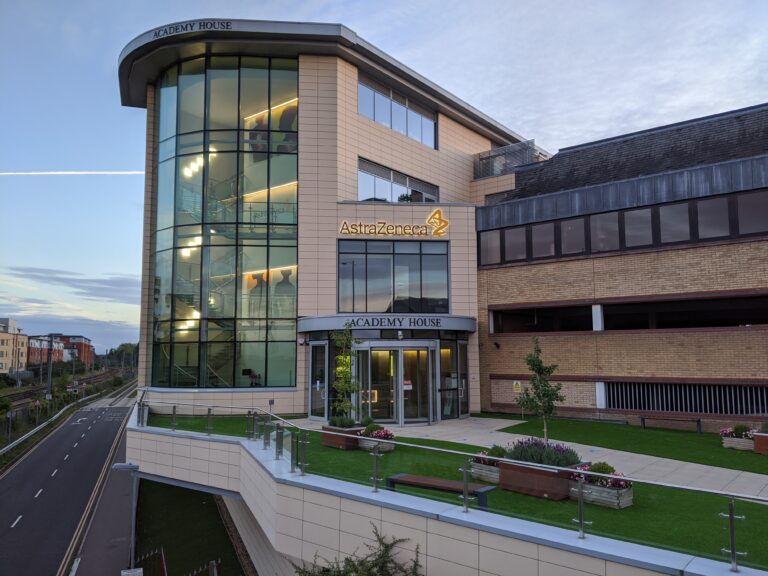
AstraZeneca Plc (LON:AZN) and its global biologics research and development arm, MedImmune, today announced that the US Food and Drug Administration (FDA) has granted Breakthrough Therapy Designation (BTD) for MEDI8897, an extended half-life respiratory syncytial virus (RSV) F monoclonal antibody (mAb) being developed for the prevention of lower respiratory tract infection (LRTI) caused by RSV.
A BTD is designed to expedite the development and regulatory review of medicines that are intended to treat a serious condition and that have shown encouraging early clinical results, which may demonstrate substantial improvement on a clinically-significant endpoint over available medicines. MEDI8897 is being developed in partnership with Sanofi Pasteur and received Fast Track designation from the US FDA in March 2015.
Mene Pangalos, Executive Vice-President, R&D BioPharmaceuticals, said: “MEDI8897 is our next-generation preventive medicine for respiratory syncytial virus, which has the potential to address an important unmet need for infants, families and caregivers. The Breakthrough Therapy Designation, together with its recent PRIME eligibility from the European Medicines Agency, will help us to bring MEDI8897 to all infants at risk for RSV as quickly as possible.”
The BTD is based on the primary analysis of the Phase IIb trial to evaluate the safety and efficacy of MEDI8897, which met its primary endpoint defined as a statistically-significant reduction in the incidence of medically-attended LRTI caused by reverse transcriptase polymerase chain reaction-confirmed RSV, for 150 days after dosing in healthy preterm infants. Full results from the Phase IIb trial will be presented at a forthcoming medical meeting.
About MEDI8897
MEDI8897 is an extended half-life RSV F mAb being developed for the prevention of LRTI caused by RSV. MEDI8897 is being developed for use in a broader infant population than the current standard of care for RSV prevention, Synagis (palivizumab), which in the US is only approved for use in high-risk infants. Additionally, MEDI8897 is being developed so that it may only require one dose during a typical five-month RSV season, vs. monthly injections with current standard of care.1
The development programme for MEDI8897 also includes a Phase III trial in late preterm and healthy full-term infants. AstraZeneca will also conduct a Phase II/III study in Synagis-eligible paediatric patients to generate additional data for use in this population.
In February 2019, the EMA granted PRIME eligibility to MEDI8897.
In March 2017, AstraZeneca and Sanofi Pasteur announced an agreement to develop and commercialise MEDI8897 jointly. In November 2018, AstraZeneca announced Swedish Orphan Biovitrum AB (publ) (Sobi) has the right to participate in payments that may be received from the US profits or losses for MEDI8897.
About RSV
RSV is the most common cause of LRTI in infants and young children worldwide, and 90% of children are infected with RSV in the first two years of life. Of those, up to 40% will experience a LRTI with the initial episode, making the development and availability of effective prevention methods a critical public health priority.2 In the US, there is currently one approved medicine for RSV prophylaxis, Synagis (palivizumab), indicated for high-risk children (premature infants ≤ 35 weeks gestational age, children with chronic lung disease of prematurity, and children with haemodynamically significant chronic heart disease).3
About MedImmune
MedImmune is the global biologics research and development arm of AstraZeneca, a global, innovation-driven biopharmaceutical business that focuses on the discovery, development and commercialisation of small molecule and biologic prescription medicines. MedImmune is pioneering innovative research and exploring novel pathways across Oncology, Respiratory, Cardiovascular, Renal and Metabolic Diseases, and Infection and Vaccines. The MedImmune headquarters is located in Gaithersburg, Md., one of AstraZeneca’s three global R&D centres, with additional sites in Cambridge, UK and South San Francisco, CA. For more information, please visit www.medimmune.com.
About AstraZeneca
AstraZeneca is a global, science-led biopharmaceutical company that focuses on the discovery, development and commercialisation of prescription medicines, primarily for the treatment of diseases in three therapy areas – Oncology, Cardiovascular, Renal & Metabolism and Respiratory. AstraZeneca operates in over 100 countries and its innovative medicines are used by millions of patients worldwide.