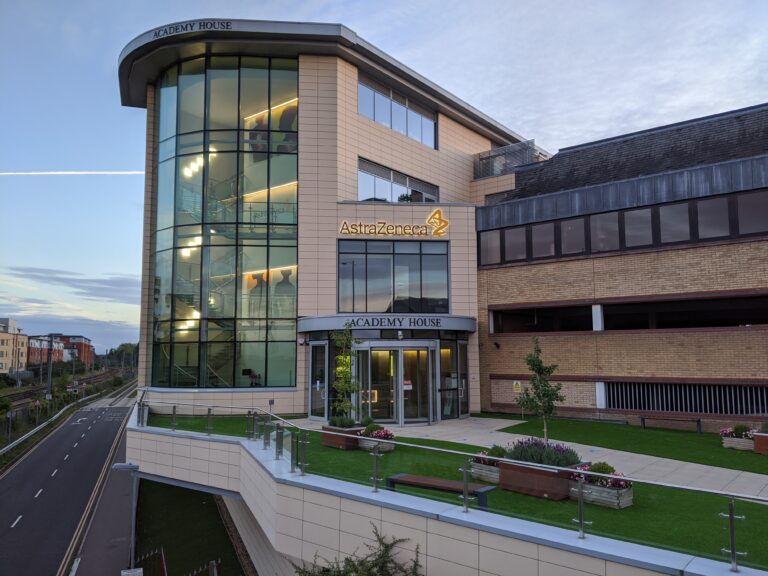
AstraZeneca PLC (LON:AZN) is advancing its ongoing response to address the unprecedented challenges of COVID-19, collaborating with a number of countries and multilateral organisations to make the University of Oxford’s vaccine widely accessible around the world in an equitable manner.
The Company has concluded the first agreements for at least 400 million doses and has secured total manufacturing capacity for one billion doses so far and will begin first deliveries in September 2020. AstraZeneca aims to conclude further agreements supported by several parallel supply chains, which will expand capacity further over the next months to ensure the delivery of a globally accessible vaccine.
AstraZeneca today received support of more than $1bn from the US Biomedical Advanced Research and Development Authority (BARDA) for the development, production and delivery of the vaccine, starting in the fall. The development programme includes a Phase III clinical trial with 30,000 participants and a paediatric trial.
In addition, the Company is engaging with international organisations such as the Coalition for Epidemic Preparedness Innovations (CEPI), Gavi the Vaccine Alliance and the World Health Organisation (WHO), for the fair allocation and distribution of the vaccine around the world. AstraZeneca is also in discussions with governments around the world to increase access. Furthermore, AstraZeneca is in discussions with the Serum Institute of India and other potential partners to increase production and distribution.
AstraZeneca recently joined forces with the UK Government to support Oxford University’s vaccine and has progressed rapidly in its efforts to expand access around the world. The Company will supply the UK starting in September and is thankful for the Government’s commitment and overall work on vaccines.
Pascal Soriot, Chief Executive Officer, said: “This pandemic is a global tragedy and it is a challenge for all of humanity. We need to defeat the virus together or it will continue to inflict huge personal suffering and leave long-lasting economic and social scars in every country around the world. We are so proud to be collaborating with Oxford University to turn their ground-breaking work into a medicine that can be produced on a global scale. We would like to thank the US and UK governments for their substantial support to accelerate the development and production of the vaccine. We will do everything in our power to make this vaccine quickly and widely available.”
AstraZeneca has now finalised its licence agreement with Oxford University for the recombinant adenovirus vaccine. The licensing of the vaccine, formerly ChAdOx1 nCoV-19 and now known as AZD1222, follows the recent global development and distribution agreement with the University’s Jenner Institute and the Oxford Vaccine Group. AstraZeneca has also agreed to support the establishment of a joint research centre at Oxford University for pandemic preparedness research.
A Phase I/II clinical trial of AZD1222 began last month to assess safety, immunogenicity and efficacy in over 1,000 healthy volunteers aged 18 to 55 years across several trial centres in southern England. Data from the trial is expected shortly which, if positive, would lead to late-stage trials in a number of countries. AstraZeneca recognises that the vaccine may not work but is committed to progressing the clinical program with speed and scaling up manufacturing at risk.
The Company’s comprehensive pandemic response also includes rapid mobilisation of AstraZeneca’s global research efforts to discover novel coronavirus-neutralising antibodies to prevent and treat progression of the COVID-19 disease, with the aim of reaching clinical trials in the next three to five months. Additionally, the Company has quickly moved into testing of new and existing medicines to treat the infection, including CALAVI and ACCORD trials underway for Calquence (acalabrutinib) and DARE-19 trial for Farxiga (dapagliflozin) in COVID-19 patients.
Financial considerations
Today’s announcement is not anticipated to have any significant impact on the Company’s financial guidance for 2020; expenses to progress the vaccine are anticipated to be offset by funding by governments.
AZD1222
ChAdOx1 nCoV-19, now known as AZD1222, was developed by Oxford University’s Jenner Institute, working with the Oxford Vaccine Group. It uses a replication-deficient chimpanzee viral vector based on a weakened version of a common cold (adenovirus) virus that causes infections in chimpanzees and contains the genetic material of SARS-CoV-2 spike protein. After vaccination, the surface spike protein is produced, priming the immune system to attack COVID-19 if it later infects the body.
The recombinant adenovirus vector (ChAdOx1) was chosen to generate a strong immune response from a single dose and it is not replicating, so cannot cause an ongoing infection in the vaccinated individual. Vaccines made from the ChAdOx1 virus have been given to more than 320 people to date and have been shown to be safe and well tolerated, although they can cause temporary side effects such as a temperature, influenza-like symptoms, headache or a sore arm.