Jasmine Yeo, fund manager at Ruffer, argues that investors may be underestimating the impact of the Strait of Hormuz closure on agricultural commodities.
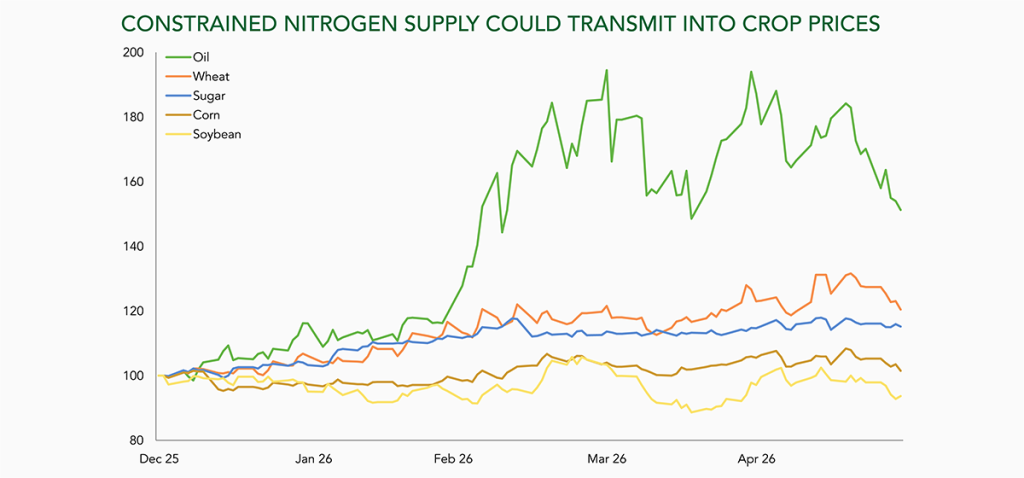
Her point is direct. Oil has already moved sharply in response to the conflict with Iran, but crop markets have not. Wheat, corn, sugar and soybeans have lagged, despite the fact that the same disruption affecting energy markets also threatens the fertiliser supply chain.
Fertiliser is central to food production. The Strait of Hormuz is an important route for traded fertiliser feedstocks, including urea, ammonia, phosphate and sulphur. Urea and ammonia are especially important for nitrogen fertiliser, which is widely used on wheat and corn. If supply is restricted and prices rise, farmers face higher costs. They may reduce fertiliser use, cut planted acreage or accept lower yields. Any of those outcomes can tighten crop supply and push prices higher.
Yeo notes that the market’s muted reaction is partly explained by timing. Agriculture moves to seasonal buying and planting cycles, not simply to daily headlines. Northern Hemisphere spring planting largely used fertiliser bought before the latest escalation. That has delayed the impact on crop prices. The next key point is the Southern Hemisphere buying season, when farmers return to the market for nitrogen inputs. If the Strait remains closed into that window, fertiliser disruption could become harder for crop markets to ignore.
Oil has already priced in a meaningful geopolitical premium. Agricultural commodities may not have done so yet. That makes them potentially useful as a hedge against further escalation, persistent supply disruption and renewed food inflation. It also means the opportunity is linked to timing. The market may have a narrow window before fertiliser constraints become more visible in crop prices.
Yeo is clear that there are risks to the view. China has restricted urea exports and built inventories, and a return of Chinese supply could ease pressure. A resolution to the conflict and a reopening of the Strait would also reduce the disruption. Weather, crop conditions and seasonal demand will still influence prices.
Even so, her argument is that investors should not treat agricultural commodities as a secondary issue. They are directly exposed to the same geopolitical pressure that has already moved oil. The difference is that the pricing response has been slower.
Chart source: Bloomberg, data as at May 2026