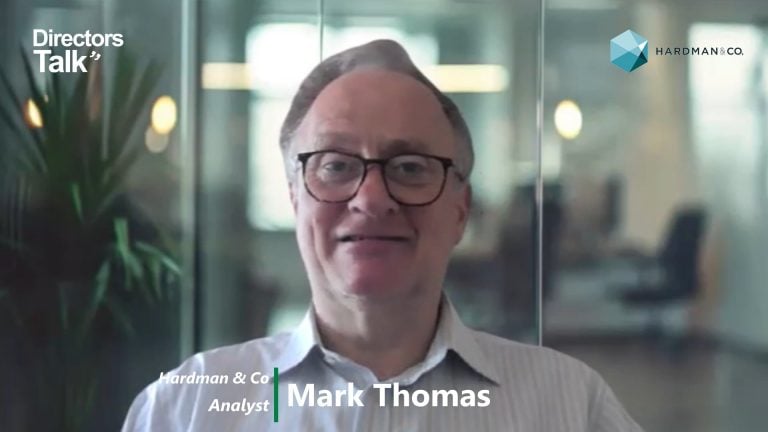
RM Secured Direct Lending (LON:RMDL) is the topic of conversation when Hardman and Co’s Financial Analyst Mark Thomas caught up with DirectorsTalk for an exclusive interview.
Q1: You called your recent report “Social infrastructure: RMDL an alternative alternative”, can you tell us about your conclusions?
A1: We reviewed social infrastructure investment companies in our note “Secure income” REITs – Safe harbour available, published on 22 March 2019. As the title of that note suggested, having a secure income and dividend we believe are the key factors in investors’ mind set when looking at those companies.
In our latest note on RMDL, we considered how it could be viewed as an alternative to these investments, not least because social infrastructure is becoming an increasingly important part of its portfolio. In summary the company: i) offers a higher dividend yield; ii) carries less downside risk; and iii) has a non-correlated share price. RMDL does not have the same equity-upside but offers investors a different portfolio option.
Q2: You talk of a higher yield. What can you tell us about that?
A2: The ordinary dividend yield from RMDL is around 7%; this compares with around 3-4% for many of the healthcare infrastructure vehicles or student accommodation. Even the highest yielding stocks in those areas Empiric or Target Healthcare or Impact are only paying between 5% and 6% yields. Our 7% for RM Secured is also before any special dividends which it typically pays on receipt of early repayment penalties or warrant gains. In our previous notes, we have detailed how RMDL delivers its returns through high skill and service levels rather than excessive credit risk in its loan book.
Q3: You mentioned less downside risk earlier. Why does the company carry less downside risk?
A3: Any losses in the social infrastructure customer would be initially borne by the equity holders in that business. The equity investors in social infrastructure are thus at higher risk than debt investors such as RMDL. It is worth exploring a bit more about how they achieve its returns.
Firstly, it is operating in a part of the market where competition is moderate. High-street banks have significantly withdrawn from non-standard lending, and the size of RMDL’s participation (£2m-£10m+) is too small for many corporate lenders/capital market investors looking to structure complex deals. Second, in terms of credit, we believe: it has robust credit assessment with appropriate measures specific to the bespoke nature of the clients; benefits from control and monitoring post drawdown; takes robust security measures; and has a diversified portfolio. Managers are aligned to shareholders and it has competitive advantages in origination.
Specifically, looking at social infrastructure business, RM Secured Direct Lending is paid for its skills and service, which, for example, may include being able to accurately assess say the construction risk in a project and to structure debt around that.
Q4: You said there was no equity upside. What do you mean by that?
A4: Equity holders clearly benefit from the (geared) capital gains should the underlying assets increase in value. RMDL does not benefit from this to any meaningful extent, although it may see early repayment gains from rising capital values (which in 2019 are likely to be in excess of 1% return).
However, we believe that, for most investors, the sector is more about having secure dividend than making material capital gains. By way of examples, we note the relatively modest NAV gains reported across a range of the companies with Empiric Student Properties reporting NAV growth of 2.7% in the year to June 2019 or Target Healthcare EPRA NAV increasing 1.7% in FY’19 or Impact Healthcare NAV up 3% in year to June 2019.
The share price performance for the social infrastructure funds under consideration here has been mixed and not all have risen.