Oriole Resources plc (LON:ORR) Chief Executive Officer Martin Rosser caught up with DirectorsTalk to discuss the publication of a maiden mineral resource estimate for the Mbe North deposit and the project’s growth potential.
Q1: You’ve announced a total resource at Mbe now exceeding 1.2 million ounces of contained gold following the maiden JORC mineral resource estimate for Mbe North. How significant is that milestone for Oriole Resources?
A1: It’s very significant. Any mineral resource, gold resource that exceeds a million ounces is very noteworthy. This is a fantastic achievement which has been delivered in a relatively short space of time.
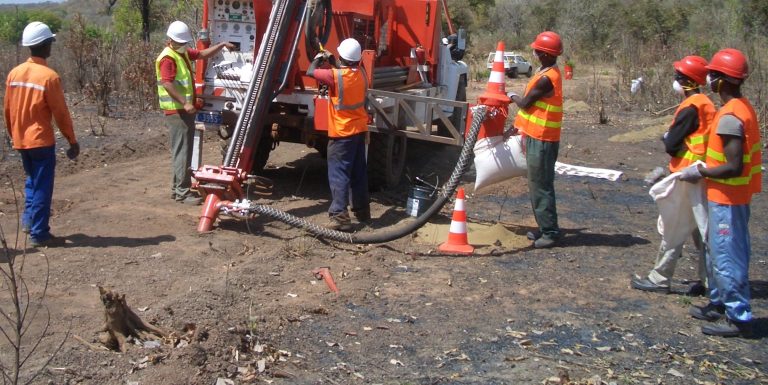
It’s not that long ago that we were just undertaking the preliminary surface-based exploration work subsequent to that trenching. Now, after the two maiden drilling programmes, firstly at Mbe South and now just reported upon Mbe North, we’re now pushing 1.25 million ounces. So, it’s going extremely well.
This is just a point in time. We think that there’s going to be a lot more gold to be found, but we’re delighted to have leapfrogged the million ounce level. As I said, we’re just under the 1.25 million ounces and it bears favourable comparison with other significant discoveries in Africa and indeed in other parts of the world.
It really does look like a step change for the project.
Q2: You’ve said that the Mbe deposits remain open in all directions. Does that suggest that the resource could continue to grow? What further work is planned to potentially define a larger resource?
A2: Well, indeed, the deposits, North and South, are open in all directions and that includes at depth. So, based on our success rate to date and what we’ve already seen that has been outlined in the two MREs, most definitely we have good confidence that the resource will grow significantly.
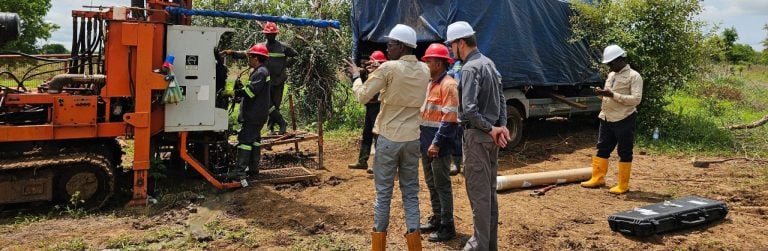
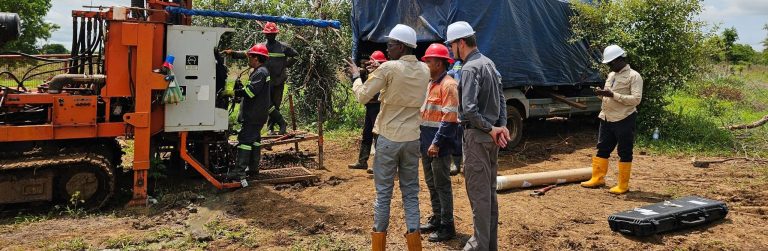
People will be aware, I’m sure, if they’ve been following Oriole, that earlier this month we commenced the 2,500 metre, 10-hole step-out drilling programme at Mbe South. That is designed to expand the resource that we have at Mbe South. If we go on our current view on what we’re likely to find, then we’re very optimistic that will add significantly. That’s just the start of continuing to delineate what we’ve got both at the North and the South.
Q3: Now following on from this resource work, what are the next steps to move Mbe towards potential gold production?
A3: We obviously have to finish the current drilling programme at Mbe South. We’ll then start to give consideration towards the next phases of drilling.
One of the obvious ones to consider is to increase the confidence level on the resource category. So, that would involve infill drilling to move from inferred into indicated/measured resources. The focus for that would be at Mbe South but we’ve also got additional step-out drilling to consider at Mbe North. So, plenty to get our teeth into once we finish the current drilling programme at Mbe South.
Given what we’ve already delineated, a very significant resource, we can put our minds to the preliminary work that one needs to undertake on mineralogy, metallurgical testing, baseline environmental and social impact assessment work. As we already are conceptualising an open pit mining scenario based on the numbers that we currently have, we can foresee that we’ve got the ingredients to have potentially a very significant sized gold mine in future.
Q4: Now, BCM holds around 50% stake in the Mbe project. What does that mean for Oriole shareholders in terms of funding, risk and then project development?
A4: BCM, our 50% joint venture partner, is a very significant entrepreneurial Ghana-based, African-focused mining contractor. They’ve got significant experience working in many different countries in the continent, considerable financial resources compared to Oriole in terms of size, and very strong mining experience and expertise to discuss and plan for the next steps.
We obviously get the benefit of an organisation that has very strong capability.
Q5: Now, the resource uses a $3,200 gold price. How resilient is that project if the gold price fluctuates?
A5: We are at the early stages of looking at the economics, but I think we can already say that the economics should be robust because we’ve got a very substantial resource that gives us economies of scale potential.
We think, given what we’ve seen in terms of the mineralisation, that we’ll have a good strip ratio. Mineralisation starts from surface. We’ve got very wide intersections forming the mineral resource estimate and so we think that that will bode well for when we do start to look at the economics. We’ve got very good access. It’s right next to a main road, it’s near the big city of Ngaoundéré, which has a regional airport.
So, there are many things in its favour when it comes to moving the project forward to the next stages in time for consideration of a potential mining operation and the economics to support it.