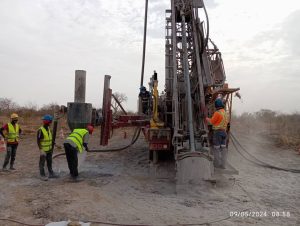
BP p.l.c. (BP.L), a stalwart in the global energy arena, presents a complex picture for investors seeking clarity amidst its diverse operations and financial metrics. With its roots firmly planted in the United Kingdom, BP operates across the oil and gas spectrum, venturing into renewables like solar, wind, and hydrogen, all while maintaining a significant footprint in traditional energy sectors. This strategic diversification is pivotal as the world transitions to more sustainable energy sources, positioning BP as a potentially resilient player in a rapidly evolving industry.
At the heart of BP’s current investor narrative is its market capitalization of $91.33 billion, underscoring its status as a major player in the integrated oil and gas industry. Currently trading at 591.2 GBp, BP’s share price has seen a modest change of 0.03% in recent times, indicating a period of relative stability. This comes within a broader 52-week range of 331.70 to 606.30 GBp, reflecting the stock’s volatility amid fluctuating global oil prices and economic conditions.
The valuation metrics paint a challenging picture. With a forward P/E ratio soaring to 911.64, BP’s valuation seems stretched compared to industry norms, warranting a closer examination by investors. This anomaly suggests that market expectations are potentially high, possibly due to anticipated growth or strategic shifts in BP’s business model. However, the lack of data on trailing P/E, PEG, and other valuation ratios leaves investors with an incomplete picture, making it imperative to rely on other available metrics for a comprehensive analysis.
Performance-wise, BP reports a modest revenue growth of 3.60%, which, while positive, may not fully excite growth-focused investors. The return on equity is a mere 1.70%, indicating limited efficiency in generating profits from shareholders’ equity. However, BP’s substantial free cash flow of $5.71 billion highlights robust operational liquidity, a reassuring signal for those concerned about the company’s capacity to manage debt and fund growth initiatives.
A notable highlight for income-seeking investors is BP’s attractive dividend yield of 4.15%. Despite a staggering payout ratio of 9,514.03%, which appears unsustainable at first glance, it’s crucial to understand the underlying factors or adjustments that might justify this figure. Investors should approach this yield with caution, considering the broader financial context and potential future changes in dividend policy.
Analyst sentiment towards BP is mixed, with 7 buy ratings, 12 hold ratings, and a solitary sell rating. The average target price sits at 569.17 GBp, suggesting a potential downside of -3.73% from the current price, indicating cautious optimism. This sentiment is corroborated by technical indicators; with the stock trading above both its 50-day and 200-day moving averages, BP appears to be in a positive technical position, albeit with a balanced RSI of 52.30 suggesting neither overbought nor oversold conditions.
BP’s strategic focus on low-carbon and renewable energy, alongside traditional oil and gas operations, positions it uniquely amidst the industry’s ongoing transformation. However, the complex valuation metrics and mixed analyst outlook necessitate a thoughtful approach. Investors should weigh BP’s potential for long-term growth against the backdrop of its current financial performance and broader energy market dynamics.